Ingredients and steps on one page. Print it, or choose “Save as PDF” in the print dialog.
Sekai Gohan
Caldeirada de Cabrito: Angolan Layered Goat Stew in White Wine
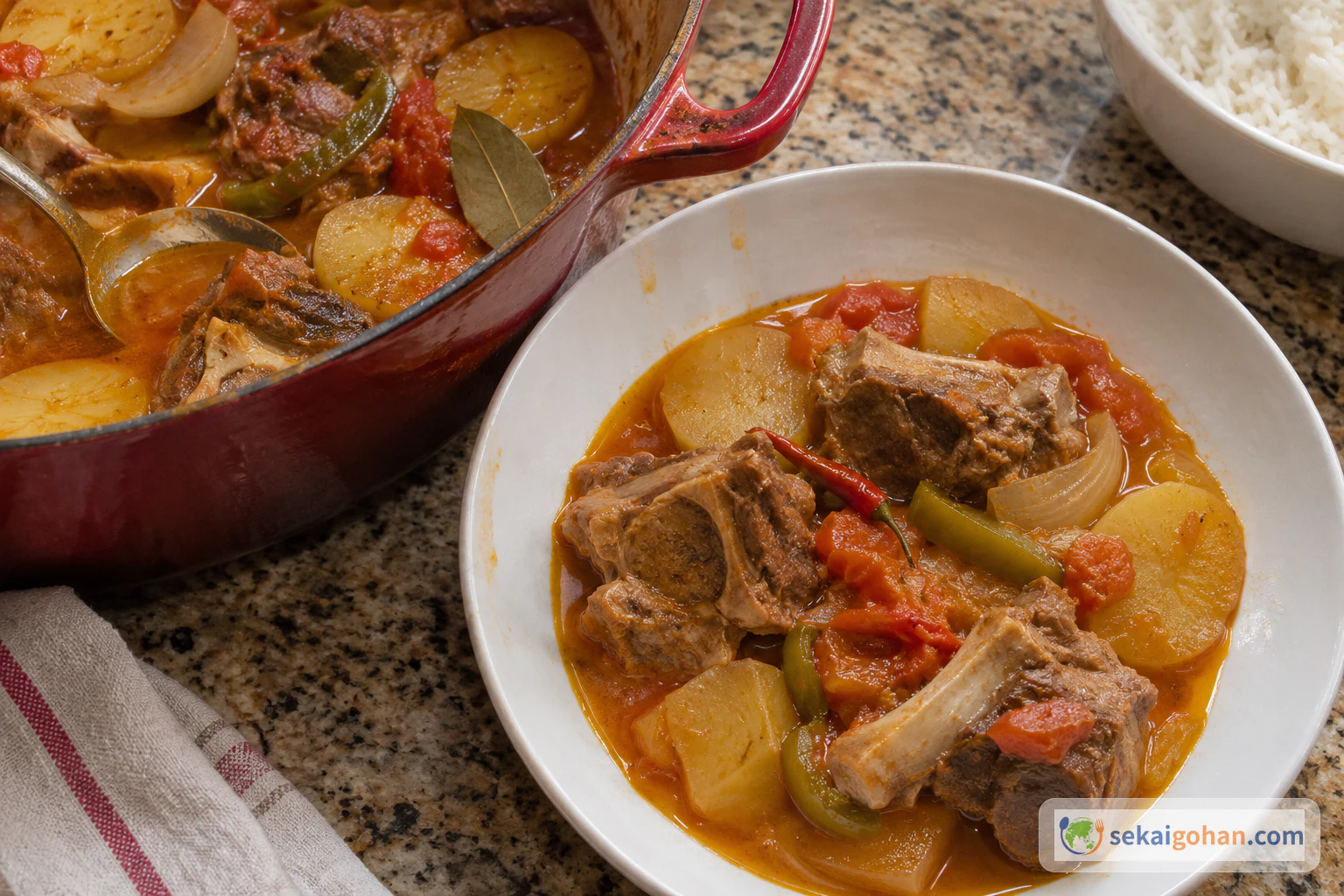
Ingredients
| Ingredient | Amount | Role |
|---|---|---|
| Young goat (cabrito), bone-in | ½ a young kid goat, cut into chunks | The meat. The bone gives body to the liquid |
| Large onion (cebola) | 1, thinly sliced | Bottom of each layer, sweetness |
| Olive oil (azeite) | scant ½ cup (100 ml) | Coats the pot bottom |
| Ripe tomatoes (tomate maduro) | 9 oz (250 g) | Acidity and moisture |
| Green bell pepper (pimento verde) | ½ | Light bitterness and aroma |
| Small red chili (gindungo) | 1½ | Heat |
| Potatoes (batata) | 1 lb 2 oz (500 g) | Top layer, the starch of the pot |
| Parsley (salsa) | ½ bunch | Fresh aroma inside the layers |
| Dry white wine (vinho branco) | 1 cup (250 ml) | Braising liquid, acidity |
| Whole cloves (cravinho-da-índia) | 2, optional | Warm aroma |
| Bay leaf (folha de louro) | ½ | Aroma |
| Aged grape spirit (aguardente velha) | 3 tbsp + 1 tsp (50 ml) | Braising liquid, depth |
| Salt and black pepper (sal, pimenta) | to taste | Final seasoning |
Steps
1Cut the goat into even chunks
Rinse and trim the goat on the board you keep for raw meat. Cut it into large bone-in chunks of about the same size. Even pieces cook at the same pace, so no small piece shreds while a large one stays tight. The goat is ready when every chunk is close in size and each one still holds its bone.
2Cut and divide the vegetables
On the vegetable board, peel the potatoes and cut them into ⅜-inch (1 cm) rounds, which hold together under the lid. Peel and seed the tomatoes and chop them coarsely. Core the pepper and cut it into thin strips, and slice the onion thinly. Split the onion, tomato, pepper and parsley into two equal piles each, and stop when everything sits in matched pairs beside the stove.
3Build the first vegetable layer
Pour the olive oil into the pot and tilt it to coat the bottom. Scatter half the onion flat over the oil, then half the tomato, then half the pepper strips. Set the cloves on top. Leave it unstirred, and move on when the bottom is covered edge to edge with even, separate layers.
4Lay in the goat and aromatics
Arrange half the goat over the vegetables in a single even layer. Scatter half the parsley over it, then add the bay leaf and the gindungo. All of the chili goes into this first layer. The layer is done when the meat lies flat and the vegetables still show at the edge of the pot.
5Repeat the layers and finish with potato
Lay down the rest of the onion, tomato and pepper, then the rest of the goat and parsley, in the same order as before. Cover everything with the potato rounds, overlapping them slightly. The potato is the lid layer of the stew. Stop when, looking down, you see only potato and no meat or vegetables.
6Pour in the wine and spirit
Mix the white wine and aguardente in a jug and pour slowly over the potatoes. The liquid should rise to the top of the ingredients. If it stops short, add a little hot water until it gets there. Stop pouring when the liquid shows between the top potato rounds.
7Cover and simmer, shaking now and then
Put the lid on and set the pot over low heat. Every so often, grip both handles with a cloth and give the pot a gentle shake to keep the bottom from catching. Never stir. Plan on roughly 60 to 90 minutes as a rough guide, and judge by the meat leaving the bone. Through that time, a thin wisp of steam should escape under the lid and there should be no smell of scorching.
8Check the goat and season
Lift the lid and use tongs to raise the thickest bone-in piece. The meat should slide off the bone and pull apart into strands. Push a thermometer into the thickest part near the bone and confirm 167°F (75°C) at the center for at least 1 minute. Then taste the liquid and season with salt and pepper. Stop when the liquid tastes seasoned all through.
9Serve hot with rice
Pick out the cloves and bay leaf as you serve. Ladle goat, potato and liquid onto plates beside a mound of white rice, or beside funge. Bring it out while it still steams. It is right when the pale liquid starts to soak into the edge of the rice.