Ingredients and steps on one page. Print it, or choose “Save as PDF” in the print dialog.
Sekai Gohan
Ablo: Beninese Steamed Cakes of Rice Flour and Maize Flour
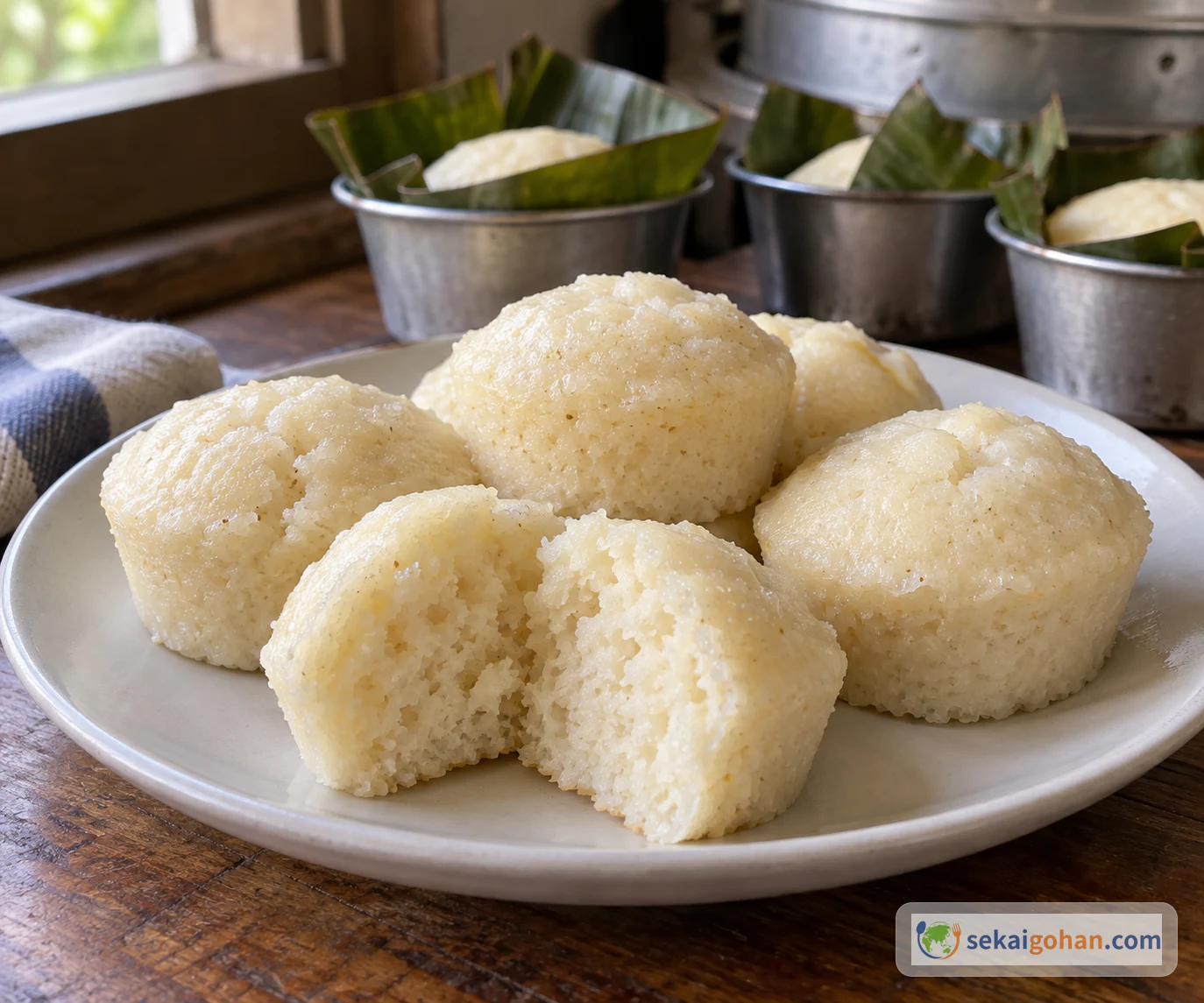
Ingredients
| Ingredient | Amount | Role |
|---|---|---|
| Rice flour (farine de riz) | 7 oz (200 g) | The main body of the batter. Added only after the maize porridge has cooled |
| Maize flour (farine de maïs) | 2 oz (60 g) | Cooked first with the water into a thin porridge |
| Cornstarch (fécule de maïs / Maïzena) | 3.5 oz (100 g) | A different ingredient from maize flour. Mixed in with the rice flour |
| Baker's yeast (levure boulangère) | 2 tsp | Makes the batter rise. Woken first in a little warm water |
| Sugar (sucre en poudre) | 3.5 oz (100 g) | Sweetness |
| Salt (sel) | 1 tsp | Seasoning |
| Water (eau), for the porridge | 2 cups (500 ml) | Cooked with the maize flour |
| Warm water, for the yeast | A little | Dissolves the yeast. Separate from the 2 cups (500 ml) |
Steps
1Cook the maize flour with the water
In a large pot, mix the 2 cups (500 ml) of porridge water well with the 2 oz (60 g) of maize flour. Bring it to a boil while stirring. Turn off the heat as soon as it boils. Use all 2 cups (500 ml) for the porridge and don't hold any back for the yeast.
2Let the porridge cool completely
Take the pot off the heat and let the porridge cool fully. Don't add the rice flour or the yeast while it is still hot; wait until it is completely cool.
3Wake the yeast in a little warm water
In a small bowl, dissolve the 2 tsp of yeast in a small amount of warm water and let it activate, following your yeast's label. Do not use boiling water.
4Mix the flours, then the yeast, sugar and salt into the cooled porridge
Once the porridge is completely cool, add the 7 oz (200 g) of rice flour and the 3.5 oz (100 g) of cornstarch. You can do this in the pot or in a large bowl. Mix until no lumps remain. Then add the activated yeast, the 3.5 oz (100 g) of sugar and the 1 tsp of salt, and mix until the batter is even. Don't taste the raw batter.
5Cover and let the batter rise
Cover the pot for the rise. At home, use a lidded container that gas can escape from, not a sealed glass jar. Allow about 1 hour when the kitchen is above 77°F (25°C) and about 4 hours when it is below 68°F (20°C). In between, judge by the batter.
Look for the batter to rise (monter) and increase in volume. Small bubbles on the surface are another sign worth watching for.
6Line the molds and fill them
Start heating the water in the steamer first. Line each small mold with food-grade banana leaf or aluminum foil. Add no oil. Spoon the risen batter into the molds and leave room for it to rise.
7Steam for about 20 minutes
Set the molds in the steamer or couscoussier in a single layer. Don't stack them, so the steam can move freely. Cover and steam for about 20 minutes once plenty of steam is circulating; the time will change with the size of your molds. Check the water level so the pot never boils dry, and top up with boiling water as needed. Follow your steamer's instructions.
8Check that the center has set
Push a thin bamboo skewer into the center of one cake. If no wet batter clings to it and the middle is set, the cakes are done. If not, keep steaming and check again.
9Cool briefly, unmold and serve
Let the molds cool for a little while before turning the cakes out. Serve them as small, white, slightly sweet steamed breads with the sauce or fish you are eating them with. Ablo is a bread served on the side. It is not a coating or batter for frying the main dish.