Ingredients and steps on one page. Print it, or choose “Save as PDF” in the print dialog.
Sekai Gohan
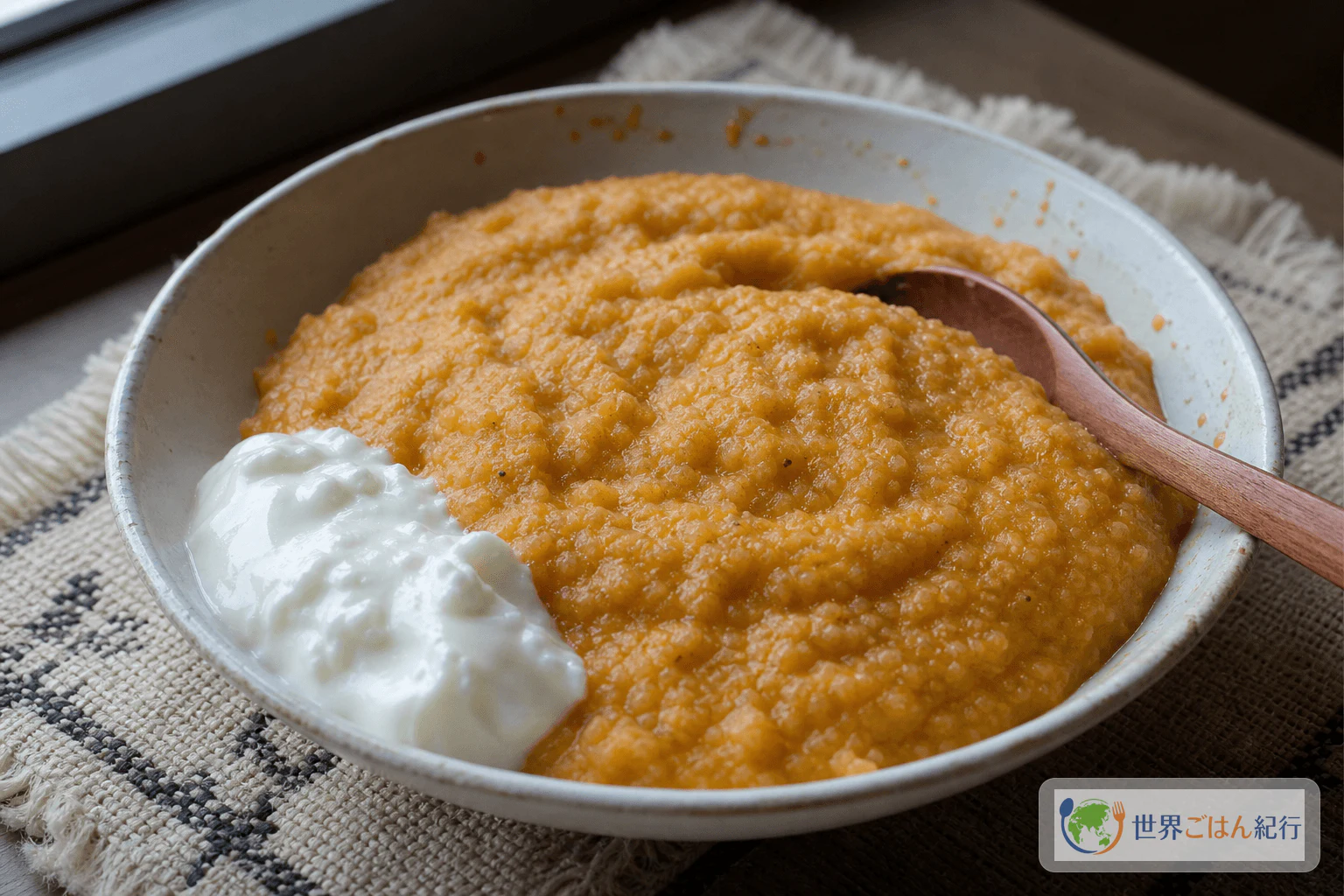
Bogobe jwa Lerotse Recipe: Botswana's Pumpkin-Colored Sorghum Porridge
Ingredients
The bogobe
| Ingredient | Amount | Substitutes & notes |
|---|---|---|
| Pumpkin | 12.5 oz (350 g) peeled weight | Weight after removing skin and seeds. Makes up lerotse's color and body |
| Cucumber | 1.5 oz (40 g) | Peel a little, and remove the seeds if there are many. It is for aroma, so don't increase it |
| White sorghum flour | 6.5 oz (180 g) | Do not omit; it is the center of the flavor |
| Cornflour | 2.5 oz (70 g) | Corn flour. Lightens the mouthfeel |
| Water | 4 cups (950 ml) | Divide into 2½ cups (600 ml) for cooking and 1½ cups (350 ml) for the flour slurry |
| Salt | 1 tsp | If adding at the end, 1/6 tsp at a time |
The madila-style accompaniment
| Ingredient | Amount | Substitutes & notes |
|---|---|---|
| Unsweetened yogurt | 7 oz (200 g) | Use as is, without draining |
| Milk | ¼ cup (80 ml) | Loosens the yogurt. If lactose is a concern, 4 tbsp water |
| Lemon juice | 1 tsp | Half if the yogurt is very sour |
| Salt | a pinch | About 0.5 g. Rounds off the sharp edge of the sourness |
Steps
1Cut the pumpkin and cucumber
10 min
Cut the pumpkin into 1 inches (2 cm) cubes, leaving some skin here and there. Shave off about half of the green skin, since too much thick skin makes the mouthfeel coarse. Halve the cucumber lengthwise, lightly scoop out the watery seed part with a spoon, and cut into 0.25 inch (5 mm) cubes. The cucumber is there for lerotse's green aroma. Use more, and the chilled cucumber smell takes over.
2Simmer and mash the pumpkin
12 min
Put the pumpkin, cucumber, 2½ cups (600 ml) water and 1/2 tsp salt in a heavy pot over medium heat. When it boils, lower to medium-low and cook for 10 minutes at a heat where the edge of the pot trembles. When a bamboo skewer goes easily to the center and the cubes break at the corners under a wooden spoon, mash it coarsely in the pot. Don't make a perfect purée; leaving small bits brings it closer to the rustic feel of lerotse porridge.
3Dissolve the flour in water
5 min
Put 6.5 oz (180 g) sorghum flour, 2.5 oz (70 g) cornflour and 1½ cups (350 ml) water in a bowl and mix from the bottom with a whisk. This step makes a smooth, lump-free batter first. The flour settles easily, so for the first minute keep mixing even if it feels heavy. Lift the whisk and the batter should fall in a thin line. Touch it with a finger and you should feel no large grains of flour. Adding too much water here makes it hard to stir later, so stop at about the thickness of a stiff tempura batter.
4Pour the slurry into the pot
5 min
Return the pumpkin pot to medium-low heat, and when the surface bubbles quietly, pour the flour slurry in a thin stream. This blends everything evenly into a smooth porridge without a floury feel. Pour slowly, and move the wooden spoon in one direction, scraping the bottom. Keep going until the white streaks are gone and the whole thing is a uniform pale orange. If it boils hard only the bottom sets, so lower toward low heat before the bubbles jump.
5Stir over low heat
8 min
Lower the heat to low and stir, turning large from the bottom of the pot with a wooden spoon, until it thickens and starts to hold together. In about 3 minutes the porridge gets heavy, and after 5 minutes the track of the wooden spoon remains for about 2 seconds. It scorches easily, so don't keep pressing the same place on the bottom; move the spoon from the near side to the far side as if folding over. The finish should fall when scooped but not run watery, and pile into a loose mound on the plate.
6Turn off the heat and rest
5 min
Add 1/2 tsp salt and mix, and turn off the heat when the surface comes together smoothly and it is a firmness that can be mounded round. Set the lid slightly ajar and rest 5 minutes, and the flour absorbs moisture and the surface settles. If it is too firm after resting, add boiling water 2 tbsp at a time and knead again over low heat for 1 minute. If it is too loose, remove the lid and stir over low heat for 2 minutes at a time, reducing to a thickness where the wooden spoon's track doesn't close back too much.
7Serve madila-style
3 min
Mix the yogurt, milk, lemon juice and salt into a loose madila-style sauce. Mound the bogobe round on a plate, shaping it with a spoon wet with water, until it is smooth and soft. Add the yogurt sauce alongside. Madila's charm is the sourness of the fermented milk itself, so even with yogurt, avoid sweet types. Adding a vegetable side of greens or a bean stew makes it easier to eat as a staple.