Ingredients and steps on one page. Print it, or choose “Save as PDF” in the print dialog.
Sekai Gohan
How to Make Poulet Moambe: The Congo's National Palm Nut Chicken Stew
Ingredients
Main ingredients
| Ingredient | Amount | Substitutes and notes |
|---|---|---|
| Chicken thighs (bone-in) | 8 pieces (about 2.75 lb (1.2 kg)) | 1.25 lb (600 g) boneless thighs also works (bone-in gives more richness) |
| Palm nut cream (canned) | 14 oz (400 g) (1 can) | 7 oz (200 g) unsweetened peanut butter plus 2 tbsp paprika can substitute |
| Tomatoes | 3 (about 14 oz (400 g)) | 14 oz (400 g) canned diced tomatoes is also fine |
| Onions | 2 (finely chopped) | — |
| Garlic | 6 cloves (minced) | Congolese cooking uses plenty of garlic |
| Ginger | 1 knob (grated) | — |
Seasonings and spices
| Ingredient | Amount | Substitutes and notes |
|---|---|---|
| Red palm oil | 3 tbsp | Vegetable oil plus 1 tsp paprika can substitute |
| Maggi bouillon cubes | 2 cubes | Consomme cubes can substitute |
| Pili pili (chili sauce) | 1 tbsp | 2 tsp Tabasco plus 1 tsp red pepper flakes can substitute |
| Salt | 1 tsp | Adjust by tasting |
| Black pepper | 1/2 tsp | — |
| Lime juice | 2 tbsp | Lemon juice can substitute |
| Bay leaves | 2 leaves | — |
Sides and vegetables
| Ingredient | Amount | Notes |
|---|---|---|
| Okra | 8 pods | Trim the stems and cut in half |
| Spinach (or cassava leaves) | 7 oz (200 g) | Roughly chopped. Komatsuna or other greens can substitute |
| White rice | 2 go | 1 go is ¾ cup (180 ml) of rice |
Steps
1Season the chicken
15 min
Season the chicken thighs with 1/2 tsp salt, 1/2 tsp black pepper, the grated garlic from 2 cloves, and 2 tbsp lime juice. Rub them in and leave for 15 minutes. In the Congo, seasoning chicken with acid first is the rule. The lime takes away any gaminess and loosens the proteins, making the meat more tender.
Bone-in vs. bonelessCongolese homes always use bone-in. Gelatin and collagen melt from the marrow and add body and richness to the palm nut sauce. If you are short on time, boneless thighs also make a delicious version, but shorten the simmer by 10 minutes (a long simmer makes them tough).
2Sear the chicken
10 min
Put 3 tbsp palm oil in a large pot. Heat over medium-high heat. When it turns from red-orange to clear, it is ready. Add the chicken, wiped dry, skin side down. Sear 3 to 4 minutes on each side. The trick is not to move it. When all sides have a golden-brown sear, take it out.
The importance of browningBrowning gives a toasty flavor through the Maillard reaction that contrasts with the sweetness of the palm nut sauce and creates depth of flavor. If you cut corners here, the taste comes out flat and dull.
3Saute the aromatics
8 min
In the pot from which you removed the chicken, saute the onions. Cook 5 minutes over medium heat, until translucent. Add the remaining 4 cloves of garlic and the ginger. Cook another 2 minutes, until fragrant. Add the 3 tomatoes, roughly chopped. Cook 3 minutes over high heat, until the tomatoes break down and the moisture cooks off.
4Add the palm nut cream
5 min
Add all 14 oz (400 g) of palm nut cream at once. Stir from the bottom of the pot with a wooden spoon for about 2 minutes, blending the cream and vegetables evenly. Loosen with ¾ cup (200 ml) water, to a smoothness where the sauce falls from the lifted spoon in a thick ribbon. Add 2 Maggi cubes and 2 bay leaves. Add 1 tbsp pili pili sauce too.
Thickness differs by can. If it is too thick, add water 3.5 tbsp (50 ml) at a time. A thickness slightly looser than ketchup is ideal.
5Return the chicken and simmer
35 min
Return the seared chicken to the pot. Submerge it in the sauce. Lower the heat and cover. Simmer 35 minutes. Every 10 minutes, lift the lid and stir, to prevent scorching at the bottom of the pot. Palm nut cream is high in sugar and scorches quickly over high heat.
The chicken is done when the meat around the bones is cooked through and clear juices run when you pierce it with a bamboo skewer. The sauce is ready when it coats the back of a spoon thickly, leaves no gritty lumps, and shows a little orange oil floating on the surface.
Separating oil is a sign of successWhile simmering, orange oil separates on the surface of the sauce. This is not a failure. It means the palm nut cream has cooked enough. In Congolese homes, when the layer of oil appears, they judge "the moambe is done." You can skim it lightly with a spoon if it bothers you, but this oil holds the concentrated flavor of the palm nut, so leaving it makes it more delicious.
6Add the vegetables and finish
10 min
At 30 minutes into the simmer, open the lid. Add the 8 okra pods (halved). Add the 7 oz (200 g) spinach too. Cover and cook 5 minutes over low heat, until the okra is tender. Taste once the spinach has wilted, then adjust with salt.
If you can get cassava leavesIn authentic Congolese poulet moambe, cassava leaves (saka-saka / pondu) are used instead of spinach. Look for frozen cassava leaves at African grocery stores and online. They have more bitterness and richness than spinach and go superbly with the palm nut sauce. Cassava leaves contain toxic cyanogenic compounds, so always boil them for at least 1 hour before use.
7Plate
3 min
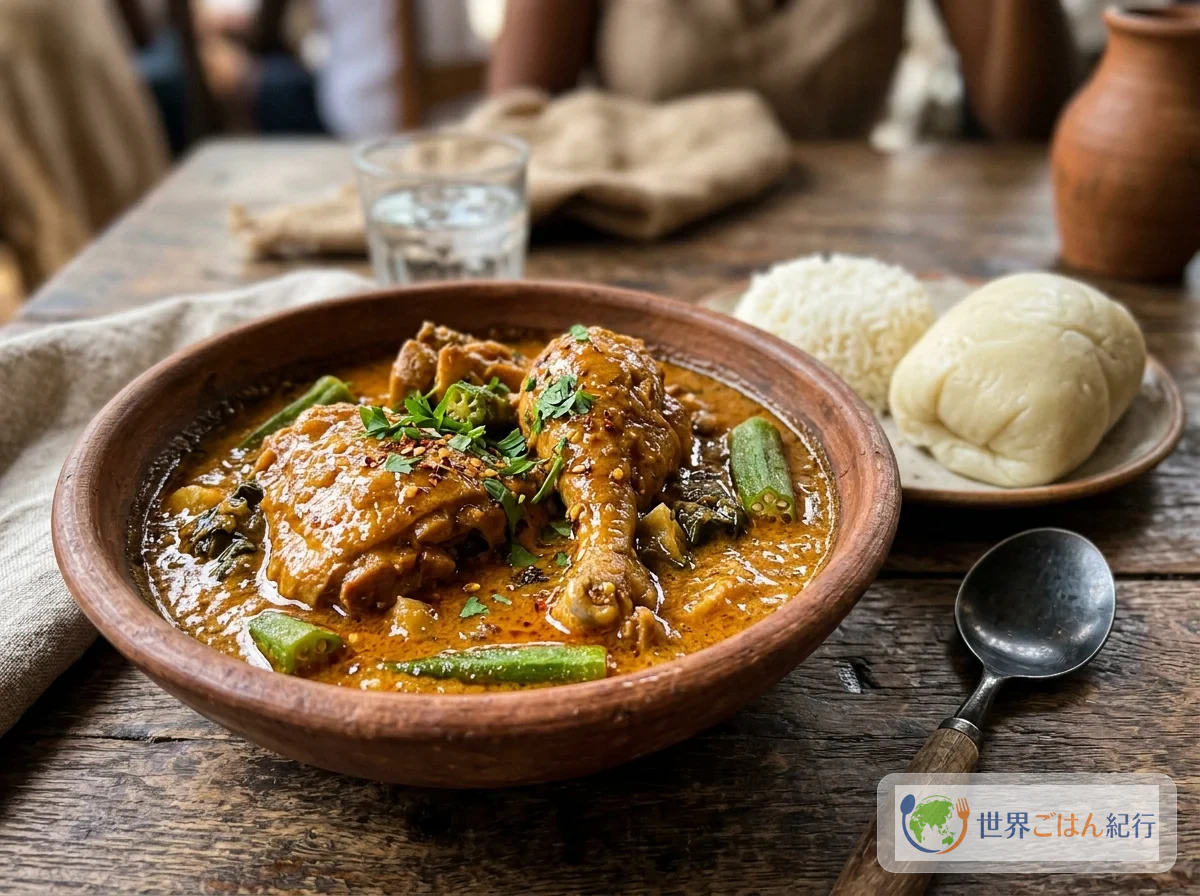
Mound about one rice bowl of white rice (or fufu) on one side of the plate and place 1 or 2 pieces of chicken on the other side. Take out the chicken carefully so it does not fall apart, ladle plenty of sauce over so it reaches the edge of the rice, and scatter the okra and greens on top to finish.