Ingredients and steps on one page. Print it, or choose “Save as PDF” in the print dialog.
Sekai Gohan
Genfo: Ethiopian Breakfast Porridge Eaten by Its Aroma
Ingredients
| Ingredient | Amount | Substitutes & notes |
|---|---|---|
| Cake flour (low-protein flour) | 11.5 oz (320 g) | Barley flour, 11.5 oz (320 g), makes it more fragrant. Avoid coarse cornmeal, because grains remain |
| Water | 3¾ cups (900 ml) | Heat 3½ cups (850 ml) and keep the remaining 3.5 tbsp (50 ml) to adjust firmness |
| Salt | 4 g | If your berbere has salt in it, start with 3 g |
| Unsalted butter | 2 oz (60 g) | To avoid dairy, replace with 3.5 tbsp (50 ml) vegetable oil |
| Fenugreek seeds | 4 g | Strongly bitter, so do not increase. If powdered, try from 2 g |
| Green cardamom | 2 pods | Crack the pods and use the seeds. About 1 g if cardamom powder |
| Onion | 1 oz (30 g) | Sliced 0.25 inch (5 mm) wide |
| Garlic | 5 g | 1 clove, sliced |
| Ginger | 5 g | Sliced 0.125 inch (3 mm) wide |
| Turmeric | 2 g | Adds color and an earthy aroma |
| Berbere | 15 g | To keep the heat down use 8 g and add 7 g paprika |
| Plain yogurt | 4 oz (120 g) | Only if serving it. Omit to avoid dairy |
Steps
1Prepare the spiced butter ingredients and set over low heat
Lightly crush 4 g fenugreek seeds and the cardamom seeds until they just crack. Slice the onion 0.25 inch (5 mm) wide, the garlic thin and the ginger 0.125 inch (3 mm) wide. Put 2 oz (60 g) unsalted butter, the spices, onion, garlic, ginger and turmeric in a small pot and warm slowly for 15 minutes over low heat. When the bubbles turn fine, the edges of the onion are translucent and the aroma rises, turn off the heat before it browns and strain.
2Dry-toast the flour for fragrance
Put 11.5 oz (320 g) cake flour in the emptied heavy pot and stir for 5–6 minutes over medium-low heat, pressing the wooden spatula broadly against the bottom. Turn off the heat when the whole flour has changed to a pale beige and a nutty aroma comes out. If dark brown specks or smoke appear, it is overheated, so move it to another bowl at once and cool the pot. You can skip toasting, but the grain flavor will be flat.
3Return the flour to boiling water a little at a time and work it
Wipe the pot lightly, put in 3½ cups (850 ml) water and 4 g salt and bring to a boil over medium heat. When it boils, lower the heat and add the toasted flour about 3 tablespoons at a time, over a total of 6–8 minutes. Each time, scrape the bottom of the pot broadly with the wooden spatula and add the next only after the flour is no longer visible. Once all of it is in, work it for 12–15 minutes over medium-low heat; it is right when, lifted on the wooden spatula, the smooth stickiness falls in a heavy ribbon and a line on the bottom of the pot stays for about 2 seconds. Only if it is too stiff, add the reserved 3.5 tbsp (50 ml) water 2 tsp at a time, and if it is too loose, heat it 3 minutes at a time over low heat to bring it back.
4Shape the mound while hot and pour the berbere butter into the center
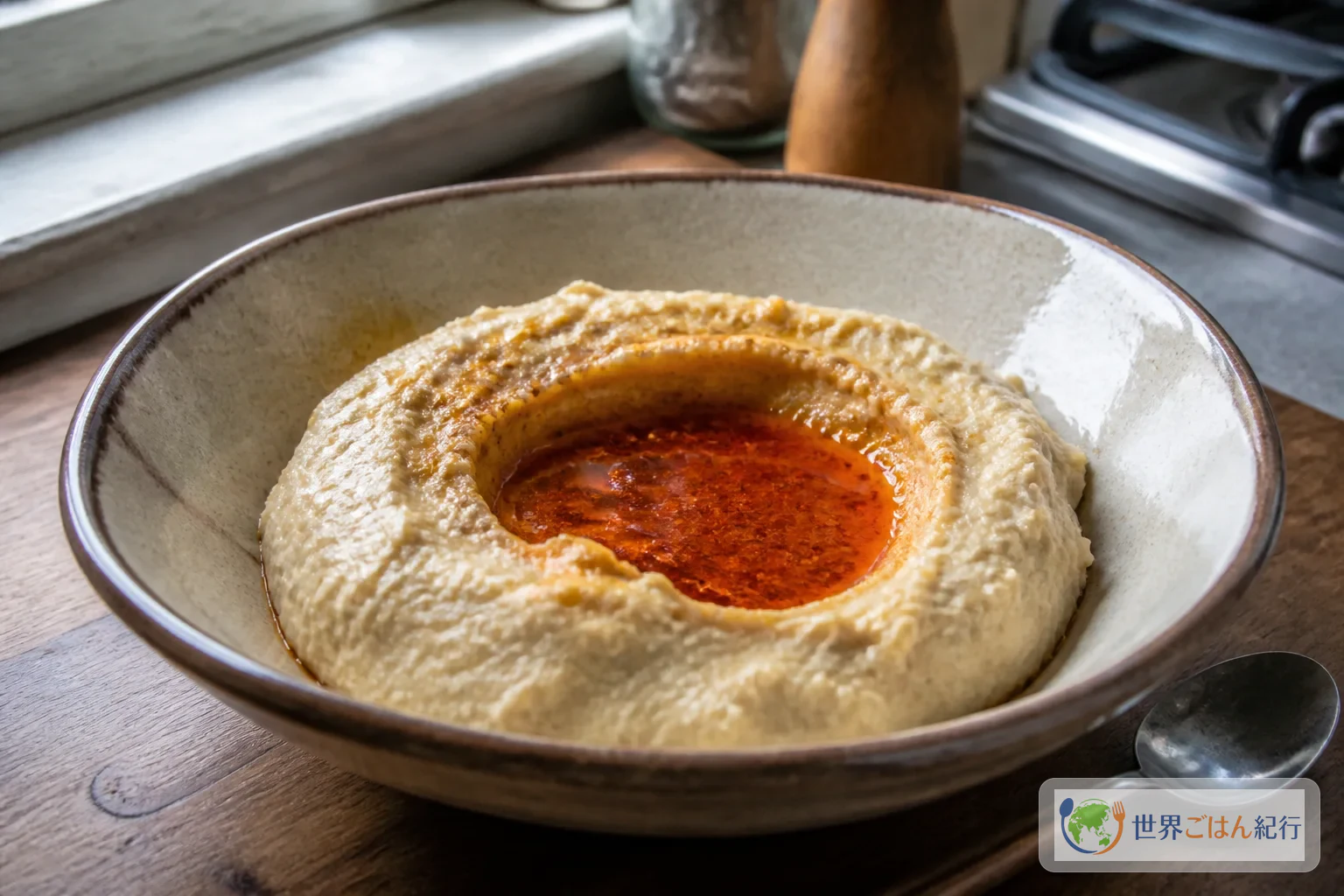
Turn off the heat, rest 2 minutes, and move the hot porridge to a large shallow dish. Gather it with the back of a wet spoon into a mound about 7 inches (18 cm) in diameter, and make a well 2.5 inches (6 cm) across and 1 inches (2 cm) deep in the center. Warm about 1.75 oz (50 g) of the strained spiced butter and 15 g berbere in a small pot over low heat for 1–2 minutes, turn off the heat when red oil floats on the surface, and pour it into the well. Take a spoonful from the outside, touch it to the red center, and eat it hot.