Ingredients and steps on one page. Print it, or choose “Save as PDF” in the print dialog.
Sekai Gohan
Shiro Wot: Ethiopian Chickpea Flour Stew
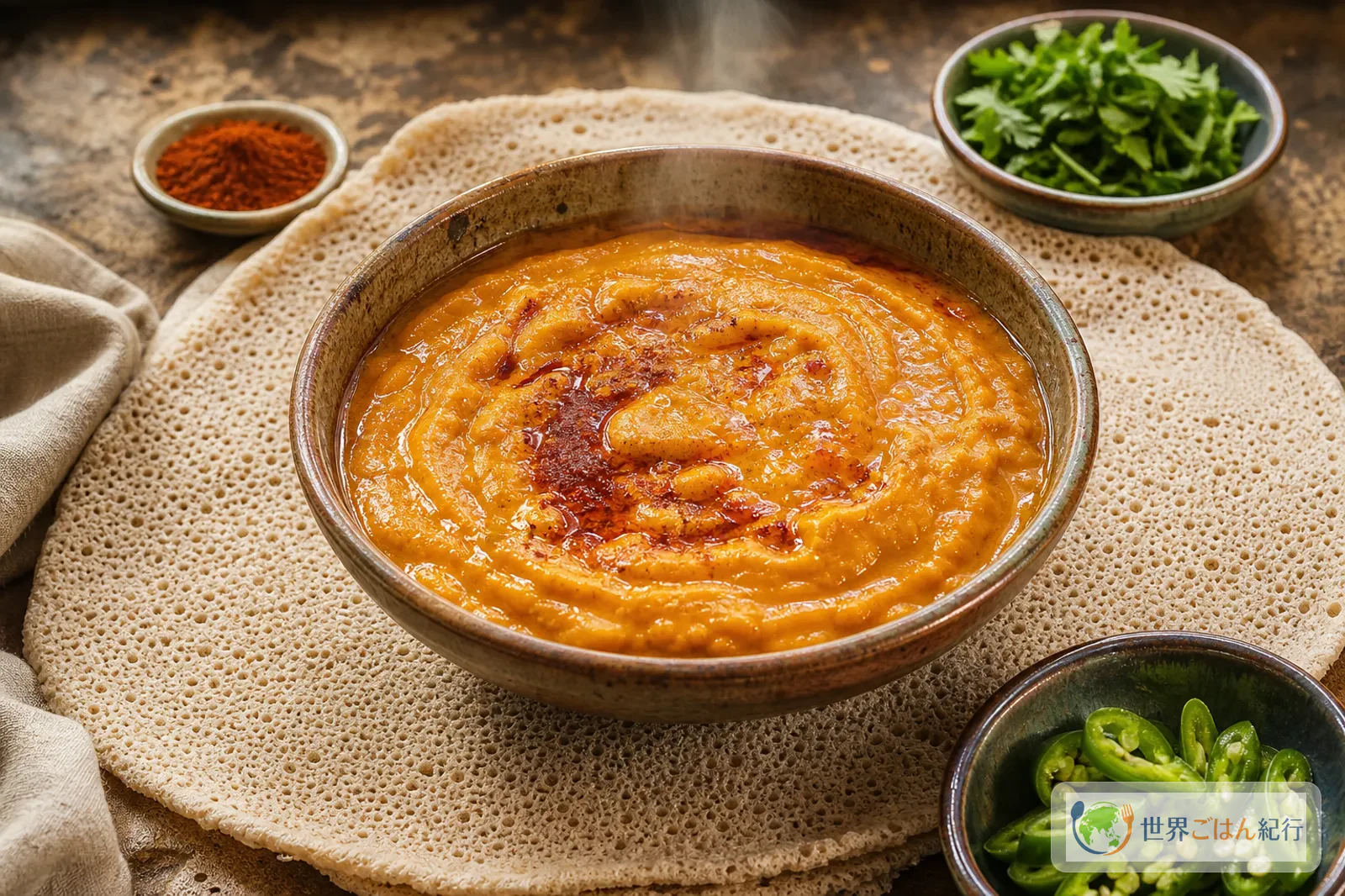
Ingredients
Shiro wot (serves 4)
| Ingredient | Amount | Substitutes & notes |
|---|---|---|
| Onions | 2, about 400 g | Finely chopped. The base of sweetness and body |
| Rice bran oil or canola oil | 4 tbsp | Plant oil for the fasting-day version. For more aroma, replace part of the oil with 2 tbsp niter kibbeh |
| Garlic | 3 cloves, about 18 g | Grated, or very finely minced |
| Ginger | 15 g | Grated |
| Tomato paste | 2 tbsp, about 36 g | Or 80 g diced tomatoes; in that case use 50 ml less water |
| Berbere | 1.5–2 tbsp | Start with 1 tbsp if your blend is hot |
| Paprika | 1 tsp | Helps color and sweetness. Optional if the berbere is red enough |
| Chickpea flour or besan | 120 g | Use the same amount of shiro powder if you have it. Sift coarse flour |
| Water | 800 ml | Divide into 300 ml for whisking the flour and 500 ml for the pot (about 3 1/3 cups total) |
| Salt | 1 tsp | Adjust at the end in 1/4 tsp increments |
| Lemon juice | 1 tsp | Brightens the flavor at the end. Leave out if you don't like acidity |
| Green chile | 1 | Halved lengthwise, optional. Not needed with hot berbere |
To serve alongside
| Ingredient | Amount | Substitutes & notes |
|---|---|---|
| Injera | 4–6 | Store-bought, homemade, or thin buckwheat crepes |
| Cooked greens | 7 oz (200 g) | Komatsuna, spinach or kale. Keep them light with salt and a little oil rather than sesame oil |
| Lemon or lime | 1/2 | A little, just before eating |
| Plain white rice | 4 bowls | A practical base on days without injera |
Steps
1Cook the onions until sweet
Finely chop the 2 onions, 0.25 inch (5 mm) or smaller. Warm 4 tbsp rice bran oil in a heavy pot over medium-low heat and add the onions with 1/4 tsp salt. Cook for 8–10 minutes, moving on when they're translucent and a thin golden film starts to form on the bottom of the pot. If they look like they might burn, add 1 tbsp water and scrape the browned film back in with a wooden spoon.
2Bloom the berbere in the oil
Add the 3 cloves garlic and 15 g ginger and cook over low heat for 1 minute. Once fragrant, add 2 tbsp tomato paste, 1.5 tbsp berbere and 1 tsp paprika and cook over low heat for 3 minutes. It's ready when red oil seeps out and the sour smell of the tomato mellows. Ground spices turn bitter if they burn, so add 2 tbsp water to bring the temperature down before it starts to smoke.
3Whisk the chickpea flour into water
Put 4 oz (120 g) chickpea flour in a bowl and whisk for 3 minutes while adding 1¼ cups (300 ml) water a little at a time. If you add all the water at once, clumps of flour stay at the bottom, so add it ½ cup (100 ml) at a time. When fine bubbles form on the surface and it looks like a smooth, lump-free purée, it's ready for the pot. Passing it through a sieve at this point makes it even smoother.
4Pour slowly into the red base
Add 2 cups (500 ml) water to the pot and heat over medium for 2–3 minutes until it bubbles gently. Lower the heat to low and pour in the chickpea flour mixture in a thin stream, stirring the bottom of the pot in wide strokes with a wooden spoon the whole time. In about 5 minutes the pale color disappears and the whole pot turns an even orange. When you feel it getting heavy at the bottom, stir by turning it over from the bottom to prevent scorching.
5Simmer until thick
Simmer over low heat for 12–15 minutes, scraping the bottom of the pot. You're looking for small bubbles on the surface and a consistency where a line drawn with the wooden spoon holds for about 1 second. Add 3/4 tsp salt and taste, adding more 1/4 tsp at a time if needed. Turn off the heat and stir in 1 tsp lemon juice; if using the green chile, put it on top at the end. If it gets too thick, add 3.5 tbsp (50 ml) boiling water and bring it back over low heat for 1 minute.