Ingredients and steps on one page. Print it, or choose “Save as PDF” in the print dialog.
Sekai Gohan
Caldo de Mancarra: Guinea-Bissau Chicken and Peanut Stew
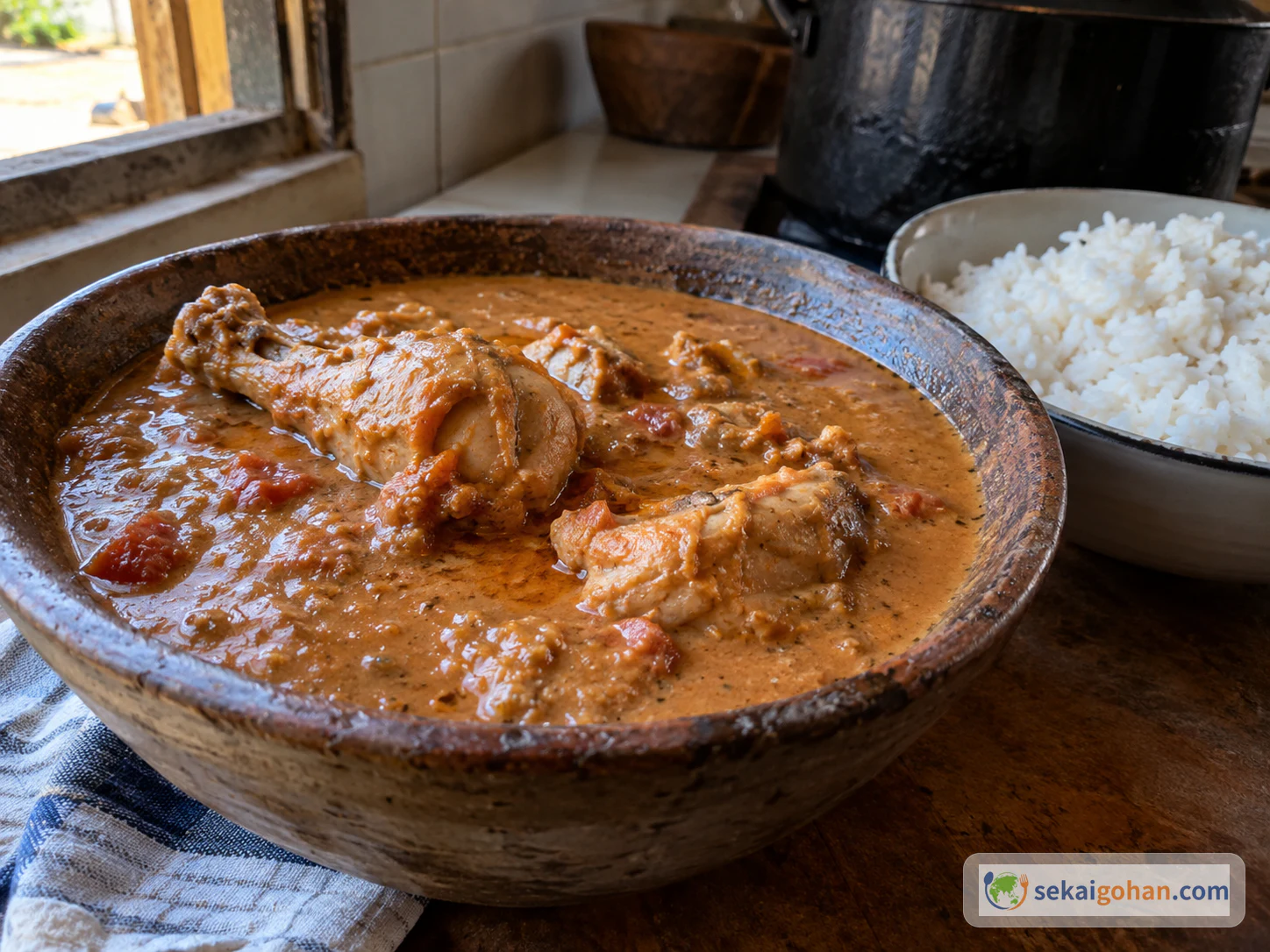
Ingredients
| Ingredient | Amount | Role |
|---|---|---|
| Chicken, skin-on and bone-in, cut into pieces | 1 whole chicken | The main ingredient and the depth of the broth. No weight is given |
| Peanuts (mancarra), unsalted, roasted, shelled and skinless | 9 oz (250g) | The core of the sauce. Use them roasted and skinless |
| Onion | 1 large | Seasons the chicken and flavors the stew. Sliced into rings |
| Tomatoes | 3 | Acidity and body in the peanut broth. Ripe, chopped |
| Water | 1 quarts (1L) | Prepared for thinning the paste and adjusting the stew. Use what you need; you may not use all of it |
| Lemon | 1 | Juiced into the pot off the heat |
| Salt | To taste | Seasons the chicken |
| Piripiri | To taste | Heat |
| Garlic | To taste | Seasons the chicken |
| Cooked white rice (optional) | As needed | Served separately |
Steps
1Season the chicken with salt, piripiri, onion and garlic
Cut the chicken into easy-to-eat pieces. Sprinkle with salt and piripiri. Add the onion rings and as much garlic as you like.
Keep the raw chicken and its juices away from cooked food and from anything that won't be cooked. Use a separate board and knife for the chicken.
2Crush the peanuts and mix with tomato into a paste
Crush the 9 oz (250g) of peanuts finely in a mortar or a food processor. Mix in the chopped tomatoes to make a paste.
3Thin the paste with hot water and strain it
Heat some of the prepared water. Stir a little of the hot water into the paste to loosen it. Pour the mixture through a fine sieve set over a bowl.
Set the strained liquid aside for step 4. Put the thicker paste left in the sieve in a separate bowl. It goes back into the pot in step 5.
Divide the 1 quarts (1L) of water between the steps as needed.
4Brown the chicken, then add the reserved liquid
Put the seasoned chicken, onion and garlic into a heavy pot. Cook over moderate heat, letting the chicken skin release its fat. No oil is needed.
If the pot starts to stick, add a small splash of the prepared water. A light surface color is enough; you don't need a deep brown crust.
After this first sauté, pour in the reserved peanut-tomato liquid and let the chicken simmer in it. Add it now, not after the chicken is partly cooked. The paste comes later.
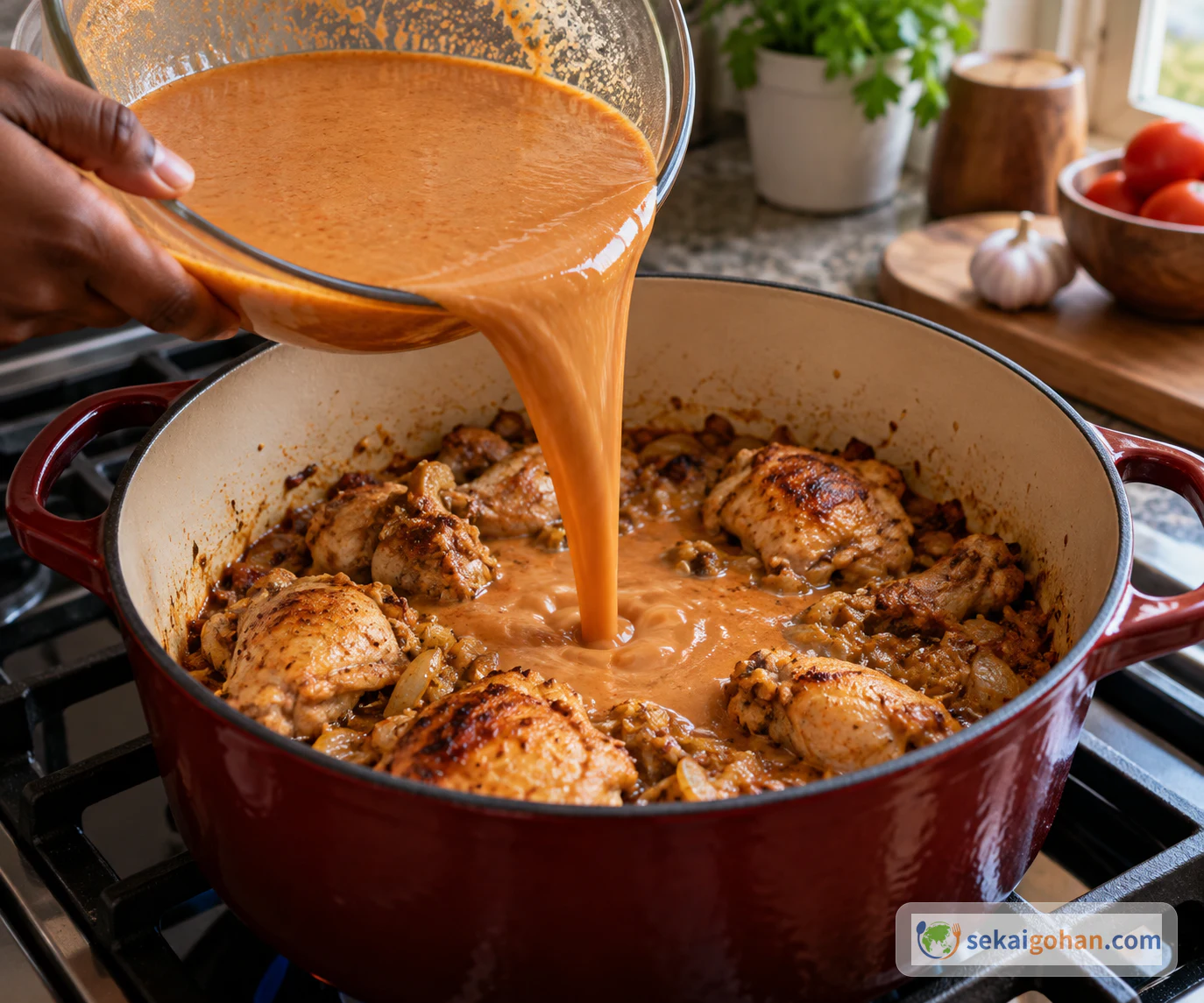
The strained liquid goes in after the sauté, before the chicken is partly cooked 5Add the paste when the chicken is partly cooked, and stir over low heat
When the chicken is about halfway cooked, add the paste you set aside in step 3. Turn the heat to low and keep stirring. The bottom can scorch easily once the paste is in. If the stew gets too thick or starts to catch, loosen it with a little of the prepared water at a time.
Before you turn off the heat, check the chicken with a thermometer. Insert it into the thickest part of the meat, not against the bone and not just in the broth. The center should reach 167°F (75°C), and it should stay at that temperature for at least 1 minute.
Color and "partly cooked" are not safety checks, and neither is a set number of minutes. Chicken size and the pot change the timing.
6Turn off the heat and add the lemon juice
Once the chicken is thoroughly cooked, turn off the heat. Squeeze in the juice of the lemon. All of the lemon goes into the pot, so there is no extra lemon for garnish.
Serve in bowls. Add cooked white rice on the side if you like.