Ingredients and steps on one page. Print it, or choose “Save as PDF” in the print dialog.
Sekai Gohan
Mokary au Coco: Malagasy Rice-Flour and Coconut Cakes
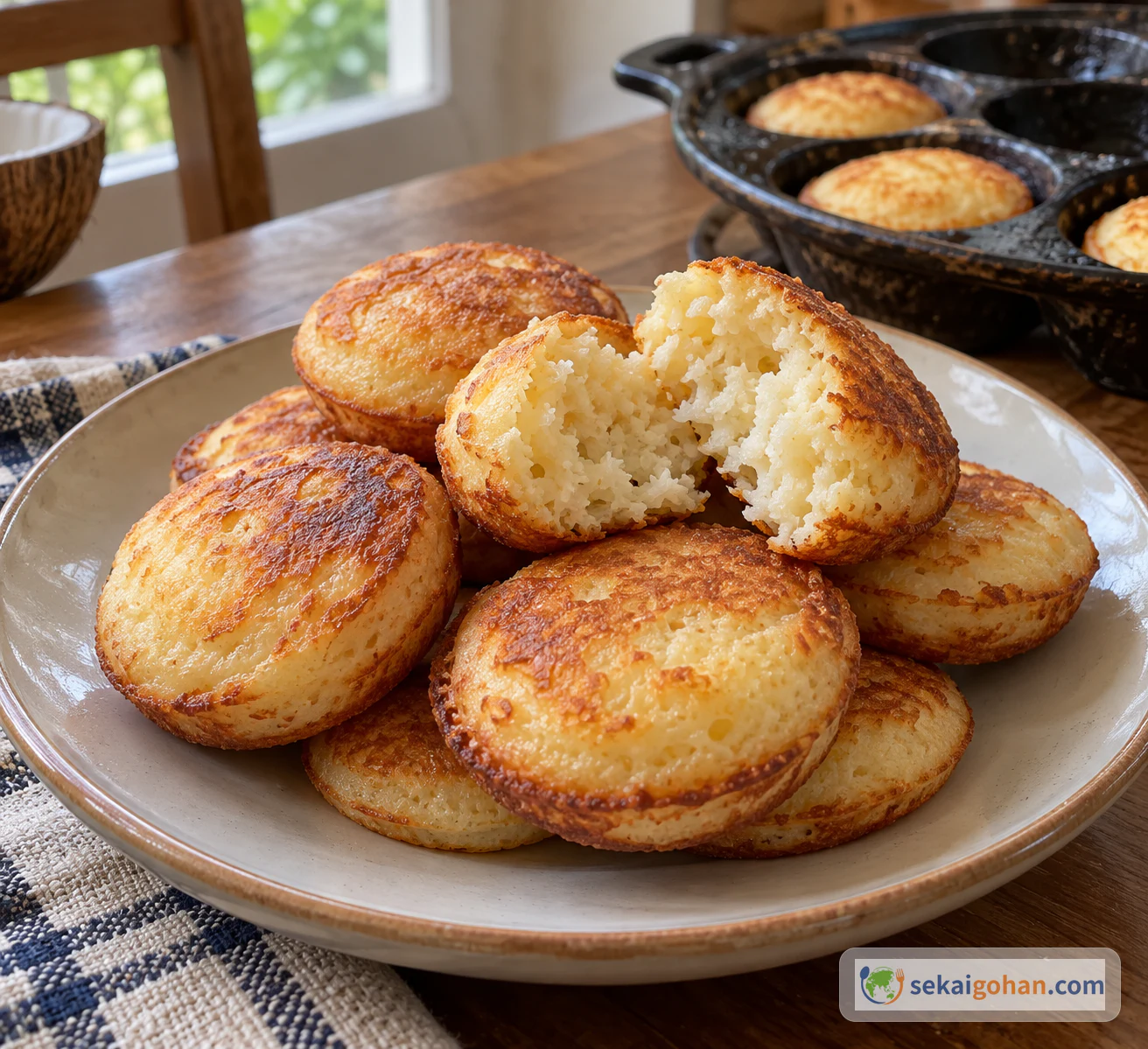
Ingredients
| Ingredient | Amount | Role |
|---|---|---|
| Rice flour (farine de riz) | 9 oz (250 g) | The main flour and the soft base of the cake |
| Wheat flour (farine de blé) | 7 oz (200 g) | Works with the rice flour to hold the cake together |
| Baker's yeast (levure boulangère) | about 4 g, half a 8 g sachet | Leavens and lightens the batter |
| Eggs (œufs) | 2 | Added after the rest |
| Coconut milk (lait de coco) | 1¾ cups (400 ml) | The main liquid and the coconut flavor |
| Butter (beurre) | 2.5 oz (70 g), melted | Added after the rest |
| Sugar (sucre) | 2.75 oz (80 g) | Gentle sweetness, added after the rest |
| Lukewarm water (eau) | 1 glass, about ¾ cup (200 ml), to have ready | 1 tablespoon for the yeast, the rest to loosen the batter. Stop at crêpe-batter consistency, even if some is left |
| Grated coconut (noix de coco râpée), optional | 5 tablespoons | Coconut texture |
| Oil | as needed | A thin coat for the pan, not mixed into the batter |
Steps
1Dissolve the yeast
Measure 1 tablespoon of the lukewarm water into a small cup, keeping the rest of the water for step 3. Stir in about 4 g yeast and leave for 10 minutes. If your yeast label gives a water temperature, follow it. Foam shows the yeast is active.
2Mix the first batter and let it rest
In a large bowl, combine 9 oz (250 g) rice flour, 7 oz (200 g) wheat flour, 1¾ cups (400 ml) coconut milk and the yeast mixture. Leave at room temperature for 1 hour 30 minutes. Don't extend the rest, even if the batter has risen only a little.
3Finish the batter
Add 2 eggs, 2.75 oz (80 g) sugar, 2.5 oz (70 g) melted butter and the grated coconut, if using. Mix, then add the remaining water a little at a time until the batter is like crêpe batter. Stop once you reach that consistency, even if water remains. If the batter is still thick after all the water has gone in, add a little more.
Don't taste the raw batter. Start cooking right away once the eggs are in.
4Oil the hot pan and half-fill the wells
Heat the pan and brush the wells lightly with oil, taking care because the metal is hot. Pour batter into each well until about half full, leaving room for it to rise. Pans and burners vary, so cook just a few cakes first to find the right heat.
5Turn when bubbles appear
Watch the surface of the cakes. When bubbles appear, carefully turn each cake with a small spatula.
6Brown the second side and serve warm
Cook the second side for a few minutes, until golden. Make sure the cakes are cooked through to the center. If the center is still raw, lower the heat and cook longer. Lift the cakes onto a plate and repeat with the remaining batter, oiling the wells as needed. Serve warm.