Ingredients and steps on one page. Print it, or choose “Save as PDF” in the print dialog.
Sekai Gohan
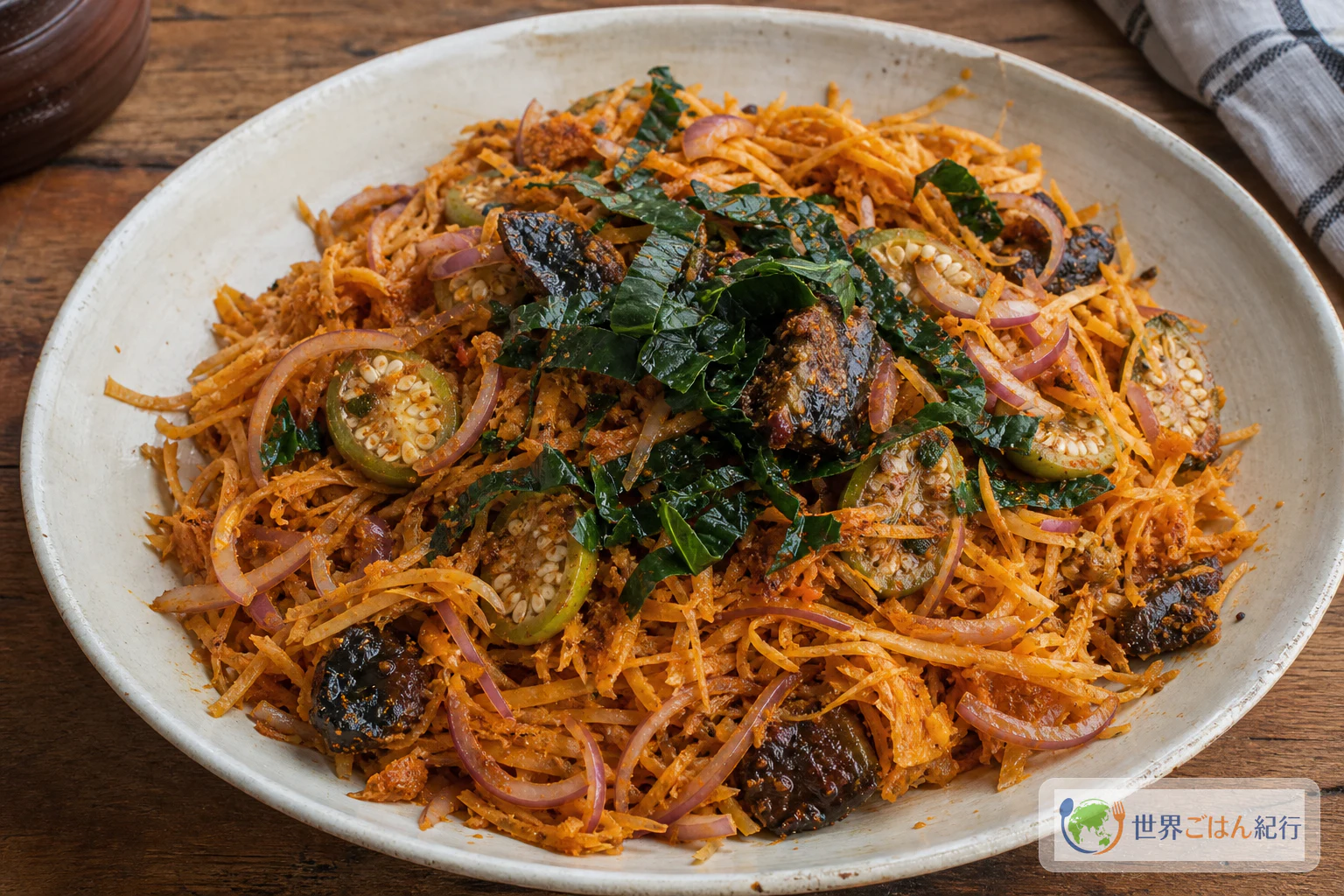
Abacha: Nigerian Cassava Salad with Red Palm Oil (African Salad)
Ingredients
The abacha
| Ingredient | Amount | Substitutes & notes |
|---|---|---|
| Dried abacha (shredded dried cassava) | 250 g | Look in African or international grocery stores for "abacha," "African Salad cassava," or "dried cassava flakes" |
| Hot water | 1.2 L | 80–90°C (175–195°F). If the water has just boiled, let it sit 30 seconds first |
| Salt | 1/2 tsp | Seasons the rehydrated cassava |
| Red palm oil | 80 ml | Epo. The key to the color and aroma |
| Baking soda (food grade) | 1/8 tsp | Dissolve in 1 tbsp water. A home substitute for kaun / potash |
| Water | 1 tbsp | Used to dissolve the baking soda |
| Ground crayfish | 12 g | Dried shrimp ground to a powder works |
| Smoked fish, flaked | 60 g | Smoked mackerel, grilled mackerel, or a little dried cod also works |
| Ugba (fermented oil bean) | 80 g | If you can't find it, soak sliced dried shiitake, squeeze dry, and add 1/2 tsp fish sauce for aroma |
| Red onion | 80 g | Sliced 2 mm thick. Regular onion also works |
| Chili or Scotch bonnet | 5–8 g | For a milder dish, use 1/4 tsp chili flakes |
| Efu (calabash nutmeg) | 1/4 tsp | Substitute a pinch of nutmeg |
| Utazi leaves | 10 g | Make up the bitterness and aroma with 8 g arugula plus 2 shiso leaves |
Garnish and table
| Ingredient | Amount | Substitutes & notes |
|---|---|---|
| Boiled eggs | 2 | Cut 1 egg into 4 wedges. Street-stall-style garnish |
| Red onion | 1.5 oz (40 g) | Sliced 0 inch (1 mm) thick. For finishing |
| Cucumber or small eggplant | 2.75 oz (80 g) | Stands in for garden egg. Sliced 0.125 inch (2–3 mm) thick |
| Roasted peanuts | 1.5 oz (40 g) | Leave whole. Serve on a separate plate if anyone avoids nuts |
| Hot sauce | 2 tsp | Heat is added at the table |
| Lime | 1/2 | Cut into 2 wedges. Cuts the richness of the oil |
Steps
1Rehydrate the dried abacha in hot water
12 min
Rinse 9 oz (250 g) dried abacha lightly in a sieve and put it in a bowl. Pour in 1.25 quarts (1.2 L) of 80–90°C water, loosen everything with chopsticks, and leave it for 8–10 minutes. No heat is used. A strand should bend when you press it with a finger and have no hard white core left, but it should not collapse when pushed. If it starts breaking into small pieces, it is over-soaked.
2Drain and season
5 min
Tip the rehydrated abacha into a sieve and let it drain for 5 minutes without pressing it down. If there are large clumps, loosen them with chopsticks into 5–6 cm lengths. Move it to a bowl and scatter 1/2 tsp salt over it. No heat is used. Go on once the salt is evenly worked in, the clumps have loosened and move freely, and water is no longer dripping from the sieve.
3Emulsify the red palm oil
3 min
Put ¼ cup (80 ml) red palm oil in a large bowl. Dissolve 1/8 tsp baking soda in 1 tbsp water and add it to the oil 1 tsp at a time, whisking. No heat is used, but if the oil is firm in cold weather, hold the base of the bowl in about 122°F (50°C) water for 10 seconds. Stop when the red oil turns cloudy orange and thickens to a slightly heavy sauce.
4Add the seafood and savory ingredients to the oil
4 min
Add 12 g ground crayfish, 2 oz (60 g) flaked smoked fish, 5–8 g chili, 1/4 tsp efu, and 2.75 oz (80 g) ugba to the emulsified oil. No heat is used. Stir from the bottom with a wooden spoon about 20 times. Check that the shrimp powder has blended into the oil and that no large bones or tough skin are left in the fish.
5Toss the abacha in three batches
5 min
Add the drained abacha to the bowl in 3 batches. After each batch, turn it from the bottom with a wooden spoon so no white streaks are left without red oil. No heat is used. Aim for an even pale-orange color; when you lift it with chopsticks, it should fall as loose thin strands, not as a clump.
6Warm gently over low heat
3 min
Move it to a frying pan or heavy pot and warm it over low heat for just 2–3 minutes. You are not stir-frying; turn it from the bottom until it reaches about 60–70°C. Turn off the heat when a little steam rises and the oil stays clinging to the cassava instead of pooling at the bottom. Letting it bubble makes the cassava break easily.
7Plate
5 min
Mound it in a dish and top with red onion sliced 0.125 inch (2 mm) thick, the utazi-substitute leaves, cucumber sliced 0.125 inch (2–3 mm) thick, boiled egg, and peanuts. No heat is used. Making the center higher and keeping the oil from running to the edge makes it easier to eat. Serve the hot sauce and lime on a separate plate so each person can adjust heat and acidity at the table.