Ingredients and steps on one page. Print it, or choose “Save as PDF” in the print dialog.
Sekai Gohan
Amala, Gbegiri and Ewedu: Yam Flour Amala with Bean and Jute Leaf Soups from South West Nigeria
Ingredients
| Ingredient | Amount | Role |
|---|---|---|
| Yam flour (elubo), for amala | 3 cups | The flour for the amala dough. Measured by volume. Don't convert to weight |
| Water, for amala | 5 cups, plus more as needed | Brought to a boil, with the flour worked into it. Add more only if the dough needs it |
| Peeled brown beans or black-eyed peas, for gbegiri | 1½ cups | The body of the gbegiri. Cook soft, then make smooth |
| Water, for cooking the beans | As needed | Keep the beans covered as they cook. Save the cooking liquid |
| Palm oil, for gbegiri | 2 tbsp | Color and richness for the bean soup |
| Ground crayfish powder, for gbegiri (optional) | 1 tsp | A seafood note. Contains crustacean |
| Salt, for gbegiri | To taste | Season at the end |
| Ewedu leaves (jute mallow, Corchorus olitorius), washed | 400 g | Edible leaves only. The weight doesn't include thick stems |
| Water, for cooking the leaves | As needed | Use only what the leaves need |
| Salt, for ewedu | To taste | Season at the end |
| Water, for washing the leaves | As needed | For rinsing the leaves before weighing and cooking |
| Pepper stew, already prepared (for serving) | 2 cups | Served on the side. Its recipe isn't part of this article |
Steps
1Gather the components and keep their waters separate
Have the peeled beans ready. If your beans still have skins, remove them first: soak the beans, then rub off the skins.
Pick the ewedu leaves off any thick stems and wash them in plenty of water. Weigh out 400 g of the washed, edible leaves. Measure the 3 cups yam flour and 5 cups water for the amala, and keep extra water nearby for adjusting. Keep the water for each component separate so the amala water doesn't get used up on the soups.
Wash your hands and boards between handling different ingredients to avoid cross-contamination.
2Cook the beans until completely soft
Put the 1½ cups peeled beans in a pot and add enough water to cover them. Bring to a boil, then simmer, adding water as needed to keep the beans covered. Keep the cooking liquid, because you'll use it later to adjust the gbegiri.
Cook until a bean collapses easily when pressed with a spoon against the side of the pot, with no firm center left. Dried beans should be cooked until fully soft. Don't stop early, whatever the clock says.
3Make the beans smooth and finish the gbegiri
Make the cooked beans smooth with an ijabe or a blender. If you use a blender, first let the hot beans and liquid cool to the temperature your blender allows. Work in small batches with the lid closed. Don't leave the pot sitting at room temperature for a long time while it cools. Add a little of the reserved cooking liquid only if the blender needs it to move. For a finer texture, push the purée through a sieve.
Return the purée to the pot over low heat. Stir in the 2 tbsp palm oil and the 1 tsp ground crayfish, if you're using it. Season with salt to taste. Cook until it is hot and smooth, and don't boil it down too far. If it becomes too thick, loosen it with a little of the bean cooking liquid at a time.
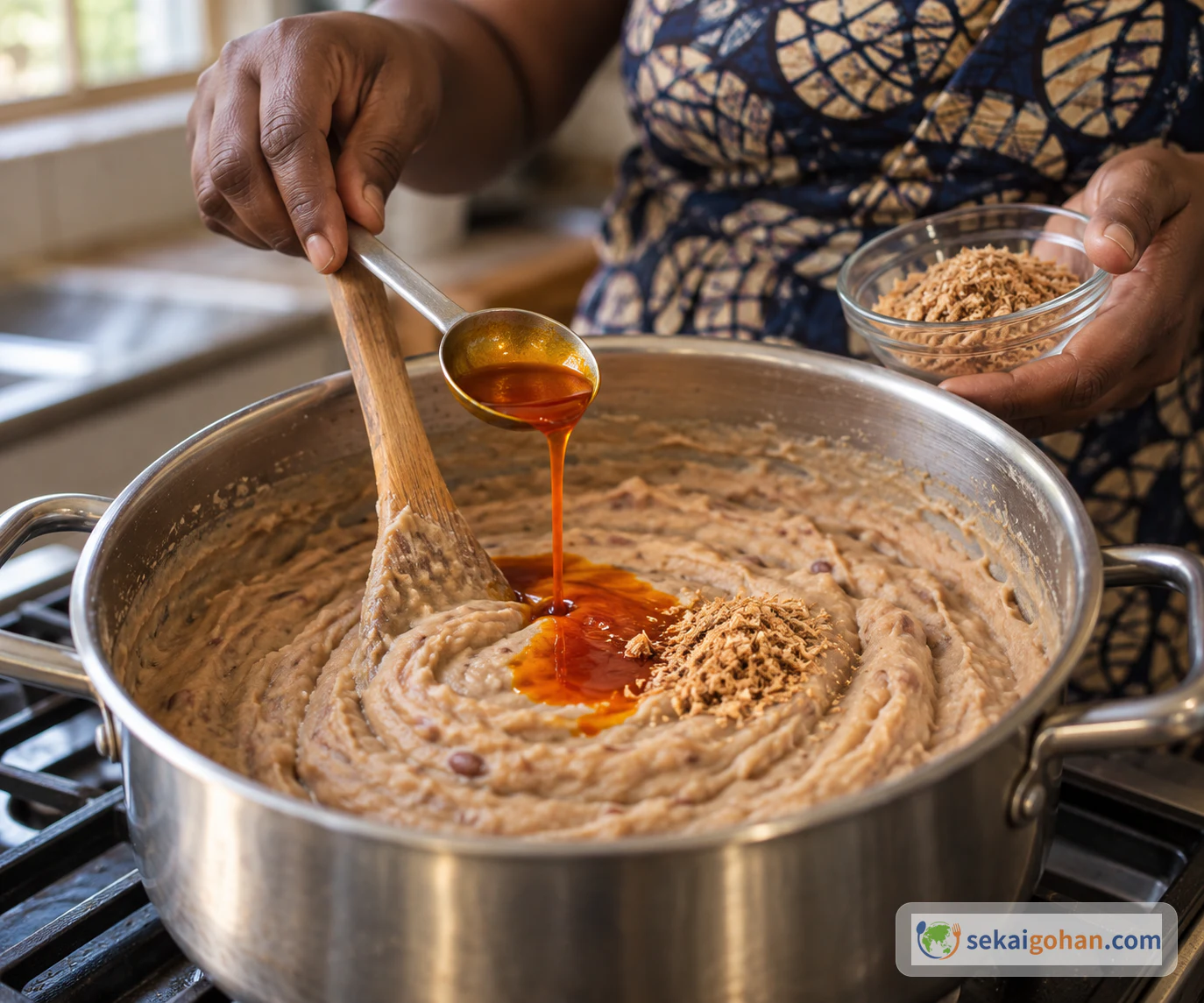
Only the palm oil, optional crayfish and salt go into the purée 4Cook the ewedu leaves and break them down finely
Bring water to a boil in a separate pot, using only what the leaves need. Too much water leaves the ewedu thin. Add the 14 oz (400 g) washed leaves.
Cook until the leaves are soft. Avoid cooking much longer, which can dull their color. Break the leaves down finely with an ijabe, or blend briefly. With a blender, cool the leaves to the appliance's allowed temperature first and keep the lid closed. Don't leave them standing at room temperature for long. Stop while the soup is fine and slippery, not a completely smooth purée. Season with salt to taste.
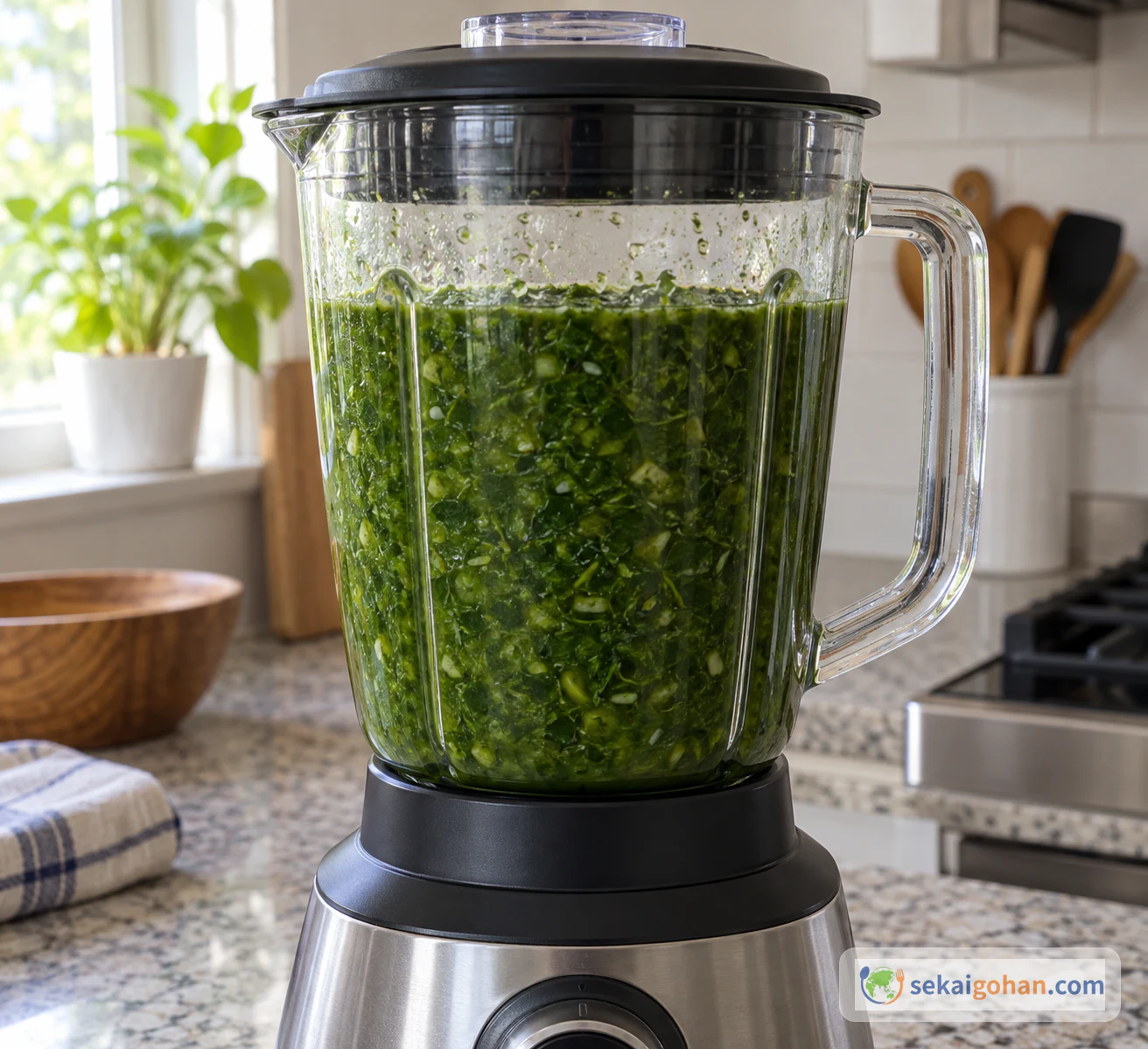
Blend briefly, stopping while the soup is fine and slippery 5Work the yam flour into boiling water for amala
Bring the 5 cups water to a boil in a heavy pot. Add the yam flour a little at a time, stirring hard with a wooden spatula as you go so lumps don't form. Keep working the dough firmly against the side of the pot.
If the dough is too stiff, add a little more hot water at a time and keep working it in. Some cooks add a little water, cover the pot and let the dough cook briefly before working it again. Continue until the amala is glossy, elastic and smooth, and no longer tastes of raw flour.
6Plate the three side by side
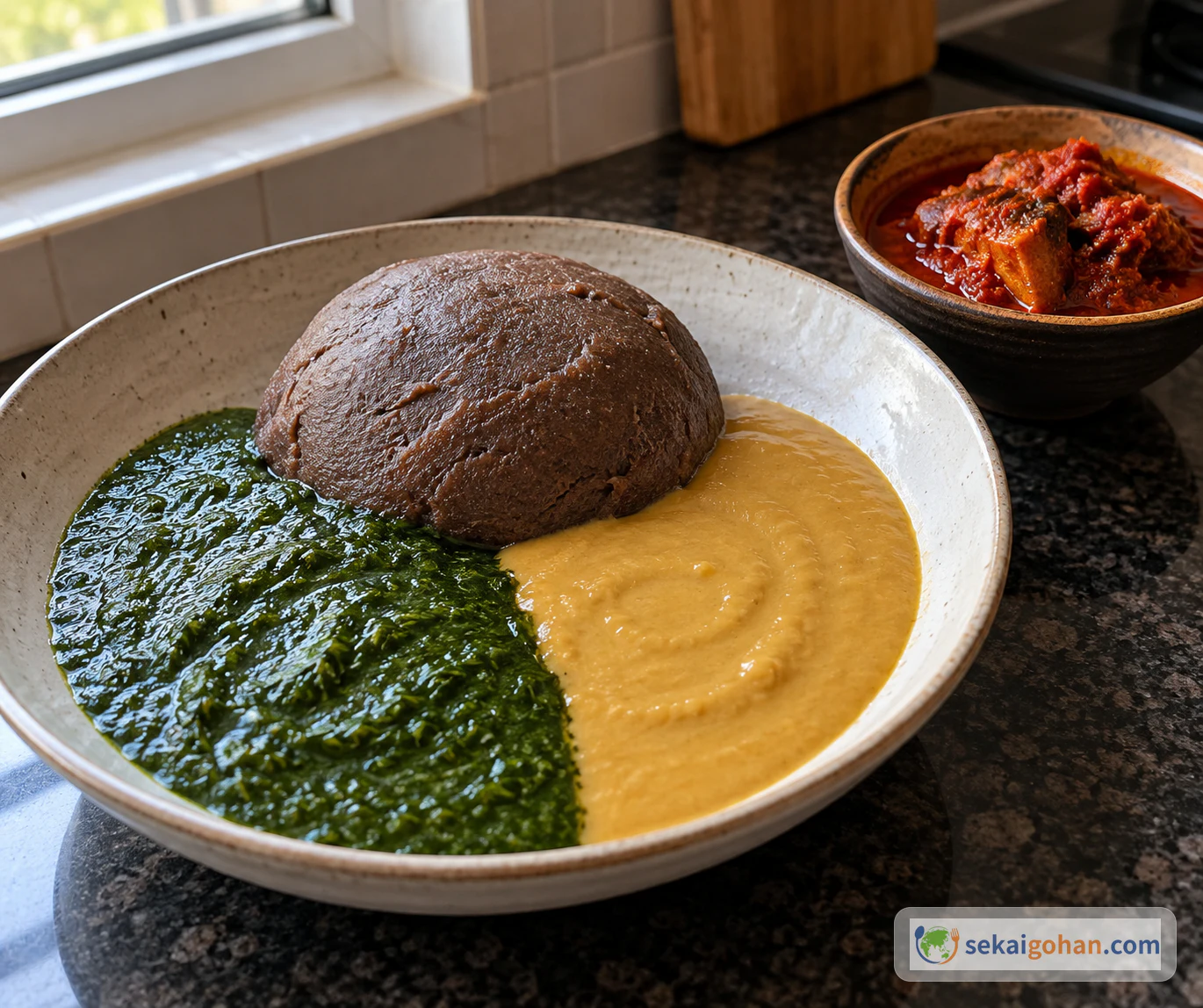
Make sure the gbegiri and ewedu are hot throughout before serving. Shape the amala into a compact mound in each bowl, then spoon the ewedu and the gbegiri alongside it as separate pools. If you're serving pepper stew, put the already-prepared stew in a small separate bowl.