Ingredients and steps on one page. Print it, or choose “Save as PDF” in the print dialog.
Sekai Gohan
Edikang Ikong: Nigerian Leafy Soup with Ugu and Waterleaf
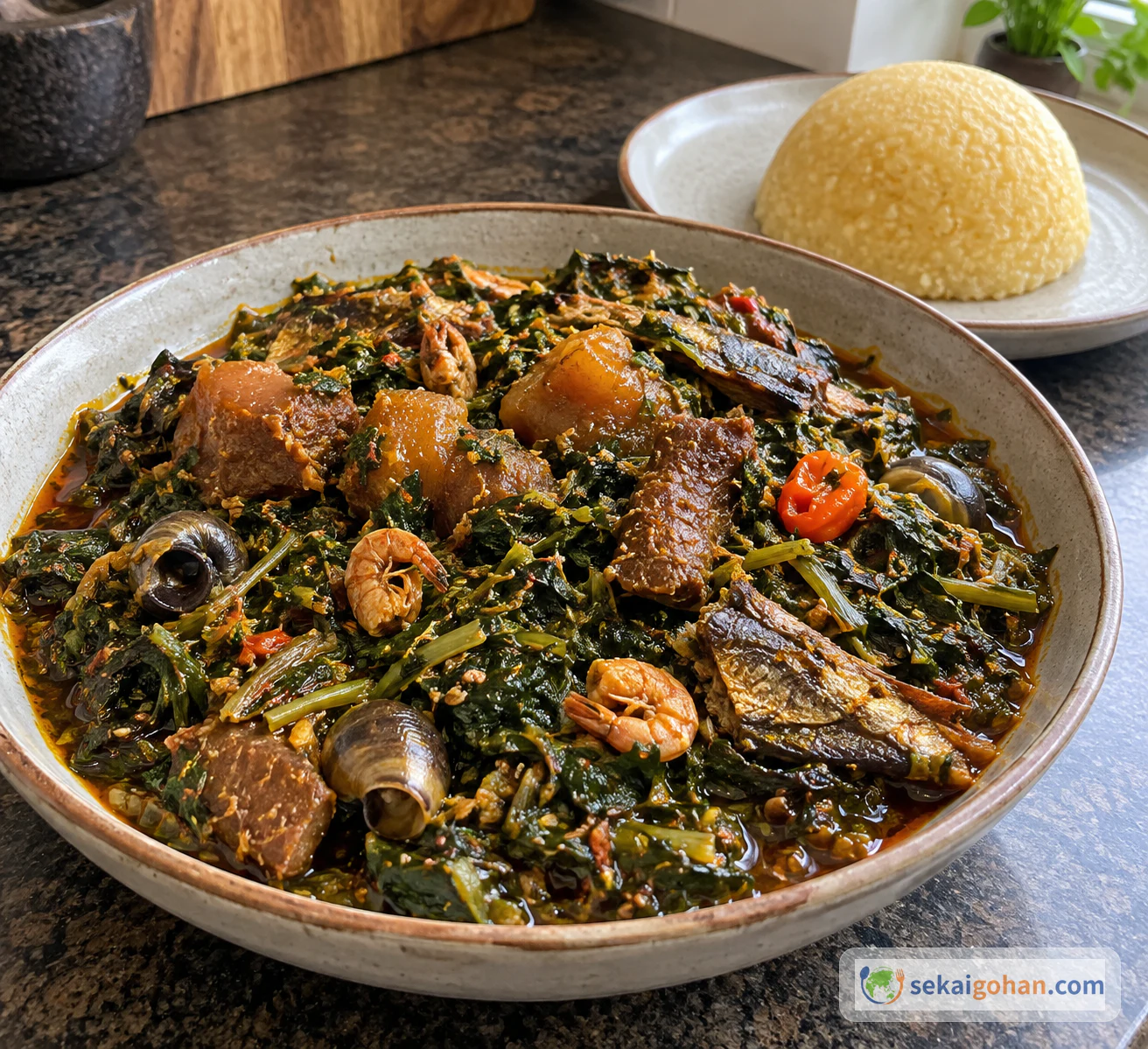
Ingredients
| Ingredient | Amount | Role |
|---|---|---|
| Assorted meats | 2 lb (about 907 g) | The meat base |
| Stockfish | 1 piece | Depth for the cooking liquid. Soak or desalt as the package says |
| Waterleaf (water leaves) or spinach, chopped | 10 oz (about 284 g) | The softer, watery leaf that goes in first |
| Ugu (fluted pumpkin leaves, ukong ubong) or kale, chopped | 16½ oz (about 468 g) | The main body of greens and their bite; goes in second |
| Raw shrimp, shelled and deveined | 1½ lb (about 680 g) | Seafood sweetness. Added raw near the end |
| Periwinkles (mfi / isam), shelled or unshelled | 1 lb (about 454 g) | Chew and a taste of the sea. Unshelled weight is not the same as edible weight |
| Habanero peppers, crushed | 2 | Fresh heat |
| Ground crayfish | 3 tbsp, divided (1 tbsp with the meat, the remaining 2 tbsp with the first leaves) | Dried crayfish for concentrated savoriness. A different ingredient from the raw shrimp |
| Dried fish | 2 large, divided in half | Smoky dried-fish aroma. Half with the first leaves, half with the shrimp |
| Dry pepper powder | 2 tsp, divided (1 tsp with the meat, the remaining 1 tsp to finish) | Dried chili heat, used in addition to the habaneros |
| Red palm oil | Roughly 1 cup | Color, richness and aroma. Not the same as palm kernel oil |
| Salt | To taste | For seasoning the meat and the final adjustment |
| Bouillon | Optional | For seasoning the meat |
| Water | Enough to just cover the meat | Only for cooking the meat and stockfish until tender |
Steps
1Prepare the two leaves separately
Rinse the leaves and drain them well. Chop the waterleaf (or spinach) and the ugu (or kale) separately and keep them in separate bowls. They go into the pot at different times, so do not combine them.
2Cook the meat and stockfish until tender and nearly dry
Put the assorted meats and stockfish in the pot. Add salt, bouillon if using, 1 tbsp of the ground crayfish and 1 tsp of the dry pepper powder. Pour in water just to cover the meat. Cook until the meat is tender and the stock has almost dried up.
The time depends on the cuts, the size of the pieces, the amount of water and your pot. Check the meat itself. Use a clean food thermometer to confirm the center reaches 75°C (167°F) and stays there for at least 1 minute. Tender meat alone is not enough. No leaves or palm oil go in yet.
3Add the waterleaf, half the dried fish, habaneros and remaining crayfish
Add the waterleaf (or spinach), half of the dried fish, the crushed habaneros and the remaining 2 tbsp of ground crayfish. Shake the pot to combine. Cook until most of the water that comes out of the leaves has dried up. The leaves release their own liquid, so do not add water.
4Add the ugu and red palm oil
Once most of the released liquid has gone, add the ugu (or kale) and the red palm oil and mix them in. Look for the leaves to be mixed through and the oil coating everything with a glossy, orange-red sheen. The pot should look leafy and glossy, not watery.
5Add the shrimp, remaining dried fish and periwinkles, then cook for 6 minutes
Before this stage, prepare the purchased food-grade periwinkles as the supplier directs. If you have no usable instructions, do not improvise a treatment. Add the raw shrimp, the other half of the dried fish and the prepared periwinkles. Cook for another 6 minutes. How long the shrimp take depends on the size of your batch and the shrimp, so check that they are cooked through before moving on. If they are not, keep cooking until they are.
6Finish with the remaining pepper and adjust
Stir in the remaining 1 tsp of dry pepper powder. Turn the soup from the bottom of the pot so the meat and seafood are spread through the leaves. If it is too thick, add a little more oil rather than water. Taste, and adjust with salt only after the dried fish, stockfish and any bouillon have had their say.