Ingredients and steps on one page. Print it, or choose “Save as PDF” in the print dialog.
Sekai Gohan
Egusi Soup: Nigerian Melon Seed Stew with Greens and Red Palm Oil
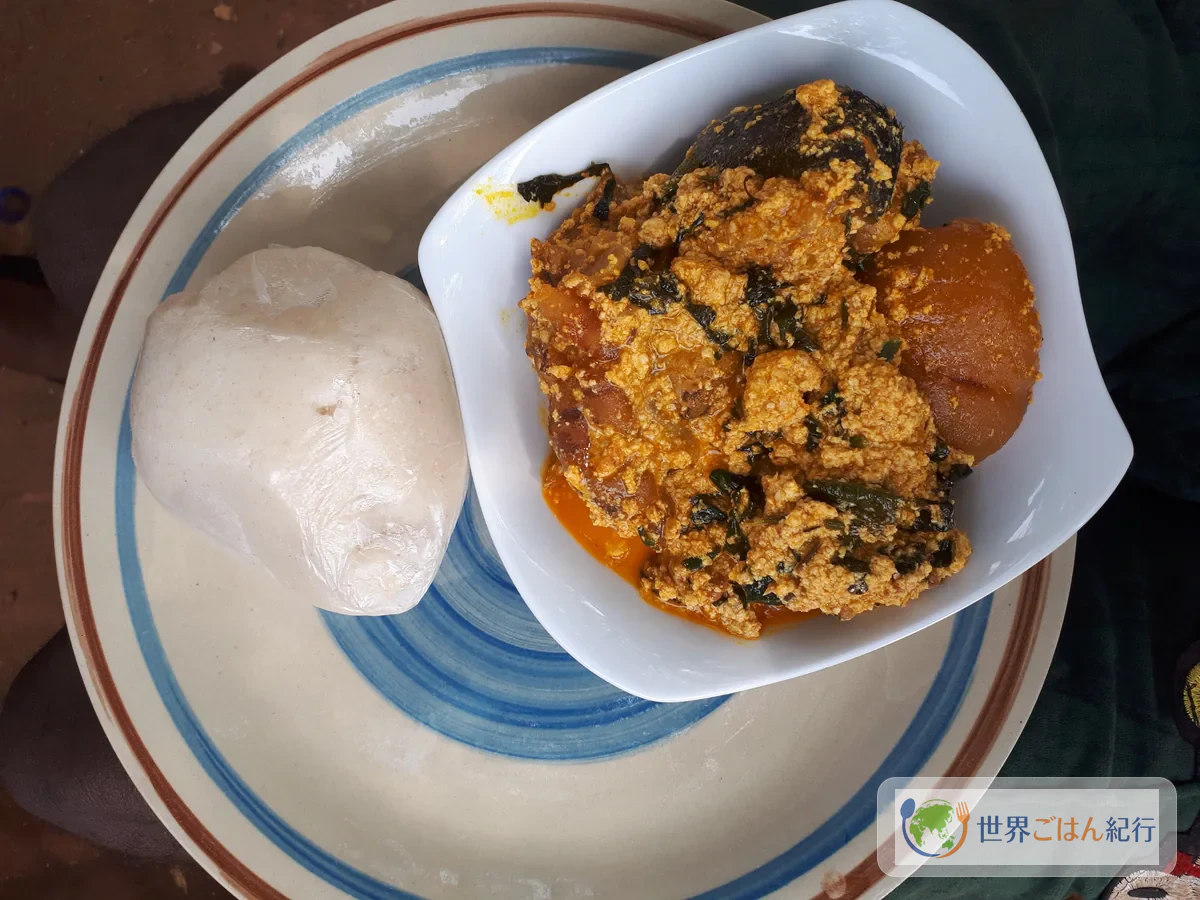
Ingredients
Meat, fish and stock
| Ingredient | Amount | Substitutes & notes |
|---|---|---|
| Beef shank or beef chuck | 12.5 oz (350 g) | 1 lb (450 g) chicken thigh also works. Beef shank is the easier stand-in for goat |
| Canned mackerel in water | 1 can (about 6.5 oz (190 g)) | A simple stand-in for local dried and smoked fish. Use with the liquid |
| Dried shrimp | 2 tbsp (about 12 g) | Substitute for ground crayfish. Closer in aroma when ground to powder |
| Onion | 1 (about 7 oz (200 g)) | Half for the meat's first simmer, half for the egusi paste |
| Ginger | 15 g | Grated. Removes the smell of the meat |
| Garlic | 2 cloves | Optional |
| Water or chicken stock | 3 cups (700 ml) | Includes the liquid from simmering the meat |
| Bay leaf | 1 | Optional. Takes away the smell of meat |
Egusi and vegetables
| Ingredient | Amount | Substitutes & notes |
|---|---|---|
| Egusi seeds or ground egusi | 6.5 oz (180 g) | Ground sesame is not a substitute. If you cannot find it, make a different dish with white pumpkin seed powder plus a little white sesame |
| Water | ½ cup (120 ml) | For the egusi paste. Too much weakens the lumps |
| Spinach | 1 bunch (about 7 oz (200 g)) | Komatsuna-type greens, water spinach or frozen spinach also work |
| Komatsuna or similar greens | 1/2 bunch (about 3.5 oz (100 g)) | Stands in for ugu and waterleaf. Using two kinds of greens gives texture |
| Tomato | 1 (about 5.5 oz (150 g)) | Optional. Too much weakens the egusi aroma |
| Red bell pepper | 1/2 (about 2.75 oz (80 g)) | Color and sweetness. A substitute that tones down the heat of local red chiles |
| Chile | 1/2–1 | A very small amount if habanero. 1/4 tsp chili flakes also works |
Oil and seasoning
| Ingredient | Amount | Substitutes & notes |
|---|---|---|
| Red palm oil | 4 tbsp | If substituting, 3 tbsp rice bran oil plus 1 tsp paprika. The flavor will be different |
| Bouillon or Maggi-type cube | 1 | If you avoid additives, adjust with salt and meat stock |
| Salt | 1–1.3 tsp | Adjust to the salt in the dried shrimp, canned mackerel and bouillon |
| Cayenne pepper | 1/4 tsp | Omit for less heat |
| Black pepper | A little | For seasoning the meat |
Steps
1Simmer the meat first
45–55 min
Cut 12.5 oz (350 g) beef shank into 1-inch (3 cm) cubes and rub with 1/3 tsp salt and a little black pepper. When the salt coats the surface of the meat evenly, put the meat, 1/2 onion thinly sliced, the ginger, the bay leaf and 2 cups (500 ml) water in a pot and bring to a boil over medium heat. Skim the scum and simmer on low for 35–45 minutes, until a bamboo skewer goes into the meat. Do not discard the cooking liquid; you will use it.
2Prepare the dried shrimp and egusi
8 min
Grind 2 tbsp dried shrimp to a coarse powder in a mill or mortar. If the 6.5 oz (180 g) egusi is whole seeds, grind them coarsely too. In a bowl, combine the egusi, 1/2 onion grated and ½ cup (120 ml) water to make a paste about as stiff as heavy miso. If it is runny, there is too much water.
3Bring out the aroma in red palm oil
6 min
Put 4 tbsp red palm oil in a separate heavy pot and warm it over medium-low heat for 1 minute. Do not heat it until it smokes. Add a little minced onion, garlic, chopped red bell pepper and chile, and fry for about 5 minutes. Move on when the oil is glossy red, the aroma has risen and the corners of the onion have softened.
4Combine the meat stock and the fish savoriness
8 min
Add the simmered meat and its cooking liquid to the pot. If it is short, add water or stock to make about 3 cups (700 ml) in total. Add the canned mackerel with its liquid, the dried shrimp powder and the bouillon. Cook for 8 minutes over medium heat, with the center of the pot gently bubbling, until the fish aroma blends with the red oil.
5Drop the egusi paste in small pieces
7 min
Lower the heat to low and drop the egusi paste into the pot in heaping teaspoonfuls. Do not touch it right after dropping. Leave it on low heat for about 5 minutes until the surface sets, the lumps hold together and they crumble when lifted, and only then move the bottom of the pot by gently shaking it. Stirring hard here makes the lumps disappear and leaves a powdery soup.
6Simmer on low heat to cook the egusi through
18–22 min
Set the lid slightly ajar and simmer on low heat for 18–22 minutes. Keep to small bubbles at the edge of the pot and do not let it boil hard enough to shake. If the bottom looks about to scorch partway through, turn it just once by inserting a wooden spoon along the bottom. It is cooked when the oil returns to the surface, the white of the egusi takes on a yellow tinge and the powdery smell has gone.
7Add the greens and finish
5–7 min
Add the roughly chopped spinach and komatsuna-type greens and simmer without a lid over medium-low heat for 5–7 minutes. Turn off the heat when the greens have wilted but not lost all their color. Adjust the salt and, if the heat is lacking, add a little cayenne. Serve warm with a staple.