Ingredients and steps on one page. Print it, or choose “Save as PDF” in the print dialog.
Sekai Gohan
Isombe: Rwanda's Cassava Leaf and Peanut Stew
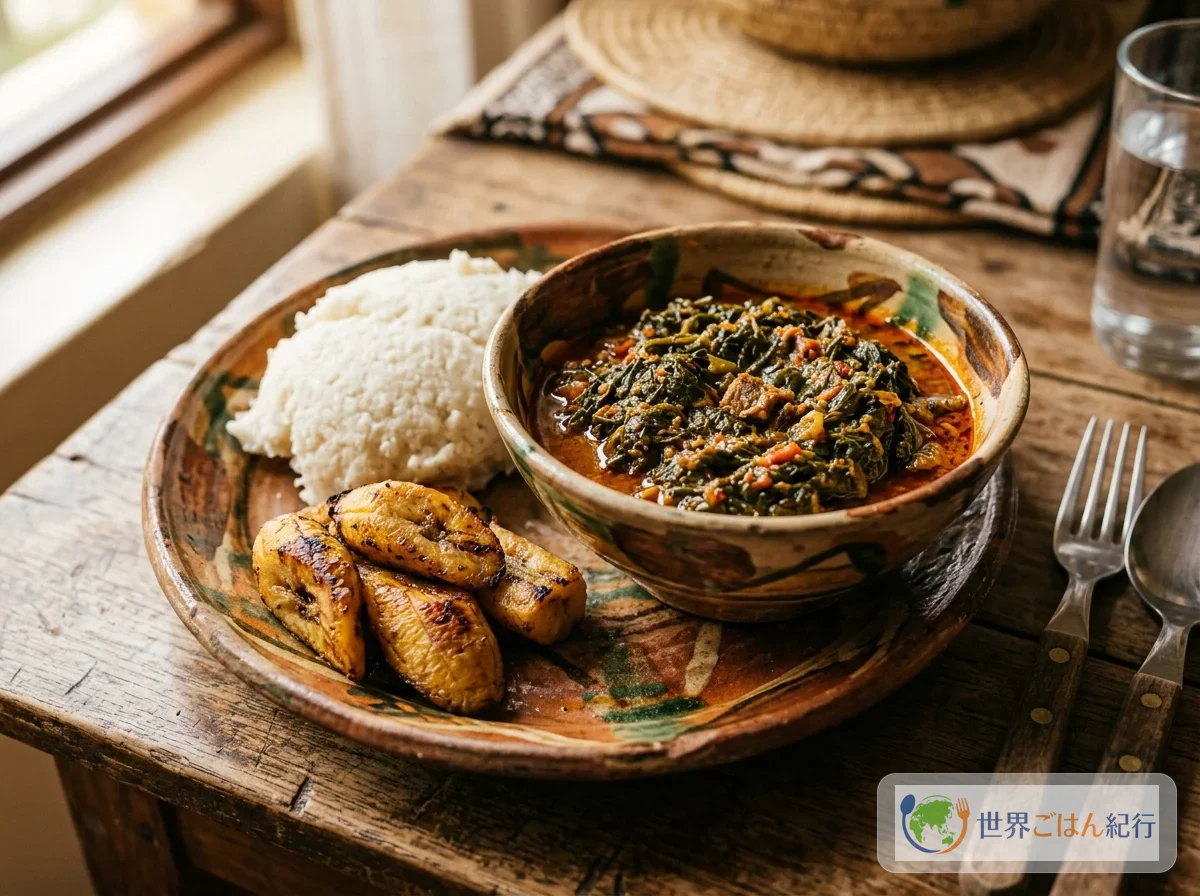
Ingredients
Main ingredients
| Ingredient | Amount | Substitutes & notes |
|---|---|---|
| Cassava leaves (frozen) | 1 lb (500 g) | Can be replaced with 14 oz (400 g) spinach + 3.5 oz (100 g) molokhia (jute leaves) to recreate the sticky texture |
| Peanut butter (unsweetened) | 4 oz (120 g) | Pure peanut paste. 2 oz (60 g) tahini + 2 oz (60 g) peanut flour also works |
| Dried shrimp | 25 g | 2 tbsp dried sakura shrimp can be used instead |
| Dried fish (stockfish) | 1.75 oz (50 g) | 1 oz (30 g) dried anchovies (niboshi) can be used instead |
| Onion | 1 (finely chopped) | — |
Frozen cassava leaves can be found at African or Asian grocery stores and online. If you can't find them, 14 oz (400 g) spinach + 3.5 oz (100 g) molokhia is the best combination. The sliminess of molokhia recreates the distinctive dense, sticky texture of cassava leaves. Spinach alone tends to turn watery, so the molokhia's viscosity is the key.
Seasonings and spices
| Ingredient | Amount | Substitutes & notes |
|---|---|---|
| Garlic | 3 cloves (minced) | — |
| Palm oil | 3 tbsp | Can be replaced with vegetable oil + 1 tsp paprika |
| Crayfish (dried shrimp powder) | 1 tbsp | Grind dried shrimp in a spice grinder. Bonito flake powder can be used instead |
| Maggi bouillon cube | 1 | Any bouillon cube works |
| Salt | 1 tsp | Adjust to taste |
| White pepper | 1/4 tsp | — |
| Pili pili (small hot chiles) | 1–2 | Dried red chiles work. Adjust the heat to taste |
To serve
| Ingredient | Amount | Notes |
|---|---|---|
| Cornmeal for ugali | 200 g | Polenta can be used instead |
| Bananas (ripe) | 2 | Grill and serve on the side |
| White rice | 2 rice-cooker cups | 1 rice-cooker cup = 180 ml (about 3/4 US cup), so 2 cups is about 300 g |
Raw cassava leaves contain cyanogenic compounds (linamarin). They must never be eaten raw. Cook frozen leaves thoroughly, following the package directions, and if you get fresh leaves, chop or pound them, then boil them carefully for at least 1 hour. Discard the cooking water. If you use spinach and molokhia instead, there is no such concern. In Rwanda, too, the practice of pounding the leaves and boiling them for a long time is passed down.
Steps
1Pre-boil the cassava leaves
20 min
This step determines both the safety and the texture of isombe. Thaw the frozen cassava leaves. Put 1.5 quarts (1.5 L) water in a pot and bring to a boil over high heat. Add the leaves and boil over high heat for 20 minutes. Discard the cooking water, rinse the leaves under cold water, drain in a colander and squeeze out the water firmly.
If you are using spinach and molokhia instead, boil them for 3 minutes in boiling water, transfer to cold water and squeeze dry.
2Turn the leaves into a paste
10 min
Put the boiled cassava leaves in a food processor or mortar and work them into a soft, coarse paste. It doesn't need to be completely smooth; ideally some leaf fibers remain and it drops off a wooden spoon in thick dollops. In Rwandan homes, the traditional method is to pound them with a wooden mortar and pestle, but about 10 seconds of pulsing in a food processor gives the same texture.
The coarseness of the paste mattersStop before it gets too smooth, while some fibers remain. In a food processor, that's about 3 pulses of 5–10 seconds each. If pounding by hand, stop while the leaves are still a little torn. A completely smooth purée turns watery when simmered.
3Prepare the peanut paste
5 min
Put 4 oz (120 g) peanut butter in a bowl and whisk it smooth while adding ¼ cup (80 ml) lukewarm water a little at a time. Mix carefully with a whisk so no lumps remain. It's ready when it becomes a silky, pourable cream.
4Prepare the dried shrimp and fish
5 min
Grind the dried shrimp into a coarse powder in a spice grinder or mortar. Soak the dried fish in lukewarm water for 10 minutes, then flake it into small pieces by hand. If using dried anchovies instead, remove the heads and guts, then grind them in a spice grinder.
5Sauté the onion and garlic in palm oil
10 min
Put 3 tbsp palm oil in a heavy pot and heat over medium for 2 minutes. When the palm oil has melted and spreads thinly across the pot, add the chopped onion and sauté for 5 minutes. When the onion turns translucent, add the garlic and sauté for 3 more minutes, until fragrant.
6Add the cassava leaf paste and simmer
15 min
Add the cassava leaf paste to the pot of sautéed onion and mix well until the onion and leaves are evenly combined. Add ¾ cup (200 ml) water, cover and simmer over medium-low heat for 10 minutes. Stir from the bottom with a wooden spoon every 5 minutes so it doesn't stick.
Now add the peanut paste and simmer for 5 more minutes. When the peanut oil separates and rises to the surface, it is cooked through.
7Add the dried shrimp and seasonings to finish
10 min
Add the dried shrimp powder, flaked dried fish, crayfish powder and Maggi cube, and mix well. If using pili pili, add it now. Cover and simmer over low heat for 10 minutes. Taste and adjust with salt and white pepper.
The ideal consistency is thick enough that the bottom of the pot shows for an instant when you drag a wooden spoon through it. If it's too wet, remove the lid and reduce over low heat.
8Make the ugali and serve
10 min
Bring 1¾ cups (400 ml) water to a boil in a pot and add the cornmeal a little at a time, stirring vigorously with a wooden spoon. Keep working it over low heat for 5 minutes, until there are no lumps, it comes away from the sides of the pot in one mass and the surface firms up. When it has come together, turn off the heat, shape it into a ball with wet hands and put it on a plate.
Spoon plenty of isombe over it and serve with grilled bananas. Eating it with your hands, Rwandan style, is the most delicious way.