Ingredients and steps on one page. Print it, or choose “Save as PDF” in the print dialog.
Sekai Gohan
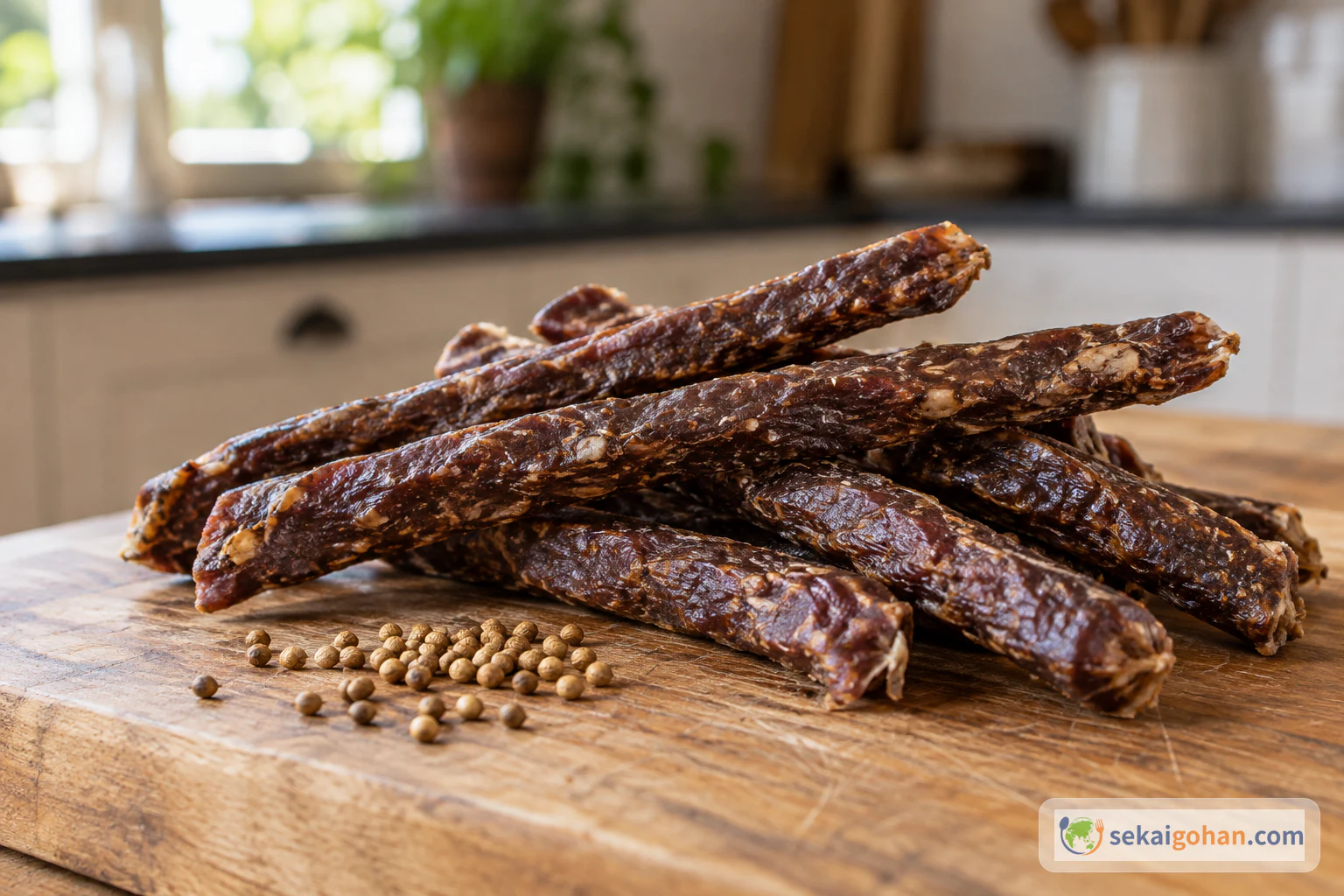
Droëwors: South African Coriander-Spiced Dried Beef Sausage
Ingredients
| Ingredient | Amount | Role |
|---|---|---|
| Lean beef, coarse ground (chuck, silverside trim or shin) | 3¾ lb (1,700 g) | The body and chew of the sausage |
| Beef fat, coarse ground | 10½ oz (300 g) | Small flecks of fat that keep each bite tender |
| Whole coriander seed, toasted and cracked | 1¾ oz (50 g) | The main aroma, citrusy and warm |
| Fine salt | 1½ oz (40 g) | Seasoning |
| Black pepper, cracked | 0.3 oz (8 g) | Heat behind the coriander |
| Ground nutmeg | 0.1 oz (3 g) | A sweet, round background note |
| Ground cloves | 0.07 oz (2 g) | A strong supporting spice; a little goes far |
| Brown vinegar | ¼ cup (60 ml) | Sharpness that lifts the beef |
| Natural sheep casings (about ⅞ inch / 22 mm) | 10–13 ft (3–4 m), rinsed and soaked | The thin skin that gives droëwors its shape |
Steps
1Toast and crack the coriander
Put the whole coriander seed in a dry skillet over medium heat and shake the pan often. Toast them lightly, until the kitchen smells of warm citrus. Tip them straight into the mortar so they stop cooking. Pound with short strokes until most seeds have split into halves and quarters, with no fine powder at the bottom.
2Soak the casings
Rinse the salt off the sheep casings under cold running water. Put them in a bowl of cold water to soak while you prepare the meat. Slip one open end over the tap and run water through each length to rinse the inside and find any holes. The casings are ready when they feel soft, supple and slippery, with no stiff dry patches.
3Chill and cut the meat and fat
Wash your hands, then use a board and knife kept for raw meat only. Cut the lean beef and the beef fat into cubes that fit your grinder's feed tube. Spread them on a metal tray, the beef and fat in separate piles, and put the tray in the freezer along with the grinder parts. Take them out when the cubes are very cold and firm at the edges, and the metal of the grinder is cold to the touch.
Cold decides the textureWarm fat smears instead of cutting, and smeared fat coats the meat in a greasy film. Grind straight from the freezer, work quickly, and return the tray to the cold if the cubes start to soften.
4Grind coarse
Fit the coarse plate and feed the beef and fat through the grinder together, alternating handfuls so they mix as they go. Catch the mince in the chilled bowl. Keep the speed steady and do not force the cubes down. Stop when you see distinct grains of red meat and white fat, not a smooth pink paste.
5Season and fold
Scatter the cracked coriander, salt, black pepper, nutmeg and cloves over the mince. Pour the brown vinegar over the top. Fold everything together with cold hands or a spatula, lifting from the bottom of the bowl, until the spice is spread evenly through the meat. Stop while the mixture still looks loose and coarse, with fat flecks you can pick out.
6Rest overnight and set up the stuffer
Cover the bowl tightly and put it in the refrigerator overnight. On the next day, wash and dry the stuffer and nozzle, and drain the casings. Slide one length of casing onto the nozzle, leaving a short tail hanging free. The mixture is ready to use when it is cold, firm and smells strongly of coriander.
7Stuff the casings loosely
Pack the cold mixture into the stuffer, pressing it down to push out air. Feed it into the casing with a steady hand, letting the casing slide off the nozzle as it fills, and keep it loosely filled. Prick any air bubbles with a clean needle. A good length is an even, thin rope that gives slightly when you press it, with no pale pockets of trapped air.
8Hang to dry
Cut the filled rope into long lengths and hang them over clean hooks or rods, each length apart from the next so air reaches all sides. Choose an airy spot out of the sun and away from warmth, with air moving around the sausages. Leave them until they have dried right through. They are done when they are dark reddish brown, wrinkled and firm along the whole length, and a stick bends and then snaps.
Before you dry raw sausageBuy fresh beef and fat from a butcher you trust and keep them cold from shop to grinder. Use clean hands, boards, bowls and tools kept apart from other food. Drying and vinegar do not kill bacteria, and traditionally dried raw sausage has made people ill; the snap tells you about texture only. Throw the batch away if it smells wrong, grows mould or turns an unexpected colour. People who are pregnant, elderly, very young or have weakened immunity should skip home-dried droëwors and choose the cooked sausage below.