Ingredients and steps on one page. Print it, or choose “Save as PDF” in the print dialog.
Sekai Gohan
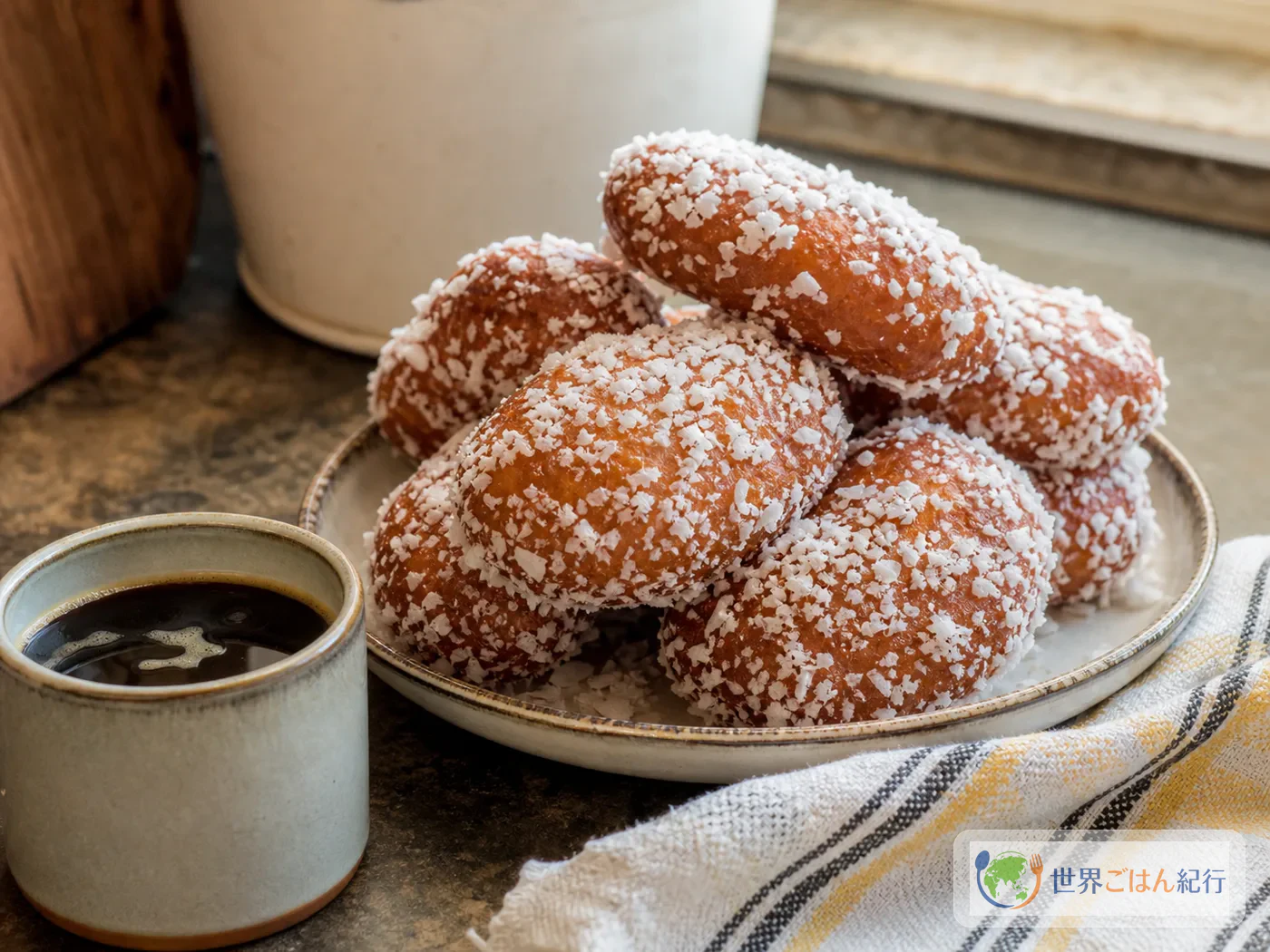
Koesisters: Cape Malay Spiced Fried Dough with Syrup and Coconut
Ingredients
Dough
| Ingredient | Amount | Substitutes & notes |
|---|---|---|
| Bread flour | 10.5 oz (300 g) | The base for chewiness |
| All-purpose flour | 3.5 oz (100 g) | You can also use 14 oz (400 g) of medium-strength flour for the whole amount |
| Instant dry yeast | 6 g | The kind that needs no proofing |
| Raw cane sugar | 1.25 oz (35 g) | White sugar also works |
| Salt | 5 g | Tightens the sweetness |
| Ground cinnamon | 1 tsp | |
| Ground cardamom | 1/2 tsp | If using whole pods, crack 3 and grind the seeds |
| Aniseed | 1/2 tsp | If you don't have it, 1/3 tsp fennel seed |
| Ground ginger | 1/2 tsp | |
| Grated orange zest | 2 tsp | Thinly shaved tangerine zest also works |
| Egg | 1 | |
| Milk | ¾ cup (180 ml) | Warmed to 35–38°C |
| Lukewarm water | ¼–½ cup (60–90 ml) | Adjust to the firmness of the dough |
| Unsalted butter | 25 g | Melted and cooled. 20 g neutral oil also works |
Syrup and finish
| Ingredient | Amount | Role |
|---|---|---|
| Water | 1½ cups (350 ml) | Base of the syrup |
| Sugar | 9 oz (260 g) | Sweetness and viscosity |
| Cinnamon stick | 1 | Carries aroma into the syrup |
| Whole cardamom | 3 pods | Lightly cracked |
| Orange peel | 2 strips | Shaved thin, avoiding the white pith |
| Lemon juice | 1 tsp | Tightens the sweetness and slows crystallizing |
| Frying oil | about 1 quarts (1 L) | At least 1.5 inches (4 cm) deep in the pot |
| Fine desiccated coconut | 4 oz (120 g) | Unsweetened |
Steps
1Mix the aromatic dry ingredients
10 min
In a large bowl, mix the bread flour, all-purpose flour, yeast, sugar, salt, cinnamon, cardamom, aniseed, and ginger evenly. Warm the milk in a small pot over low heat, or in a microwave at 600 W for 20 seconds at a time, to 35–38°C (up to 100°F), body temperature. If it is too hot the yeast weakens, so if it feels hot when you put a finger in, let it cool a little.
2Knead and let the dough rise
60 min
Add the egg, warmed milk, and melted butter, add the lukewarm water starting at ¼ cup (60 ml), and mix. When no dry flour remains, knead for 8 minutes. Aim for a dough slightly softer than an earlobe, sticky but coming away from your hands. Return it to the bowl, cover with a cloth, and rest it in a place at 28–30°C for 45–60 minutes. When it has about doubled and fine bubbles show on the surface, go on.
3Shape into small ovals
25 min
Turn the dough onto a lightly floured surface and divide it into 12 pieces of about 2 oz (55 g). Lightly oil your hands and shape each into an oval about 3 inches (7 cm) long, 1 inches (3 cm) wide, and 1 inches (2 cm) thick, then set them seam side down. If the surface dries, it tends to crack in the next step, so cover with a cloth and rest for 20 minutes until slightly puffier.
4Fry, holding the oil temperature
18 min
Pour frying oil about 1.5 inches (4 cm) deep into the pot and heat over medium to 350°F (170°C). Add 3–4 pieces at a time and fry about 2 min 30 sec to 3 min per side, 5–6 minutes in all. When the surface is a deep golden brown, no white dough is left in the center when you break one open, and it springs back plumply when pressed lightly, drain it.
5Dip in the warm syrup
10 min
In a separate pot, put the water, sugar, cinnamon stick, cracked cardamom, and orange peel over medium-low heat. When it simmers, cook 8 minutes and add the lemon juice. Lower the heat to hold it warm at 90–95°C (up to 203°F), and dip the fried dough in one piece at a time for 20–30 seconds. Lift it out when the surface turns glossy and a little syrup seeps out when pressed.
6Roll in coconut
8 min
Spread the desiccated coconut on a tray and roll the dough in it while still hot, straight from the syrup. The goal is a thin white coat of coconut over the whole surface, and a surface that is not overly sticky once on a plate. Pressing it on thickly makes it too sweet, so just lightly sprinkle on whatever fell off.
7Rest briefly and serve
20 min
Rest on a rack for 15–20 minutes so the excess syrup settles. Heap them in a mound in the center of a plate, leaving gaps between them, so the coconut is not crushed and the aroma does not get trapped. Rather than piping hot, when they feel just slightly warm to the touch the aroma of spice and citrus is easiest to notice, and they go very well with coffee or strong tea.