Ingredients and steps on one page. Print it, or choose “Save as PDF” in the print dialog.
Sekai Gohan
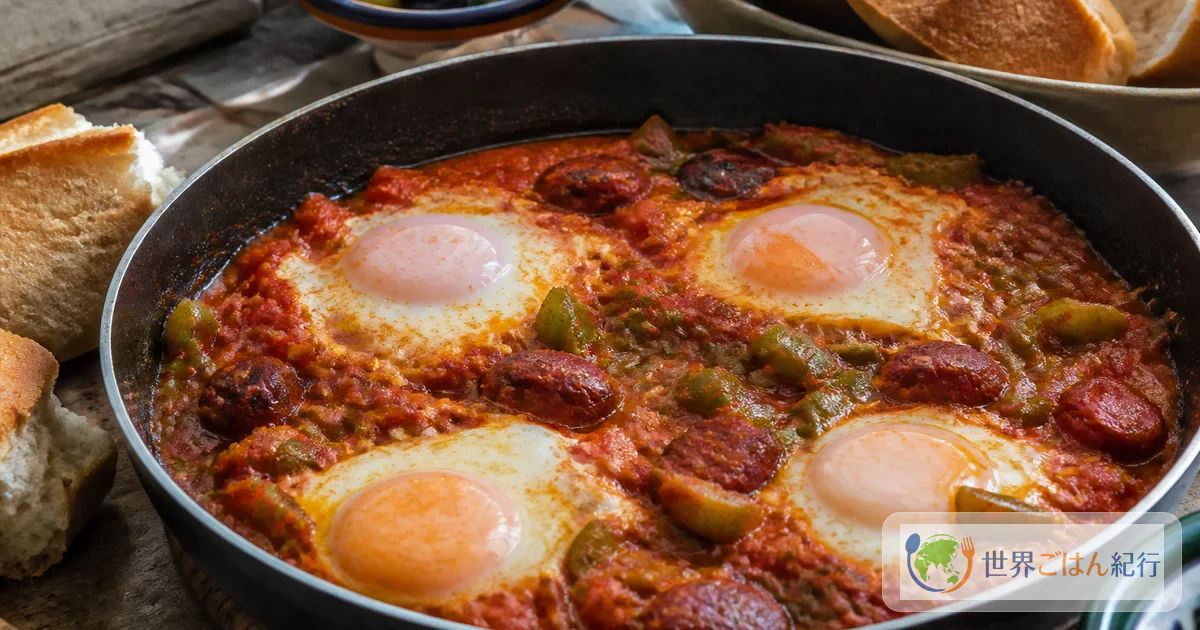
Ojja: Tunisian Harissa Eggs with Merguez
Ingredients
Red sauce
| Ingredient | Amount | Substitutes & notes |
|---|---|---|
| Olive oil | 2 tbsp (30 ml) | Start from 1.5 tbsp (20 ml) if the merguez gives a lot of fat |
| Onion | 1 (about 5.5 oz (150 g)) | Cut 0.25 inch (5 mm) wide |
| Green pepper | 2 (about 200–250 g) | Can be made with 1 red bell pepper, which adds sweetness |
| Canned diced tomatoes | 1 can (14 oz (400 g)) | With fresh tomatoes, use 4–5 ripe ones, peeled |
| Garlic | 2 cloves (about 10 g) | Fresh over tubes, to make the aroma the star |
| Harissa | 15 g | Add 5 g at a time depending on the heat |
| Tomato paste | 25 g | If using concentrated tomato, adjust starting from half the amount |
| Caraway seeds | 2 g | With cumin alone, the direction of aroma changes |
| Ground cumin | 2 g | If whole, crush lightly |
| Paprika | 2 g | Adds red aroma rather than heat |
| Water | ½ cup (150 ml) | You may rinse out the tomato can and use that |
| Salt | 2–3 g | Taste the merguez and harissa and adjust at the end |
| Black pepper | A little | Add to taste at the end |
Toppings and eggs
| Ingredient | Amount | Substitutes & notes |
|---|---|---|
| Merguez | 9–10.5 oz (250–300 g) | Lamb sausage or coarse-ground beef sausage can stand in |
| Eggs | 4 | If avoiding runny yolks, cook them through |
Finish and table
| Ingredient | Amount | Substitutes & notes |
|---|---|---|
| Flat-leaf parsley or parsley | 10 g | Chopped and scattered at the end |
| Bread | Enough for 4 | Baguette, flatbread, whole-wheat bread, anything that can scoop the sauce |
| Harissa for finishing | 1–4 tsp as you like | Serve separately for each family member |
Steps
1Cut up the vegetables and merguez
10 min
Slice the onion 0.25 inch (5 mm) wide, cut the pepper into 0.5 inches (1.5 cm) squares and mince the garlic finely. If the canned tomatoes are whole, put them in a bowl and crush them roughly, leaving some of the pieces. If the merguez is thick, cut it into 3–4 cm lengths; thin ones can be used as they are. Do not reuse the cutting board and knife that handled raw sausage for the vegetables, and wash them with detergent and running water after cooking.
Take the eggs out of the refrigerator and set them aside unbroken. Do not use any with cracked shells. If you measure the harissa, tomato paste, caraway and cumin into a small dish beforehand, the pan is less likely to scorch when the spices go in.
2Brown the merguez and take it out
5–7 min
Heat: medium.
Warm the skillet, add only 1 tsp (5 ml) olive oil and lay in the merguez. Cook 4–5 minutes, rolling it, until the surface has a reddish-brown color and the center of the cut is cooked through, then move it to a plate. If a lot of fat comes out, leave about 2 tbsp in the pan and remove the rest. If you can use a thermometer, aim for 160°F (71 °C) at the center of ground-meat sausage.
If you try to cook it fully here, the merguez dries out when simmered later. Stop at a toasty surface cooked through to the middle, and put it back in the sauce at the finishing stage. Do not throw away the juices on the plate; return them to the pan at the end.
3Open up the aroma of onion and spices
6–8 min
Heat: medium-low.
Add the onion to the same skillet and pour in the remaining 1.5 tbsp (25 ml) olive oil. If more than 2 tbsp fat came out of the merguez, reduce the olive oil to 1.5 tbsp (20 ml) and fry 4–5 minutes, picking up the browned bits from the bottom with a wooden spoon. When the onion is translucent and the edges are lightly colored, add the garlic, caraway seeds, cumin and paprika and stir for 30–40 seconds, until the spices are evenly blended into the oil. If it makes a dry sound and looks about to scorch, add 1 tsp (5 ml) oil at a time.
Letting spices touch the oil before any liquid goes in gives an aroma joined to the sausage fat. If the caraway turns black or smokes, turn off the heat and add 1 tbsp water. If bitterness has spread over the bottom, do not scrape the scorch; move just the onion to another pan.
4Add the tomato, pepper and harissa
5 min
Heat: medium to medium-low.
Add the tomato paste and harissa and fry 1 minute to make red oil. Add the pepper and stir for 30 seconds, then pour in the crushed tomatoes and ½ cup (150 ml) water. When it boils, lower to medium-low, run the wooden spoon once around the bottom of the pan and stir until the paste dissolves evenly.
Start with only 15 g harissa. Some products are salty, so keep the salt to 2 g here and decide the seasoning after the merguez goes back in. Even when the tomato is sharp, do not add sugar first; judge after the next reduction has cut down the moisture.
5Reduce the sauce and return the merguez
15–18 min
Heat: medium-low.
Set the lid slightly ajar and simmer 10–12 minutes. When the corners of the pepper remain, the trail from dragging a wooden spoon across the bottom stays visible for 2–3 seconds and the bubbles in the sauce have turned large and slow, return the merguez and the juices from the plate. Simmer 3–4 minutes more, taste the salt and add 1 g at a time if needed.
If you add the eggs while it is still watery, the whites spread and the flavor thins out. Conversely, reduced until the bottom shows, it scorches easily while the eggs wait. Lower the heat when a spoonful of sauce falls slowly and clings to the pepper.
6Drop in the eggs and set the whites
4–6 min
Heat: low.
Make 4 hollows in the sauce and break in the eggs one at a time. If a white spreads too far, separate it from its neighbor with the tip of a chopstick. Cover and wait 4 minutes, and turn off the heat when the surface of the whites has set white and the yolks shake when pressed. If you want the yolks set, keep the lid on and cook another 2–3 minutes.
Do not spread the eggs into the sauce; finish them keeping the shape of the hollows. If you want the yolk to coat everything, you can once, after the whites begin to set, stir broadly with a spoon, but the sauce looks thinner and the contrast of thickness for dipping bread is reduced. If you serve it to someone who needs to take care with raw egg safety, set both yolks and whites.
7Serve with parsley and bread
2 min
Heat: off, residual heat.
Scatter chopped parsley and add harissa 1 tsp at a time if needed. If you carry the skillet to the table as it is, cover the handle with a cloth and set out a trivet. While it rests for 2 minutes the whites settle and the yolks easily keep a flowing richness.
Do not cut the bread thick; tear it to a size that can scoop the sauce. Rather than dividing into single portions with a knife and fork, having each person take the egg in the center and the sauce at the edge with bread is the natural way to eat ojja. Hot oil and egg remain, so when serving children, cool it first and choose a part with less heat.