Ingredients and steps on one page. Print it, or choose “Save as PDF” in the print dialog.
Sekai Gohan
Buddha's Delight (Luóhàn Zhāi): Chinese Vegetarian Braise at Home
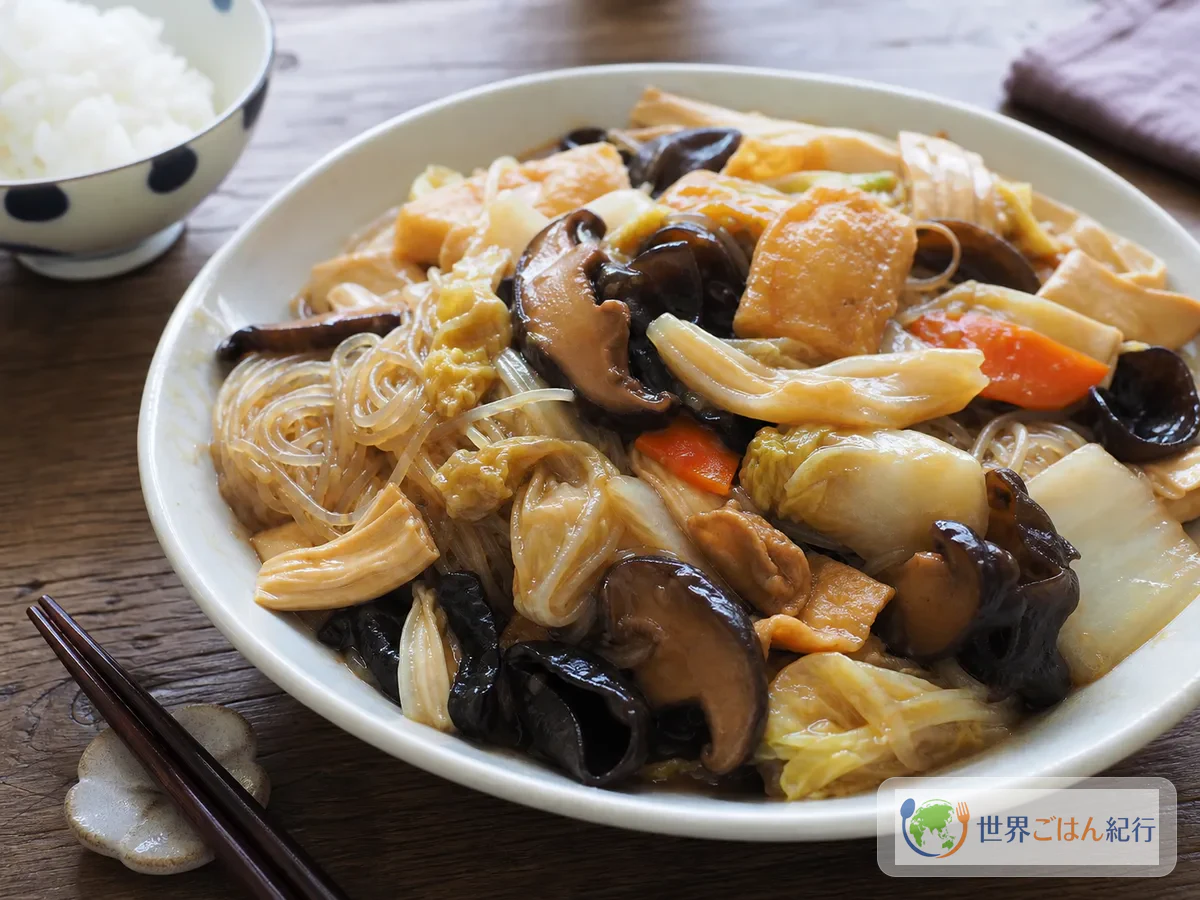
Ingredients
| Ingredient | Amount | Substitutes & notes |
|---|---|---|
| Dried shiitake | 6 (about 25 g) | Thick, meaty caps are ideal. Use 1¼ cups (300 ml) of the soaking liquid |
| Dried wood ear | 8 g | 2.75 oz (80 g) if using fresh wood ear. Cut off the hard base |
| Dried tofu skin (yuba) or fuzhu | 2 oz (60 g) | 4 oz (120 g) if using fresh tofu skin. 7 oz (200 g) of thick fried tofu also works as a home version |
| Dried golden needles (lily buds) | 15 g | If you can't find them, omit and add 2.75 oz (80 g) napa cabbage |
| Mung bean glass noodles | 1.75 oz (50 g) | Korean sweet potato noodles are thicker and send the texture in another direction |
| Napa cabbage | 1 lb (500 g) | Separate leaves and stems. Regular cabbage changes the sweetness |
| Carrot | 2.75 oz (80 g) | Half-moons 0.125 inch (3 mm) thick |
| Boiled bamboo shoots | 4 oz (120 g) | Cut 0.25 inch (5 mm) thick. Water-packed is fine |
| Fried tofu puffs or thin fried tofu | 5.5 oz (150 g) | If using thick fried tofu, 1 piece (about 7 oz/200 g), with the surface oil removed |
| Ginger | 15 g | Thin slices 0.125 inch (2 mm) thick |
| Red fermented tofu (nam yu) | 1.25 oz (35 g), about 3 pieces | 1 oz (30 g) if using white fermented tofu. Miso alone makes a different dish |
| Brine from the red fermented tofu jar | 2 tsp | Use the red liquid in the jar |
| Soy sauce | 2 tbsp | Regular dark soy sauce is easier to work with than light |
| Shaoxing wine | 1 tbsp | 1 tbsp of sake can stand in |
| Sugar | 1 tsp | Makes up for the sweetness of the napa cabbage |
| White pepper | 1/4 tsp | Adds aroma at the end |
| Sesame oil | 1 tbsp | For finishing. If the product is very strong, start with 2 tsp |
| Rice bran oil or mild-flavored sesame oil | 2 tbsp | Use an oil with little aroma |
| Potato starch or cornstarch | 1 tsp | Dissolve in 2 tsp water; use only if the glaze is lacking |
Steps
1Soak the dried goods
30 min
Put 6 dried shiitake, 8 g wood ear and 15 g golden needles into separate bowls and pour in enough hot water at about 122°F (50 °C) to cover. Soak 2 oz (60 g) dried tofu skin in warm water for 30 minutes, and soak 1.75 oz (50 g) mung bean glass noodles in water for only the last 10 minutes. The shiitake are ready when they are soft through to the center when pressed with a finger and the folds of the wood ear have opened; then squeeze out the water. Strain the shiitake soaking liquid through a tea strainer and measure out 1¼ cups (300 ml). Do not use dried goods whose soaking water has turned cloudy and sour-smelling.
2Dissolve the fermented tofu sauce
6 min
Cut off the stems of the soaked shiitake and slice the caps 0.25 inch (5 mm) wide. Remove the hard base of the wood ear and tear large pieces into bite-size. Cut the tofu skin into 2 inches (5 cm) lengths, the napa cabbage stems into 1.5 inches (4 cm) widths, the leaves into large rough pieces, and the carrot 0.125 inch (3 mm) thick. In a small bowl, mash 1.25 oz (35 g) red fermented tofu, 2 tsp of its brine, 2 tbsp soy sauce, 1 tbsp Shaoxing wine, 1 tsp sugar and 2 tbsp shiitake soaking liquid into a smooth reddish-brown sauce with no lumps left.
3Bring out the aroma of ginger and fermented tofu
2 min
Put 2 tbsp rice bran oil in a wok or deep skillet and heat over medium heat for 1 minute. Add 15 g ginger and stir-fry for 30 seconds; when the edges turn slightly translucent, add the fermented tofu sauce. Lower to medium-low and spread it with a wooden spatula for about 45 seconds, stopping when the oil has taken on the reddish-brown color and the fermented aroma rises. High heat will scorch it and bring out bitterness, so lower the heat immediately if the bottom of the pan starts to blacken.
4Stir-fry the dried goods first
4 min
Add the shiitake, wood ear, golden needles, bamboo shoots and carrot, and stir-fry over medium heat for 3 minutes. You are looking for the wood ear to give a light popping sound, a shine on the surface of the shiitake, and a faint tint of the sauce on the corners of the bamboo shoots. If the bottom of the pan is dry and the sauce looks about to set, add 1 tbsp of shiitake soaking liquid. Coating the dried goods with flavor here keeps the seasoning from fading when the napa cabbage releases water later.
5Add the napa cabbage, tofu skin and fried tofu
5 min
Add the napa cabbage stems, tofu skin and fried tofu first and turn them over medium heat for 2 minutes. When the cabbage stems have wilted slightly and a thin coat of sauce clings to the surface of the tofu skin, add the cabbage leaves and stir-fry for 2 more minutes. Even if the leaves heap over the rim of the pan, they sink to about half once heated. If you press them down forcefully the tofu skin tears, so scoop from the bottom as you turn.
6Simmer in the soaking liquid
10 min
Add 1¼ cups (280 ml) of the shiitake soaking liquid and bring to medium-low heat where small bubbles rise gently. Cover with the lid slightly ajar and simmer 8 minutes, until the napa cabbage stems turn translucent and the tofu skin and fried tofu swell from absorbing the liquid. Turn from the bottom of the pan just once along the way. A hard boil cooks off the liquid before the glass noodles go in and makes it too salty, so keep the bubbles rising quietly in the center of the pot.
7Finish with the glass noodles
4 min
Add the drained mung bean glass noodles and simmer over medium-low heat for 3 minutes. Turn off the heat when the noodles are clear and about 3 tbsp of liquid remains at the bottom of the pan. Drizzle in 1 tbsp sesame oil and 1/4 tsp white pepper, and only if the glaze is lacking, add half of the starch slurry and warm for 30 seconds. If you cook off all the liquid, the glass noodles stiffen after plating, so leave a little glossy margin.