Ingredients and steps on one page. Print it, or choose “Save as PDF” in the print dialog.
Sekai Gohan
Char Siu: Cantonese Honey-Glazed Barbecue Pork at Home
Ingredients
| Ingredient | Amount | Substitutes & notes |
|---|---|---|
| Pork shoulder, in one piece | 700 g | About 1½ lb. Pork butt also works. Pork belly is fattier, so shorten the roasting time |
| Soy sauce | 30 ml | Regular (dark-colored Japanese-style) soy sauce, 2 tbsp. Many contain soy and wheat |
| Dark soy sauce (lou chau) | 10 ml | 2 tsp. Omit if you don't have it; don't increase the regular soy sauce instead |
| Shaoxing wine | 30 ml | 2 tbsp. Or 30 ml cooking sake, or dry sherry |
| Sugar | 25 g | About 2 tbsp. Light brown or cane sugar also works |
| Honey | 25 g | About 1 tbsp. 25 g maltose makes the surface stickier |
| Salt | 6 g | About 1 tsp, to season the meat. Adjust to how salty your soy sauce is |
| Garlic | 1 clove, 6 g | Grated |
| Ginger | 10 g | Grated |
| Star anise | 1 | Use whole, not broken. For a milder aroma, use 1/2 |
| White pepper | 1 g | Ground. If using black pepper, 0.5 g |
| Sesame oil | 5 ml | 1 tsp, for aroma. To leave it out, use 5 ml rice bran or neutral oil |
| Water (for the glaze) | 15 ml | 1 tbsp. Used when reducing the reserved sauce |
| Water (for the pan) | 100 ml | Scant 1/2 cup. Keeps sugar from burning on the pan |
| Salt (for boiling the greens) | 1 g | Add to the cooking water |
| Cooked white rice | 600 g | For serving. The next day, use leftovers in fried rice or chow mein |
| Bok choy (qing geng cai) | 2 heads, 180 g | Or 200 g komatsuna or another tender green |
| Cucumber | 1/2, 50 g | Thinly sliced. A fresh side to balance the fat |
Steps
1Cut the meat into strips and mix the sauce
10 min
Cut the 1.5 lb (700 g) pork shoulder into 4 strips about 2–2.5 inches (5–6 cm) wide, 1 inch (3 cm) thick and 5–6 inches (12–15 cm) long. Trim only the thick fat on the surface, leaving about 0.25 inch (5 mm). Note which face shows the long grain of the meat; when it's done, you'll slice across that grain. In a bowl, mix 2 tbsp (30 ml) soy sauce, 2 tsp (10 ml) dark soy sauce, 2 tbsp (30 ml) Shaoxing wine, 25 g sugar, 25 g honey, 6 g salt, the grated garlic and ginger, white pepper, sesame oil and star anise. Once the sugar and salt have dissolved and the sauce would coat the meat evenly, transfer just ¼ cup (60 ml) to a separate container before it touches the meat.
2Marinate in the refrigerator
8–12 hr
Put the remaining sauce in a zip-top bag, add the meat and massage the sauce all over through the bag. Press out the air and marinate in the refrigerator, at around 4°C (39°F), for 8 to 12 hours. Turn the bag over once partway through so the top and bottom color evenly. The meat is ready to roast when the surface is an even red-brown and the sauce clings thinly rather than running off like water. Don't marinate at room temperature; keep it refrigerated until just before roasting.
3Reduce the glaze and set up the pan
8 min
Add 15 ml water to the reserved 60 ml of sauce and set it over medium heat in a small saucepan. When it boils, turn the heat to low and simmer for 3 minutes, until it's thick enough to leave a thin line when dripped from a spoon. Turn off the heat and divide the reduced glaze between 2 small dishes. One (about 1/3) is for brushing on the raw meat in step 4; the other is for steps 5 and 6. Don't reuse the brush or dish used on the raw meat in any later step. Preheat the oven to 180°C (350°F), pour 100 ml water into a deep roasting pan and set the rack over it. The water isn't for steaming the meat; it keeps sugar that drips onto the pan from burning and smoking.
4Roast at 350°F (180°C) to cook the meat through
20–25 min
Lightly wipe the marinade off the meat, arrange it on the rack and brush the surface thinly with the glaze set aside for the raw meat. Roast at 180°C (350°F) for 12 minutes, turn with tongs and roast another 8 to 13 minutes. When the surface is dry and red-brown and the edges of the fat start to turn translucent, it's ready for layers of sugar. If you roast it for a long time with a thick coat of glaze, the surface turns black before the meat is cooked, so brush it on thinly at first.
5Glaze at 400°F (200°C) and set the color
12–17 min
From the remaining glaze, spoon out 2 tsp and set it aside for brushing on in step 6. Take the meat out and brush both sides with glaze, using a clean brush. Raise the oven to 200°C (400°F), roast for 8 minutes, brush thinly once more and roast another 3 to 7 minutes. It's time to stop when small bubbles appear on the glaze and the corners turn red-brown. Check the internal temperature at the thickest part, and once it reaches 75°C (167°F), keep roasting for at least 1 more minute before taking it out. For safe pork, the center should reach 75°C for at least 1 minute, or 63°C for at least 30 minutes. If the surface looks like it's about to blacken, tent loosely with foil and drop the oven back to 180°C (350°F).
6Rest, then slice across the grain
10 min
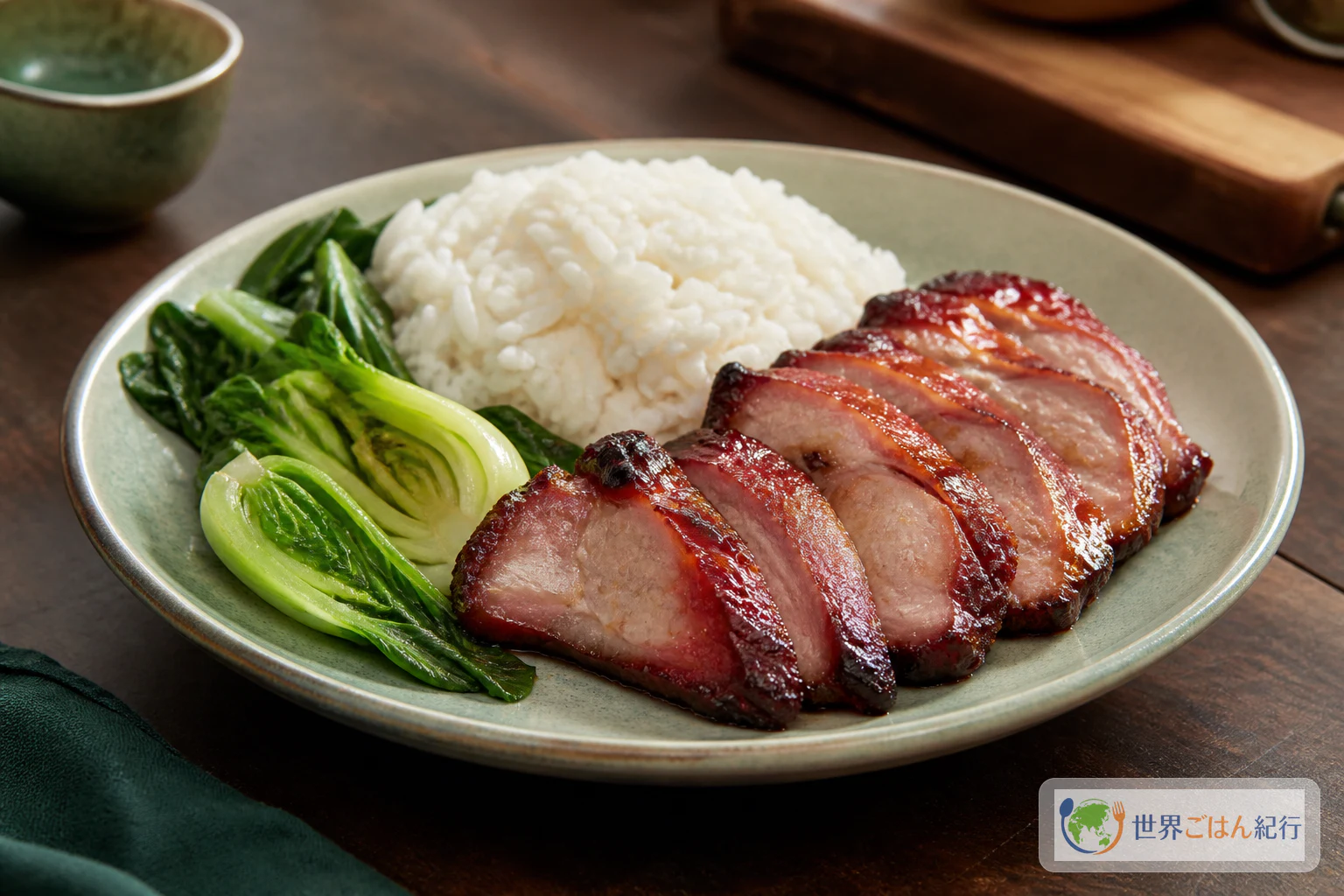
Take the roasted meat off the rack, tent loosely with foil and rest for 10 minutes. Slicing it hot lets the juices run out, and the knife crushes the film of glaze. Once rested, slice it across the grain, about 0.25 inch (5–7 mm) thick, and brush the surface thinly with the glaze you set aside in step 5. If the cut surface is hot and the fibers come apart without being crushed, it's ready to serve.
7Serve with white rice and greens
10 min
Put rice in bowls and fan 4 or 5 slices of char siu on each. Boil the bok choy for 1 to 2 minutes in water with 1 g salt, kept at a boil over medium heat. When the stems bend slightly when pressed with chopsticks and the leaves are bright green, drain and add to the plate. Thinly sliced cucumber at the edge of the plate gives a crisp, juicy bite after the sweet fat. For a shop-style siu mei rice plate, don't let the char siu overwhelm everything: cut it so rice, greens and meat fit into the same mouthful, and the sweetness of the glaze won't feel heavy.