Ingredients and steps on one page. Print it, or choose “Save as PDF” in the print dialog.
Sekai Gohan
Shuizhu Niurou: Sichuan Water-Boiled Beef in Red Chili Oil
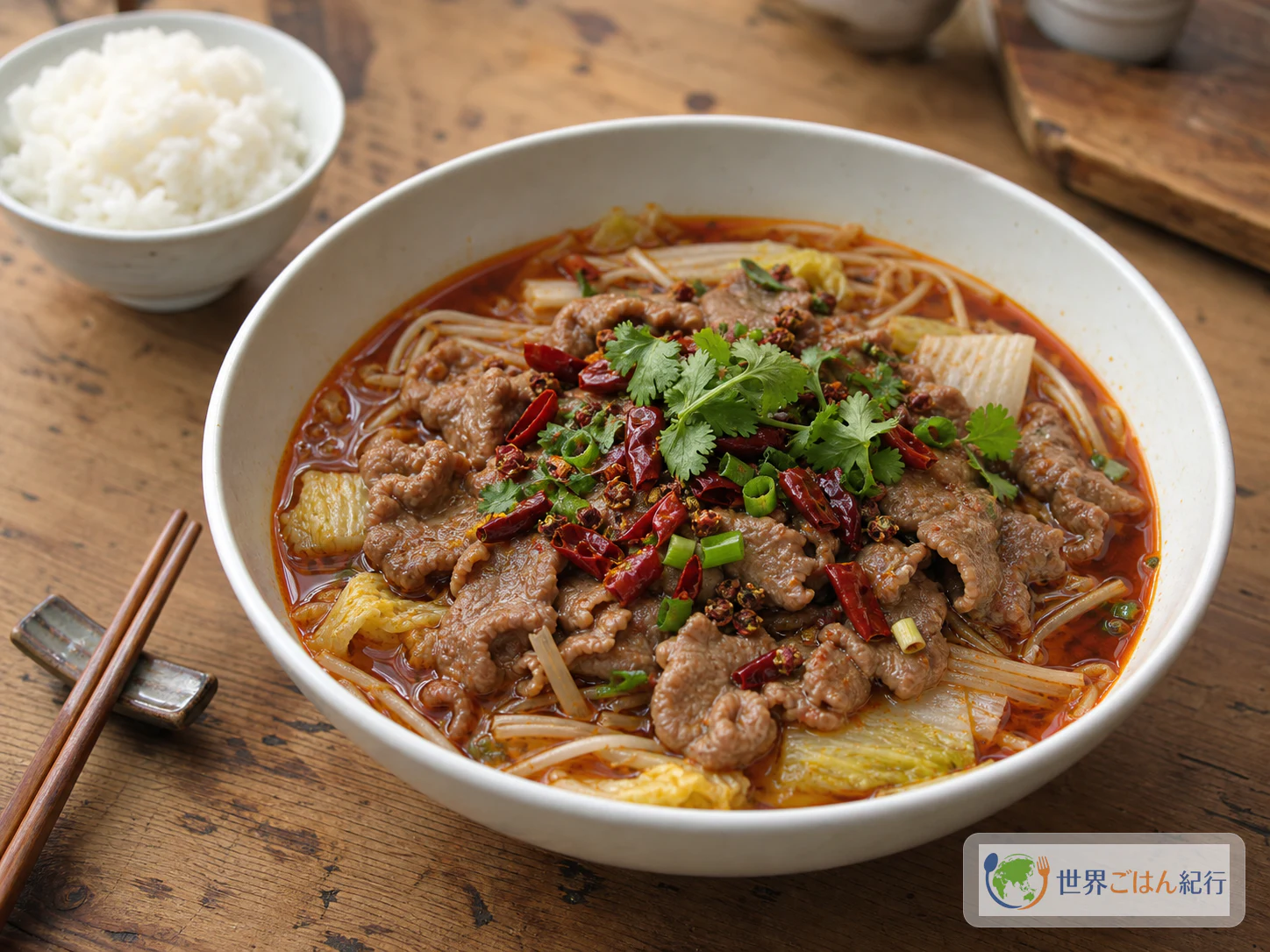
Ingredients
| Ingredient | Amount | Substitutes & notes |
|---|---|---|
| Thin-sliced beef | 350 g | Chuck eye, trimmings or thin-sliced round. Cut large slices into 4 cm (1 1/2 in) widths |
| Shaoxing wine | 1 tbsp | 1 tbsp sake also works |
| Soy sauce | 2 tsp | For marinating the beef |
| Salt | 1/4 tsp | For the marinade. Don't add more; the doubanjiang is very salty |
| Potato starch | 1 1/2 tbsp | Forms the coating that keeps the beef silky. Cornstarch works too |
| Water | 1 tbsp | Helps the marinade soak in |
| Rice bran oil or canola oil | 2 tsp | For the marinade. Keeps the slices from sticking together |
| Water for blanching | 600 ml | For blanching the napa cabbage and bean sprouts. Separate from the water for the soup |
| Napa cabbage | 250 g | Cut into 4 cm pieces. Green cabbage also works |
| Bean sprouts | 200 g | Soybean sprouts give more crunch |
| Japanese leek (naganegi) | 1 | Slice the white part thinly on the diagonal; save the green part for finishing. A few scallions or a small leek can stand in |
| Garlic | 4 cloves | Thinly slice half and coarsely chop the other half |
| Ginger | 20 g | Cut into 3 cm matchsticks |
| Pixian doubanjiang | 2 tbsp | If using regular doubanjiang, up to 2 1/2 tbsp |
| Dried red chilies | 8 g | Shake out some of the seeds and cut into 2 cm pieces |
| Sichuan peppercorns (whole) | 2 tsp | Half goes into the oil, half into the finish |
| Coarse chili flakes | 2 tsp | Korean gochugaru gives color with milder heat |
| Chicken stock | 450 ml | Or 450 ml water + 2 tsp chicken bouillon granules. About 1 3/4 cups + 2 tbsp |
| Soy sauce | 1 tbsp | For the broth |
| Sugar | 1 tsp | Rounds off the edge of the heat |
| Chinese black vinegar | 2 tsp | Cuts the richness at the end. 2 tsp rice vinegar also works |
| Rice bran oil or canola oil | 4 tbsp | Finishing oil. Olive oil's aroma doesn't suit the dish |
| Scallions or cilantro | 20 g | For finishing. If you don't like cilantro, use only scallions |
Steps
1Marinate the beef
10 min
No heat for this step. If the 12.5 oz (350 g) of thin-sliced beef is in large pieces, cut it into 1.5 inches (4 cm) widths, then massage in 1 tbsp Shaoxing wine, 2 tsp soy sauce, 1/4 tsp salt and 1 tbsp water. Add 1 1/2 tbsp potato starch and mix until the surface of the meat turns a thin, pale white, then coat it with 2 tsp oil at the end. The oil should be evenly distributed, the meat should look glossy, and the slices should come apart one by one when you lift them with chopsticks.
2Cook the vegetables first
6 min
Bring 2½ cups (600 ml) water to a boil over high heat in a wok or deep skillet, and blanch the 9 oz (250 g) napa cabbage for 2 minutes and the 7 oz (200 g) bean sprouts for 40 seconds. Lift them out when the white stems of the cabbage turn slightly translucent and the sprouts are limp but not broken. Drain, spread them in a large serving bowl, and scatter half of the thinly sliced white part of the leek on top.
3Fry the doubanjiang into a red oil
5 min
Wipe out the pan, add 2 tbsp oil, 2 cloves' worth of sliced garlic, 20 g ginger matchsticks, half of the dried chilies and 1 tsp Sichuan peppercorns, and set over medium-low heat. When it smells fragrant, add 2 tbsp Pixian doubanjiang and fry for about 2 minutes. Move on once the paste has dissolved into the oil, red oil is seeping out at the bottom of the pan and the edges of the garlic are lightly colored. If it looks about to scorch black, turn the heat down to low right away.
4Bring the broth to a simmer and slide in the beef
5 min
Add 2 cups (450 ml) chicken stock, 1 tbsp soy sauce and 1 tsp sugar and bring to a gentle bubble over medium heat. A hard boil makes the meat shrink, so adjust to medium-low, with bubbles rising quietly from the bottom of the pan. Add the beef one slice at a time, loosening it gently with chopsticks. When about 80 percent of the pink is gone and the surface looks smooth and whitish, turn off the heat. Not letting it keep boiling hard is what decides whether it stays tender.
5Pour everything over the vegetables
3 min
With the heat still off, pour the beef and broth into the bowl of vegetables. Arrange it so the cabbage and sprouts soak up the red broth and the beef sits on top. Now add 2 tsp black vinegar around the rim of the bowl (not around the sides of the pan); it lightens the heaviness of the oil a little. If the meat sinks too far into the broth, pull it back up with chopsticks.
6Sizzle the chilies and Sichuan pepper with hot oil
2 min
Pile the remaining dried chilies, 2 tsp chili flakes, 1 tsp coarsely crushed Sichuan peppercorns, 2 cloves' worth of chopped garlic and the green part of the leek on top of the beef. Heat 2 tbsp oil in a small pan over medium heat to around 180°C (356°F). Without a thermometer, it's ready when a scrap of leek dropped in immediately throws up fine bubbles. Turn off the heat and pour the oil in a thin stream over the mound of chilies and Sichuan pepper. When it sizzles and the red oil smells fragrant, it's done.