Ingredients and steps on one page. Print it, or choose “Save as PDF” in the print dialog.
Sekai Gohan
Zhajiangmian: Beijing Fried Sauce Noodles with Pork Belly and Two Bean Pastes (炸酱面)
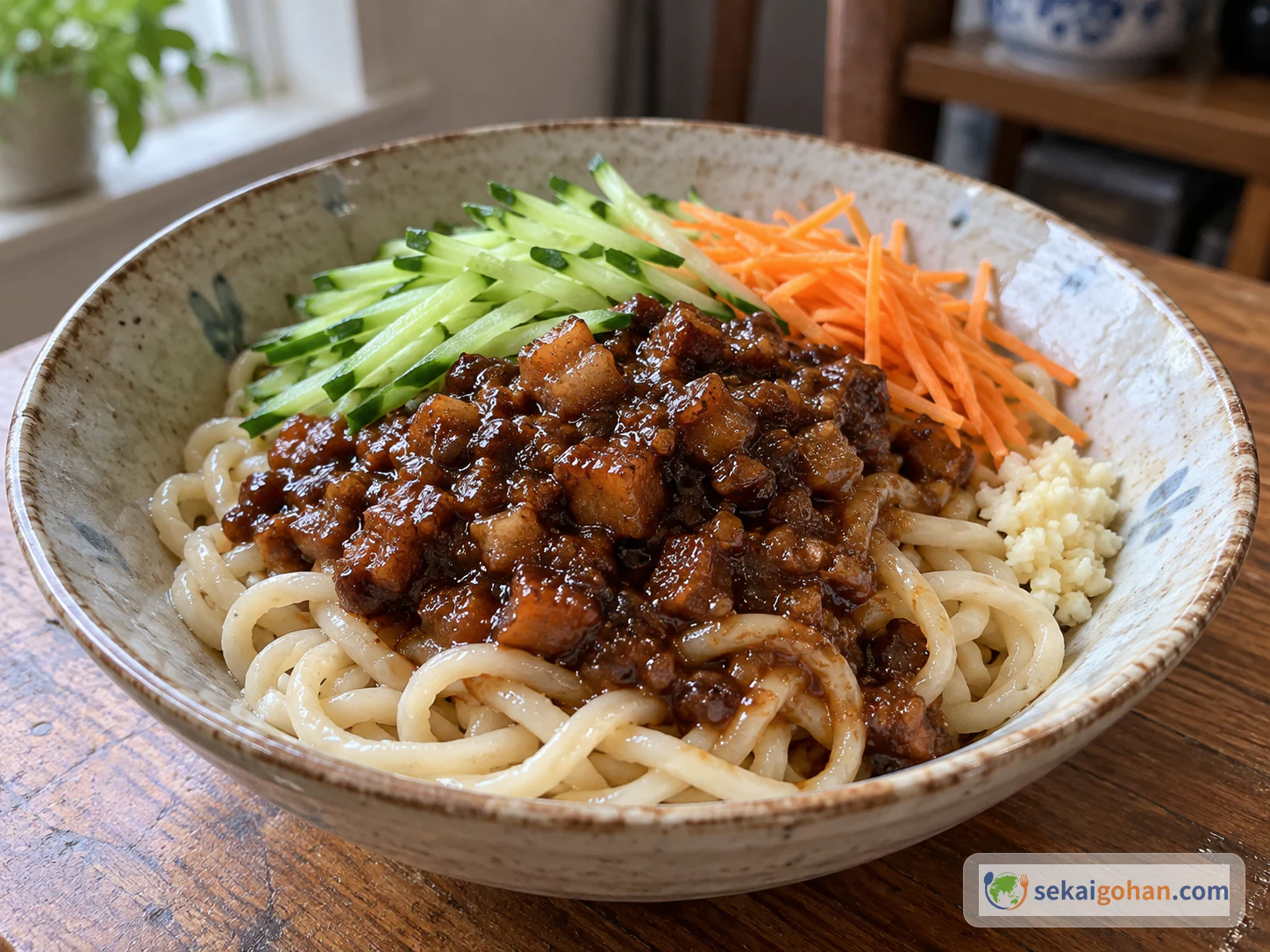
Ingredients
| Ingredient | Amount | Role |
|---|---|---|
| Skin-on pork belly | 1 lb (about 454 g) | Separate the skin and fat layer from the lean, and cut both into about 1/2 inch (about 1.3 cm) cubes. The fat is rendered into the oil |
| Water (for the lean pork) | 2 tbsp (30 ml) | Worked into the lean pork 1 tbsp at a time |
| Neutral oil | 1/3 cup (80 ml) | The base of the aromatic oil |
| Scallions | 6, finely chopped, green and white parts kept separate | Greens flavor the oil and are removed; whites go into the sauce |
| Ginger | 5 slices, about 3 mm thick | Aromatic oil; leave as slices |
| Star anise | 3 | Sweet, warm aroma in the oil |
| Bay leaves | 6 | Aromatic oil |
| Cinnamon stick | 1 small | Aromatic oil |
| Sichuan peppercorns | 2 tsp | Aromatic oil; whole peppercorns, not ground |
| Shaoxing wine (紹興酒) | 4 tbsp | Links the aroma of the pastes and the pork |
| Dark soy sauce (老抽) | 1 1/2 tbsp | Color and depth |
| Sweet wheat paste (甜面酱, tianmianjiang) | 1/4 cup | Fermented-wheat sweetness |
| Ground bean sauce (黄豆酱, yellow soybean paste) | 3 heaping tbsp | Salt and fermented-soybean savoriness |
| Water (for the sauce) | 1 cup (about 240 ml) | Liquid for simmering the pastes; separate from the 2 tbsp above |
| Sugar | 1 tsp | Optional; leave it out at first. Add only after tasting |
| Salt | 1/2 tsp | Optional; leave it out at first. The pastes are already salty |
| Thick fresh wheat noodles | 1 lb (about 454 g) | Thick enough to carry the dense sauce. If using dried noodles instead, 8 oz (about 227 g); prepare one or the other, not both |
| Carrot | julienned 1 cup | Raw topping (菜码) |
| Cucumber | julienned 1 cup | Raw topping; crunch and freshness against the salty sauce |
| Garlic | 4 cloves, minced | Optional table topping; adds raw garlic sharpness |
Steps
1Separate and cut the pork belly
Cut the layer of skin and fat away from the lean meat. Cut both the fat-and-skin portion and the lean into cubes of about 1/2 inch (about 1.3 cm), keeping them in separate bowls. Add the 2 tbsp water to the lean pork 1 tbsp at a time, working it in until no standing water remains.
The fat goes into the wok first so it can render; the lean goes in later so it doesn't overcook while the fat is rendering. Wash the board and knife before touching any of the raw vegetables.
2Make the aromatic oil over low heat
Put the 1/3 cup oil, the scallion greens, ginger, star anise, bay leaves, cinnamon stick and Sichuan peppercorns in the wok. Cook over low heat for about 15 minutes. You want the scallion greens to turn crisp without burning, and the oil to smell fragrant.
Then lift out all the aromatics and discard them. Keep the oil in the wok; it is the base for the pork.
3Render the fat, then add the lean pork
Over medium-low heat, cook the cubes of fat and skin in the flavored oil for 5–6 minutes, until the fat renders out and the edges turn lightly golden. Stoves differ, so let the color decide more than the clock.
Add the lean pork and stir-fry for about 1 minute, until the surfaces turn white and opaque. This is a midway stage only: the pork is not done here. It finishes cooking in the simmering and reducing that follow.
4Add the pastes and simmer covered
Turn the heat to low. Add the Shaoxing wine, dark soy sauce, tianmianjiang, ground bean sauce, the 1 cup water and the scallion whites, and stir to combine. The sauce will be loose at this point.
Cover and cook over medium heat for 10 minutes.
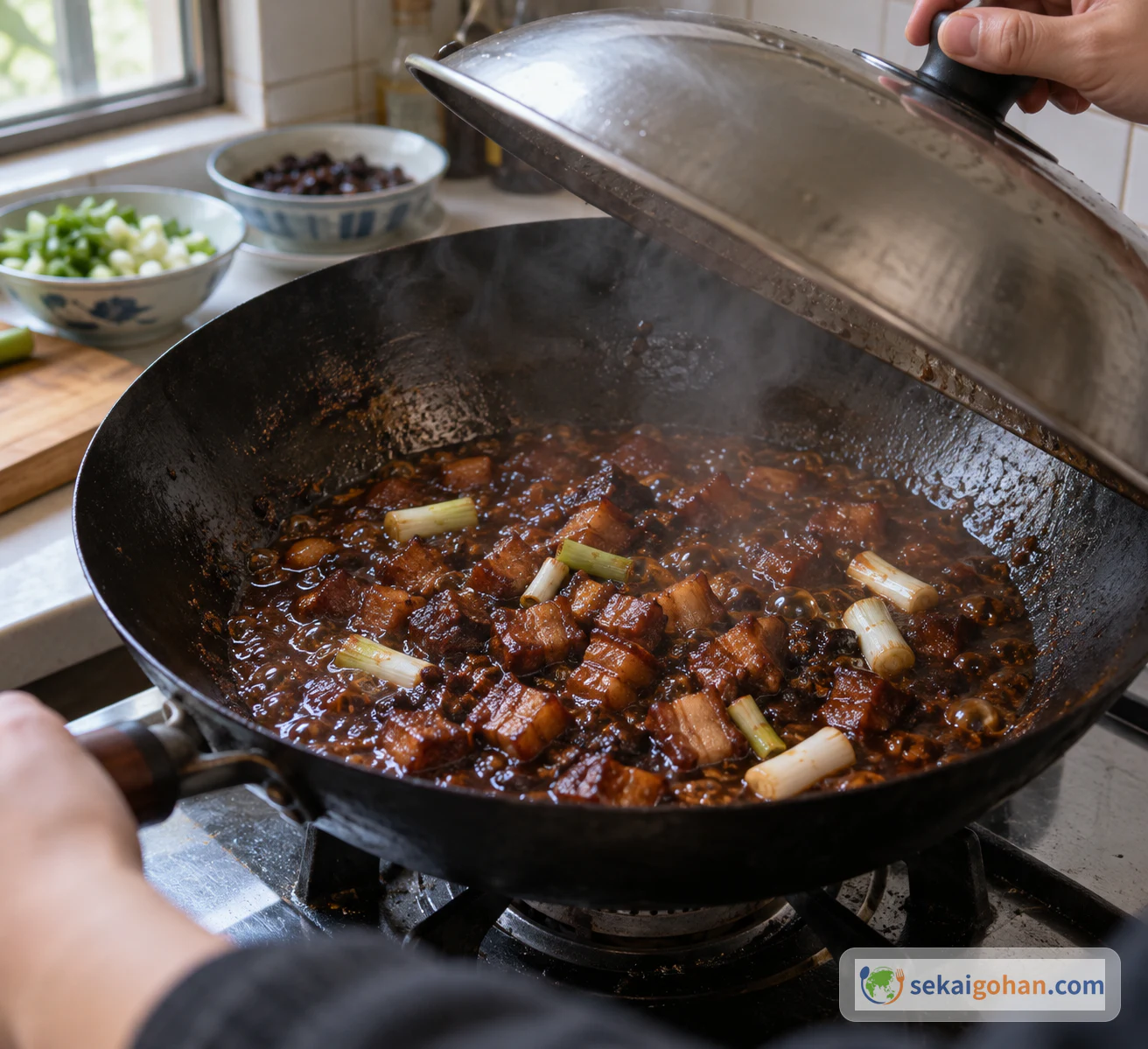
With the lid on, the sauce simmers gently before it is reduced 5Uncover and reduce until the oil shows
Remove the lid, turn the heat to medium-high and keep stirring for 8–12 minutes, scraping the bottom of the wok so the sauce doesn't catch. Start checking at 8 minutes. Stop when pushing the sauce aside with the spatula reveals oil at the bottom of the pan and the sauce is thick enough to coat noodles. Don't cook it until it is dry; over-reduced sauce is hard to mix through noodles and tastes saltier.
Check the pork with a thermometer: the center of the pieces should reach 75°C (167°F) for at least 1 minute. Small cubes are worth checking directly rather than judging by color.
6Boil the noodles
Cook the thick wheat noodles according to the package. For fresh noodles, use a large pot and add about 1/4 cup cold water each time the water returns to a boil. This water is separate from the sauce water.
7Add the toppings and mix in the sauce a little at a time
On a clean board with a clean knife, not the ones used for raw pork, prepare 1 cup each of julienned cucumber and carrot, and mince the garlic if you are using it.
Divide the drained noodles among bowls. Spoon a modest amount of sauce over each and top with cucumber, carrot and, if you like, garlic. Each person mixes their own bowl and adds more sauce only if needed, adjusting the salt against the noodles and the moisture of the vegetables bite by bite. The sauce is made for 8 and the noodles for 4, so there will be sauce left over.
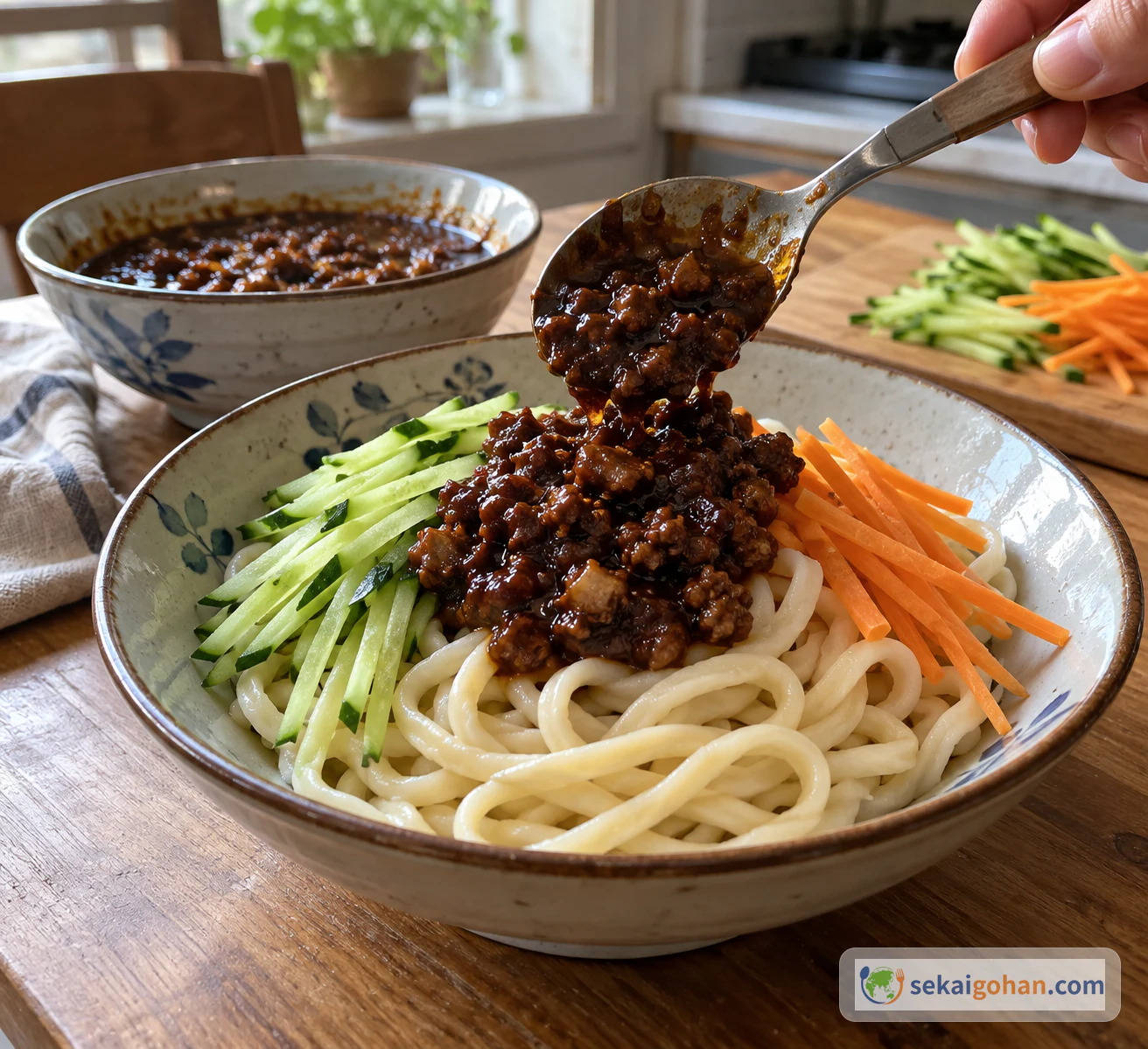
Start with a little sauce; extra stays in a separate bowl