Ingredients and steps on one page. Print it, or choose “Save as PDF” in the print dialog.
Sekai Gohan
Edamame: Japanese Salt-Boiled Green Soybeans in the Pod (枝豆)
Ingredients
| Ingredient | Amount | Role |
|---|---|---|
| Fresh shell-on edamame (枝豆, さや付き) | 1 bag (about 9 oz (250g)) | Boiled in the pod; the beans inside are what you eat |
| Water | about 1 quarts (1L) | Cooking water |
| Salt | about 4% of the water; about 1.5 oz (40g) for 1 quarts (1L) | Split in half, as in the next two rows |
| Salt for rubbing | half of the salt; about 20g in the 1 quarts (1L) example | Rubbed into the pods to remove fuzz and season them |
| Salt for the cooking water | the remaining half; about 20g in the 1 quarts (1L) example | Added to the water after it boils |
Steps
1Trim and wash the pods
Pick edamame with pods that are well filled with beans and look freshly harvested. Before boiling, snip off a little of the tip of each pod, and trim both ends if you have time; this is optional. Rinse the pods briefly and drain off the water. They are ready when they sit washed and drained in the colander.
2Rub the pods with half the salt
Put the pods in a bowl, sprinkle over half of the weighed salt (about 20g in the 1 quarts (1L) example), and rub them hard with your hands, squeezing as you scrub. This removes fuzz and seasons the pods, so do not use all the salt here. Only if the pods are unusually fuzzy, rinse them once after rubbing; otherwise keep the salt on the pods. The pods are ready when the fuzz is gone and they look evenly coated in salt.
3Bring the salted water to a boil
Put about 1 quarts (1L) water in the pot and bring it to a boil before adding any salt. Add the remaining half of the salt (about 20g in the 1 quarts (1L) example) to the boiling water. If you rinsed very fuzzy pods, add salt to the cooking water in the same amount you used for rubbing, in addition to the usual about 20g for rubbing and about 20g for the water. Wait until the salted water returns to a full boil.
4Boil the pods for 4–6 minutes
Tip the pods into the pot with the salt still clinging to them. If salt is left in the rubbing bowl, pour some of the cooking water into the bowl to rinse it, then pour that salty water back into the pot so all the salt ends up in the cooking water. When the water returns to a boil with the pods in it, turn the heat down a little and cook for 4–6 minutes. A drop lid helps heat reach the pods more evenly; if you don't use one, stir occasionally with chopsticks instead. The water should keep a steady, gentle boil.
5Taste, drain and serve hot
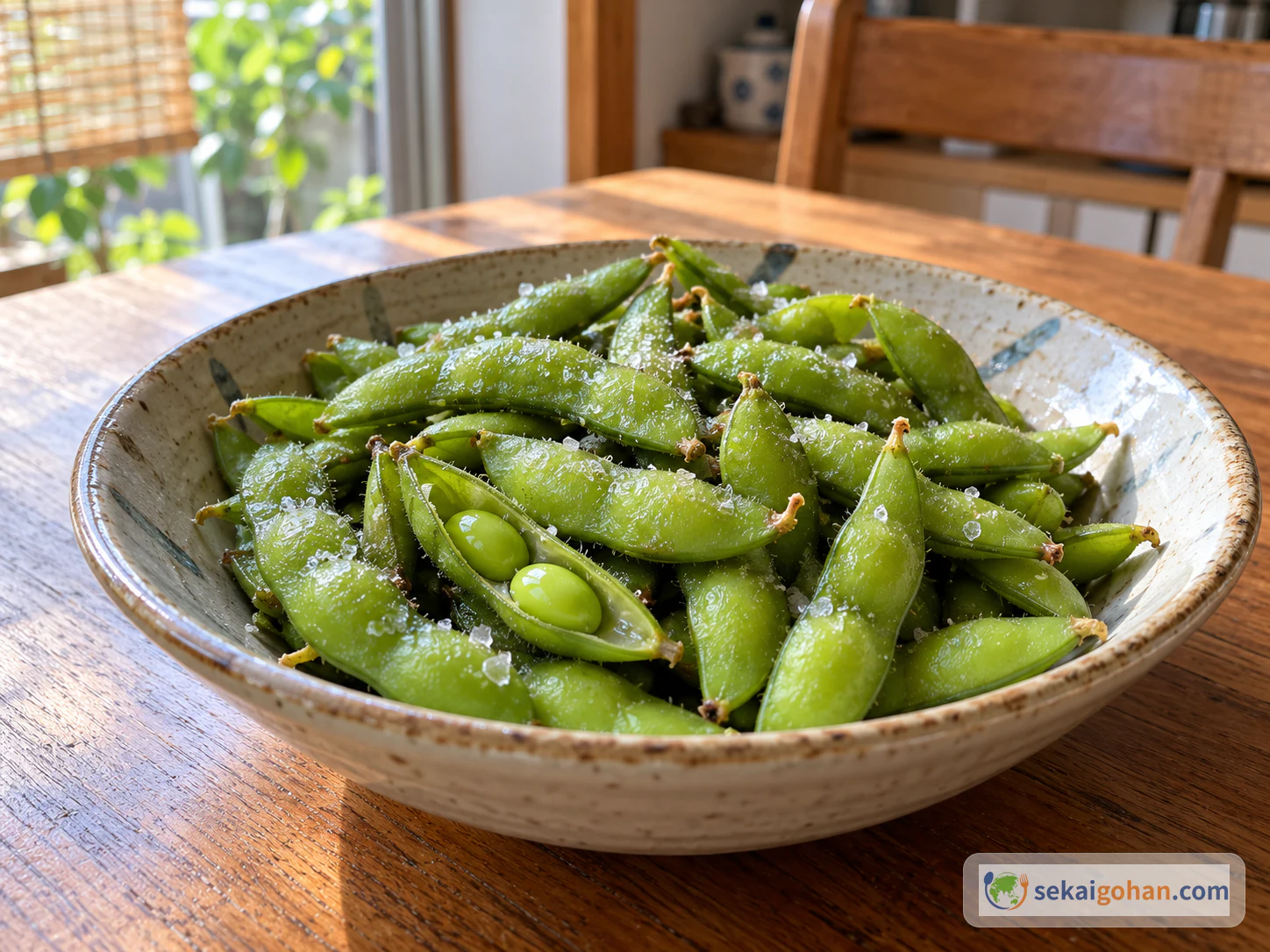
Take a pod out, press out the bean, and eat one or two beans to check whether they are done. Taste the bean only, not the pod. When they are done, drain the edamame in a colander, without a cold-water rinse. Bring them to the table while hot and serve them in their pods; diners press out and eat the beans.
6Cool or make ahead
If you need to cool the edamame, for a packed lunch for example, do not put them in water. Leave them in the colander after draining and let them cool there. In edamame season you can make them ahead: boil them the night before, refrigerate, and serve the next morning; or boil them and freeze them.