Ingredients and steps on one page. Print it, or choose “Save as PDF” in the print dialog.
Sekai Gohan
Hoshigaki Recipe: How to Make Japanese Dried Persimmons (干し柿)
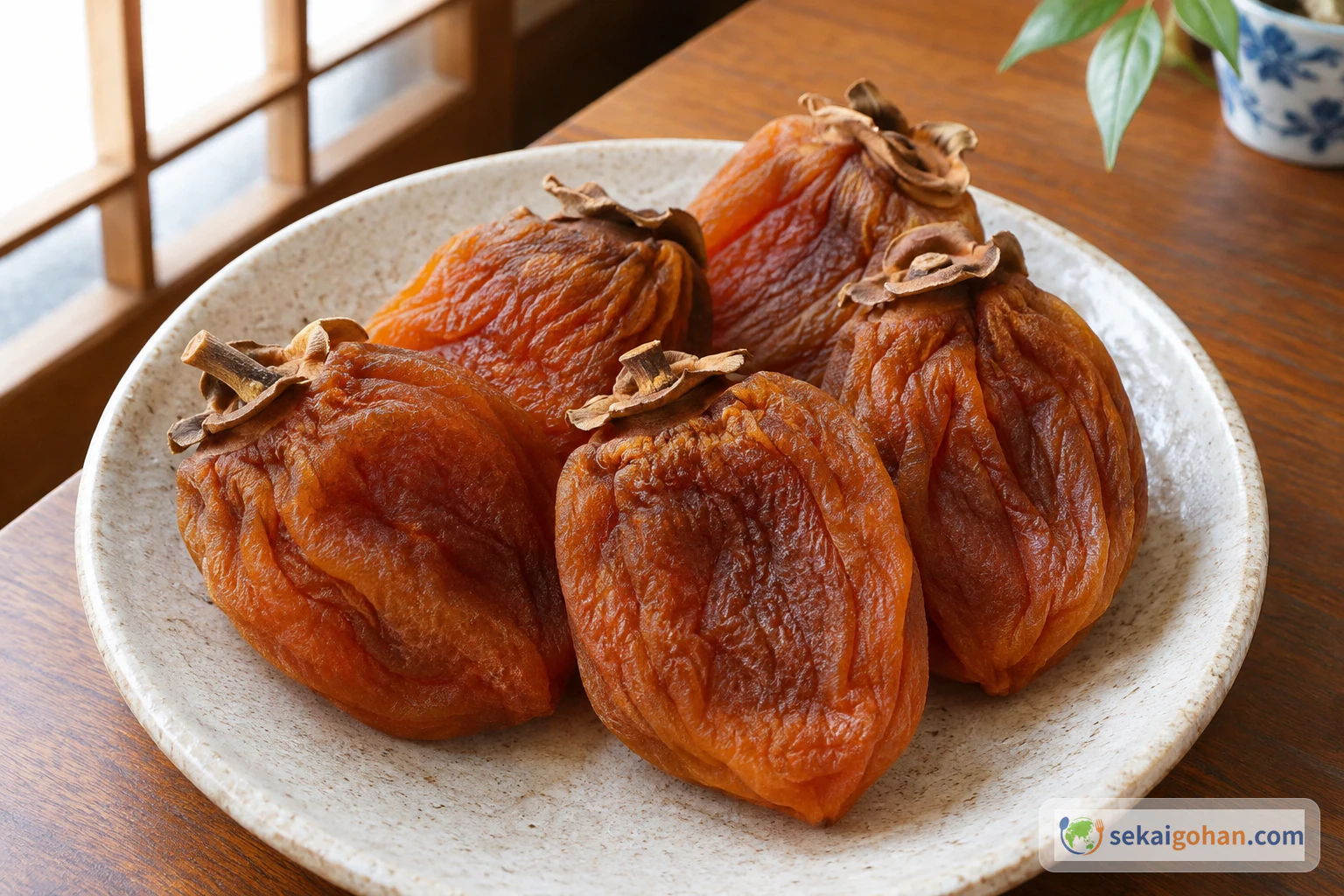
Ingredients
| Ingredient | Amount | Role |
|---|---|---|
| Astringent persimmons (shibugaki, 渋柿), with stems | As needed | The fruit to dry; the stem hooks onto the twine |
Steps
1Peel the persimmons, leaving the stems
Peel each persimmon completely, leaving no skin behind. Keep the stem in place, because it holds the fruit on the twine.
2Hook the stems onto the twine
Cut the twine into lengths of 23.5 inches (60 cm) to 27.5 inches (70 cm). Hook each stem into the twine, about 6 to 7 fruit per string, leaving gaps so the persimmons do not touch.
3Pass the fruit quickly through boiling water
This step is optional. Set a stable pot of boiling water on the stove. Holding the twine, and using heat-safe utensils to steady the fruit, pass the surface of each peeled persimmon quickly through the water. Take care not to scald yourself. This brief dip does not sterilize the fruit.
4Hang the strings in an airy, sheltered place
During a period of settled weather, hang the strings somewhere airy, with as much sun as possible and out of the rain, such as under an eave. Check again that the fruit is not touching.
5Keep the fruit out of the rain
On rainy days, cover the fruit from the rain or move the strings so they stay dry. Don't leave wet fruit or slow-drying fruit unattended.
6Check the surface after about a week
After about 1 week, look closely at the surface of each persimmon. If you suspect mold or spoilage on any fruit, discard it without tasting it.
7Massage gently for the first time
With clean fingers, gently massage each persimmon as if breaking up the fibers inside. Be careful not to tear the surface.
8Dry for another 7 to 10 days
Keep the fruit drying for another 7 to 10 days in the same airy, rain-free conditions. Weather changes the pace, so judge by the fruit, not the calendar.
9Massage and shape several times
During those days, massage the persimmons several times with clean hands, shaping them as you go. Keep the surface intact, and keep checking for anything that looks like mold or spoilage.
10Take the fruit off the twine
When you no longer feel moisture in the fruit, take it off the twine. Feel alone does not prove the fruit is safe, so discard anything doubtful.
11Cut off the stems
Using clean kitchen scissors on a clean board, cut off each stem.
12Wrap each persimmon
Wrap the persimmons one at a time in food wrap.
13Refrigerate or freeze
Put the wrapped persimmons in the refrigerator, in a clean covered container if you like, or put them in the freezer instead. Eat them as they are.