Ingredients and steps on one page. Print it, or choose “Save as PDF” in the print dialog.
Sekai Gohan
Imoni: Yamagata Inland-Style Taro and Beef Soup (芋煮)
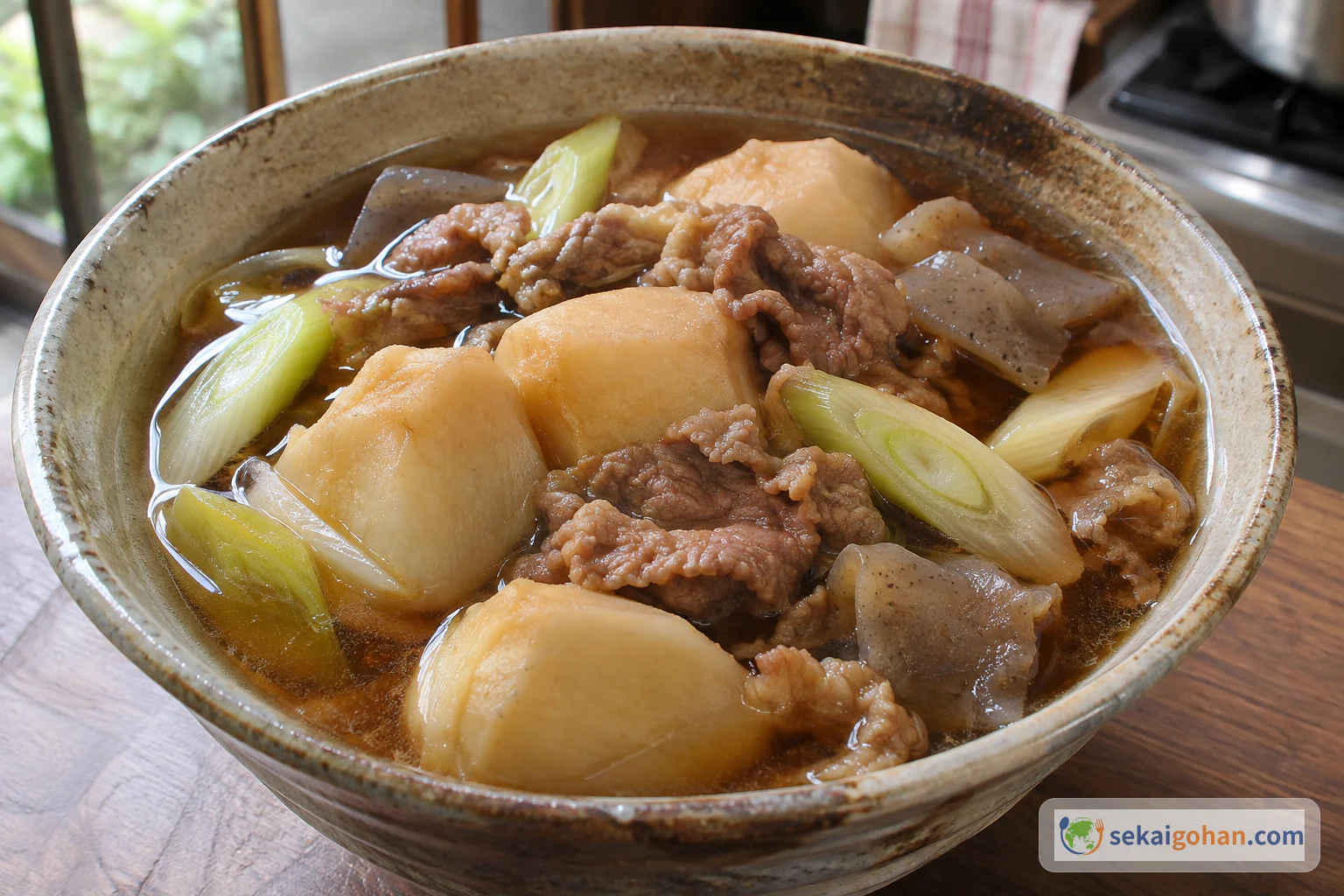
Ingredients
| Ingredient | Amount | Role |
|---|---|---|
| Taro (satoimo), skin on | 1 lb (500g) | The heart of the pot. Weigh with the skin on, then peel and cut into large bite-size pieces |
| Slab konnyaku (ita konnyaku), konjac-flour | 1/2 slab | Chewy texture. Torn by hand into bite-size pieces |
| Beef, thin-sliced, with plenty of fat (belly or trimmings) | 5.5 oz (150g) | Savory richness. Cut into pieces about 1.5 inches (4cm) long |
| Long scallion (naganegi) | 1 | Aroma and sweetness. Cut into large diagonal pieces and added last |
| Soy sauce | 4 tbsp (1 tbsp + 3 tbsp) | The main flavor. 1 tbsp first, the remaining 3 tbsp later |
| Sugar | 1½ tbsp | Sweetness. Added with the beef |
| Sake (seishu) | 3 tbsp | Seasons the broth. Added with the beef |
| Water | 800cc | The broth. Taro and konnyaku start in it |
Steps
1Peel and cut the taro
Weigh out 1 lb (500g) taro with the skin on, then peel it on the vegetable board. If you are using pre-peeled taro, skip this step. Cut the peeled taro into large bite-size pieces. Keep the pieces roughly the same size so they soften together.
2Cut the beef, scallion and konnyaku
On a separate board for meat, cut 5.5 oz (150g) fatty thin-sliced beef into pieces about 1.5 inches (4cm) long. Keep the cut beef apart from the vegetables, then wash your hands and the knife. Cut 1 long scallion into large diagonal pieces; set aside, it goes in last. With clean hands, tear 1/2 slab konjac-flour konnyaku into irregular bite-size pieces; torn, rough edges are what you want here, not neat knife cuts. Konjac-flour konnyaku can go in as it is, but if your konnyaku is made from fresh konjac corm, boil it in water and drain before moving on.
3Pour the water and add the taro and konnyaku
Pour 800cc water into the empty pot. No stock and no seasoning yet. Add the cut taro and torn konnyaku to the water. Do not add the beef or scallion yet.
4Heat the pot, add the first soy sauce and test the taro
Put the pot over the heat and bring it up to a light boil. Add 1 tbsp soy sauce and keep simmering, and keep the remaining 3 tbsp for later. Push a clean chopstick into one piece of taro. When it goes in without resistance, move on; if it still meets a firm center, keep simmering and check again.
5Add the beef and the rest of the seasoning
Once the taro is soft, add the cut beef to the pot. Add the remaining 3 tbsp soy sauce, then 1½ tbsp sugar. Add 3 tbsp sake.
6Skim, cook the beef through and soften the scallion
As the pot simmers, skim the foam that rises to the surface with a ladle. Keep simmering until the beef is cooked all the way through. Heat the center to 167°F (75°C) and hold it there for at least 1 minute, checking the thickest folded piece of beef with a clean food thermometer. Add the diagonal scallion pieces to the pot; this is the last ingredient to go in. Simmer until the scallion is very soft and slumped, so that the flavors come together.
7Ladle into large bowls while hot
Ladle the imoni into donburi or large soup bowls while it is hot. Use a clean ladle and bowls, not any tool that touched raw beef.