Ingredients and steps on one page. Print it, or choose “Save as PDF” in the print dialog.
Sekai Gohan
Kani-maki-jiru: Kitago's Strained River-Crab Miso Soup from Miyazaki (かに巻き汁)
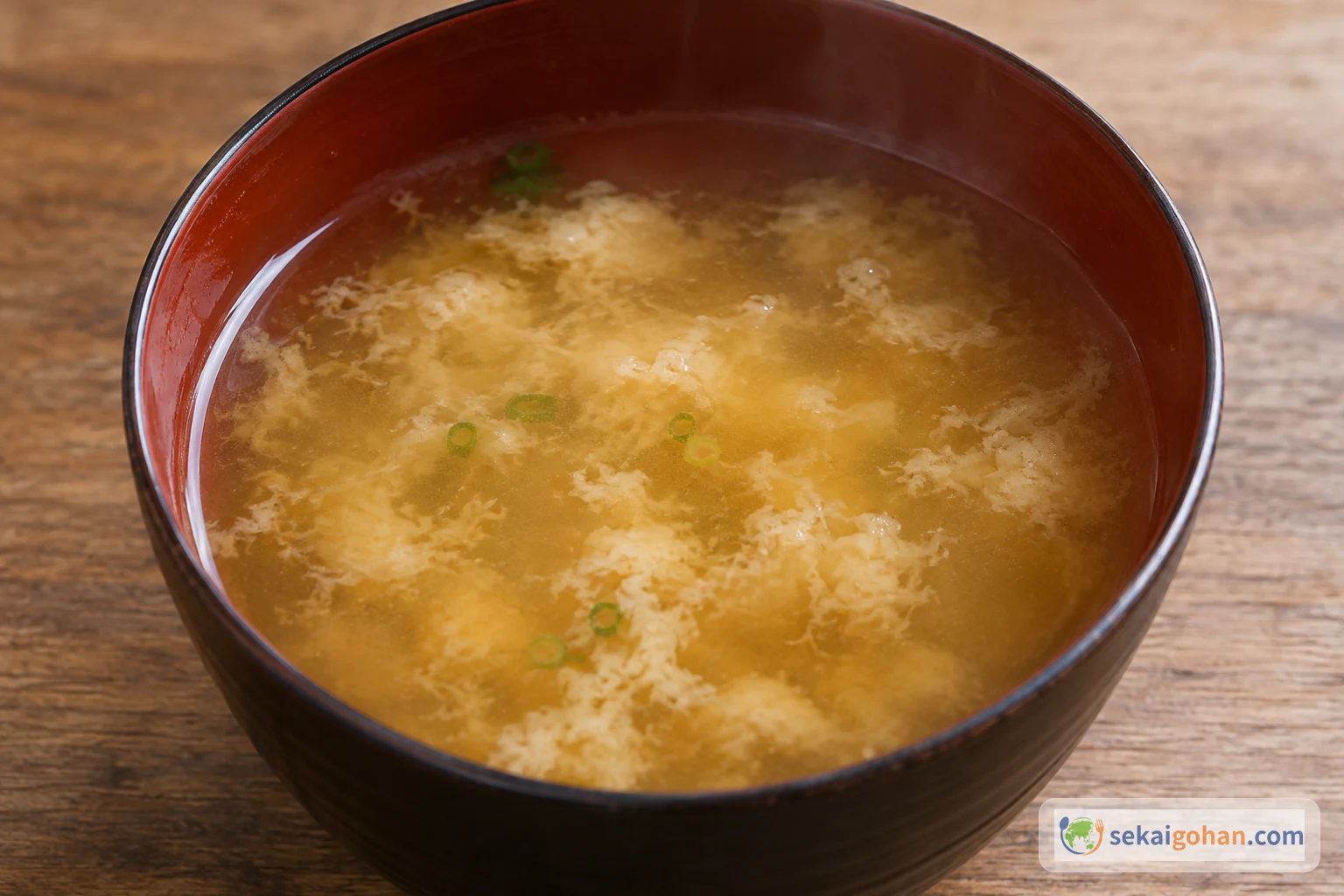
Ingredients
| Ingredient | Amount | Role |
|---|---|---|
| Yamataro crab (山太郎ガニ, yamataro-gani; also called mokuzugani), top shell removed | 7 oz (200g) | Gives the soup its flavor and its curds. This is crab with the top shell off, not fully picked crabmeat |
| Miso (味噌) | 3.5 oz (100g) | Pounded with the crab; the only seasoning in the pot |
| Water | 3¼ cups (800ml) | Added in two stages to draw the crab and miso through the sieve |
| Ginger, for juice (生姜汁; optional) | to taste | A raw finishing aroma. Use the juice only, with no ginger pieces in the bowl |
| Green onion (ねぎ; optional) | to taste | A raw finishing garnish |
Steps
1Wash and prepare the raw crab
Clean your hands and all food tools. Rinse the raw crab well under running water, then set it on a surface kept for raw preparation, with the top shell removed. This is not fully picked crabmeat. Keep every tool used for raw crab away from cooked food and serving dishes, and wash them well after use. Do not taste the crab or the pounded liquid at any point before it is cooked. The crab is ready when it is clean and the top shell is off.
2Pound the crab with the miso
Pound the crab coarsely in a mortar, or break it up in a blender. Add the 3.5 oz (100g) of miso to the coarsely crushed crab, then pound or blend the two together until finer. Do not add water yet. The mixture is ready when the crab and miso are worked together into a finer paste.
3Add water and strain the first liquid
Pour water into the crab and miso a little at a time, until about 1¾ cups (400ml) has gone in. Pour the mixture through a sieve into a clean bowl. Set the bowl aside. The first liquid is ready when it has collected in the bowl and the coarse crab stays in the sieve.
4Pound the leftover crab and strain again
Return the crab from the sieve to the mortar or blender and pound or blend it again. Do not add more crab or miso. Add the rest of the 3¼ cups (800ml) of water, then pour the crab and water through the sieve into the bowl holding the first liquid. Do not scrape what is left in the sieve into the bowl. The step is done when the second liquid has joined the first and the residue stays in the sieve.
5Strain the collected liquid into the pot
Pour all the collected liquid through a clean sieve into an empty, clean bowl. This step strains the liquid again. It does not involve scraping the residue. Then pour the strained liquid into a clean pot. Nothing else goes in. The liquid is ready when it sits in the pot, strained twice and clear of coarse crab.
6Heat the soup until fully cooked
Set the pot over high heat. As soon as the soup begins to boil, turn the heat down to low. This only marks the change of heat and does not mean the soup is done. Cook gently on low until soft curds form. Use a food thermometer to make sure the coldest part of the whole soup reaches 167°F (75°C) at its center and stays there for 1 minute. The curds alone do not show that the soup is safe. Go by the temperature, not the clock.
7Prepare the ginger juice and green onion (optional)
If using ginger, wash it well under running water, then grate it. Use a grater and dish that have not touched raw crab. Press the grated ginger through a small fine strainer and collect the juice in the dish. Keep only the juice. The pulp stays out of the soup. If using green onion, wash it well under running water, then chop it with a knife and cutting board that have not touched raw crab. The step is done when you have ginger juice in the dish and chopped green onion ready.
8Add the garnishes and serve
Once the whole soup is fully heated as described above, add ginger juice and green onion to taste, and only then. Ladle the soup into clean bowls that have not touched raw crab or its tools. Serve it as soon as it is made. The soup is ready when it is a clear miso soup with soft curds, served freshly made.