Ingredients and steps on one page. Print it, or choose “Save as PDF” in the print dialog.
Sekai Gohan
Sashimi: A Three-Fish Platter, Cut Fish by Fish (Sashimi / 刺身)
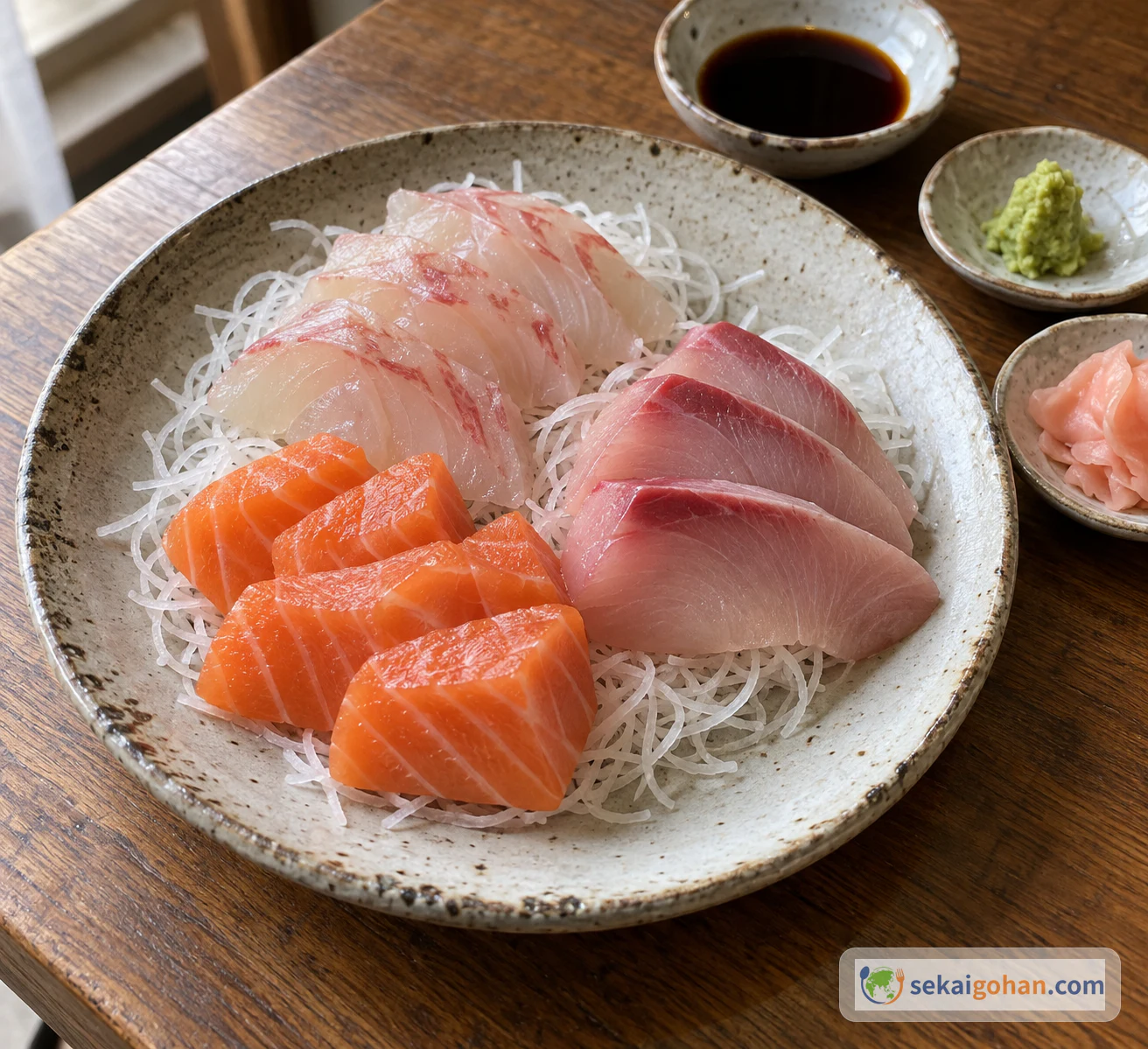
Ingredients
| Ingredient | Amount | Role |
|---|---|---|
| Salmon fillet for raw eating, skin and bones removed | 3.5 oz (100g) | Richness and orange color. Cut into blocks |
| Snapper fillet for raw eating, skin and bones removed (in Japan, raw-eating red sea bream, madai, is a practical choice) | 3.5 oz (100g) | Gentle flavor and firm flesh. Sliced with the blade tilted |
| Kingfish fillet for raw eating, skin and bones removed (in Japan, raw-eating yellowtail, buri, or amberjack, hiramasa, is a practical choice) | 3.5 oz (100g) | A richer fish as an accent |
| Daikon radish (大根) | 3.5 oz (100g) | Shredded finely as a bed for the fish and a crisp contrast |
| Wasabi powder | 1 tsp | Heat. Use this or the paste, not both |
| Water, for the wasabi powder only | 1/2 tsp | Mixed into the powder to make a paste |
| Wasabi paste (instead of powder) | 1/2 tsp | Heat, ready to serve |
| Pickled sushi ginger (甘酢しょうが), shredded | To serve | A palate cleanser between bites |
| Soy sauce | To serve | Served in small dishes for dipping |
Steps
1Check the labels and keep the fish cold
Before you begin, confirm that each fish is labeled for raw eating and is within its date. Move the fillets to a clean plate, cover it, and keep it in the refrigerator until the moment you slice. Cold fish is also easier to cut cleanly.
2Shred the daikon and lay it on the plate
With clean hands and clean tools, peel 3.5 oz (100g) of daikon and cut it into fine, thin shreds. Drain off any water well and spread the daikon on the serving plate as a bed for the fish.
3Cut the salmon straight down into blocks
Take the salmon from the refrigerator and place it on the cutting board. Hold the blade at 90 degrees to the board and cut straight down into small block-shaped pieces, keeping your fingers curled away from the edge. Make the blocks a size that is easy to eat. Keep the salmon as blocks rather than turning everything into thin slices.
4Slice the white fish with the blade tilted, across the grain
For the snapper or red sea bream, tilt the blade to 45 degrees and slice across the grain of the flesh, drawing the knife toward the tail end. Use a smooth single pull with a sharp blade rather than sawing back and forth, which can tear the flesh. Keep the slices even with one another.
5Cut the third fish into easy-to-eat pieces
For yellowtail or amberjack, look at the direction of the grain and cut the fish into easy-to-eat pieces with the same smooth, single-pull stroke. There is no need to copy the salmon blocks or the white-fish slant exactly; what matters is a clean cut from a sharp, clean knife on cold fish.
6Prepare the wasabi
If you are using powder, put 1 tsp of wasabi powder in a small dish, add 1/2 tsp of water and mix with a teaspoon into a smooth paste. If you are using paste, simply put 1/2 tsp in a small dish.
7Arrange the three fish on the daikon
Place the salmon, white fish and richer fish on the daikon in three separate groups, using clean chopsticks or fingertips. Avoid piling the pieces too heavily on top of one another, and keep the groups apart so each fish can be tasted on its own. Do not pour soy sauce over the fish.
8Add the condiments and eat right away
Set the wasabi beside the fish, add the shredded sushi ginger, and serve soy sauce in small dishes. Bring the plate to the table while the fish is still cold and freshly cut. Cut only what you will eat and do not keep leftovers for the next day.