Ingredients and steps on one page. Print it, or choose “Save as PDF” in the print dialog.
Sekai Gohan
Shimotsukare: Tochigi Salmon Head and Daikon Sake Lees Stew
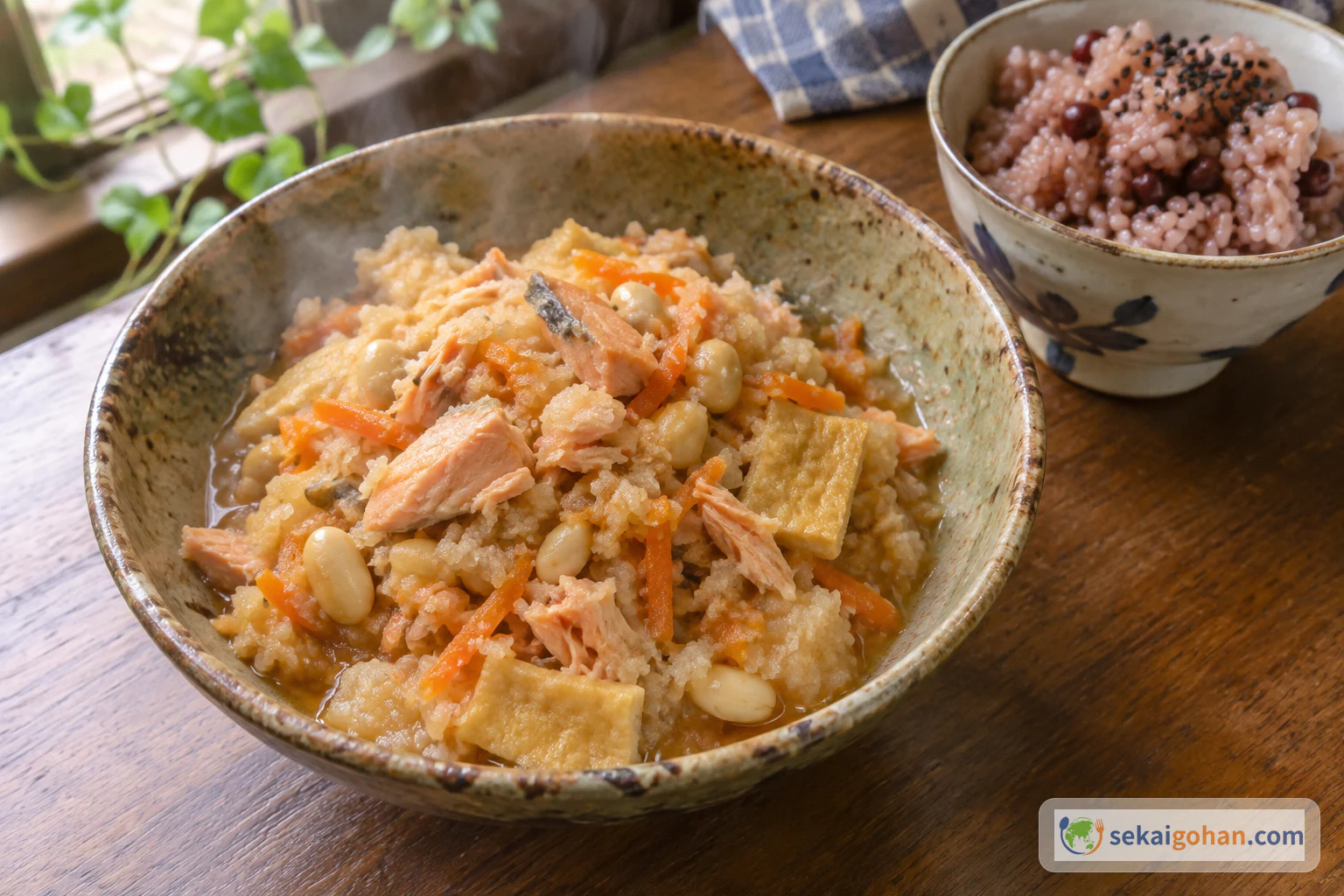
Ingredients
| Ingredient | Amount | Role |
|---|---|---|
| Daikon radish (daikon) | 2¼ lb (1 kg) | The body of the stew; grated coarsely for texture and sweetness |
| Carrot (ninjin) | 5¼ oz (150 g) | Colour and sweetness; grated coarsely |
| Roasted soybeans (iri-daizu) | 1½ oz (40 g) | Toasty flavor and a little bite; skins rubbed off |
| Fried tofu pouch (aburaage) | 1 sheet | Richness and chew; toasted and cut into strips |
| Salted salmon head (shiobiki-zake no atama) | 1 small | Savory depth and salt from bone and skin |
| Vinegar (su) | 1 tbsp | Tames fishiness and softens the bones in the pressure cooker |
| Water | ¾ cup + 1 tbsp (200 ml) | For cooking the salmon head under pressure |
| Sake lees (sake-kasu) | 1¾–2¾ oz (50–75 g) | Mellowness and aroma; added at the end |
| Soy sauce (shoyu) | to taste | Final seasoning |
| Salt | to taste | Final seasoning |
| Sugar | to taste (optional) | Rounds out the sweetness |
| Hot water | as needed | For softening the sake lees |
Steps
1Parboil the salmon head
Rinse the salted salmon head well under running water, getting into the gills and crevices. Cut it into rough ¾-inch (2 cm) pieces with a heavy knife, working carefully through the bone. Drop the pieces into a small pot of boiling water and let it return to a boil, then pour off the water. This washes away excess salt, slime and fishy smell. The pieces are ready when the flesh has turned opaque and grey scum floats on the water you discard.
2Cook the head under pressure with vinegar
Put the parboiled pieces into the pressure cooker with the vinegar and the water. Lock the lid and cook over medium heat for about 20 minutes once it comes up to pressure. Turn off the heat and let the pressure drop on its own. The head is ready when the pressure indicator has fully settled and the lid opens without any force.
Pressure cooker handlingFollow your pressure cooker's manual for maximum fill and minimum water. Do not cool the pot under running water or force the valve to release pressure; let it fall naturally before opening.
3Grate the daikon and carrot coarsely
Set the onioroshi over a bowl and grate the daikon in long strokes, letting the rough shreds fall into the bowl. Grate the carrot the same way and keep it alongside. The grate is right when the daikon looks like coarse, uneven flakes and strands rather than a smooth purée.
4Rub the skins off the roasted soybeans
Wrap the roasted soybeans in a clean cloth. Rub the bundle firmly between your palms, rolling the beans against each other. Open the cloth and pick out the beans, leaving the papery skins behind. They are ready when most beans are bare and pale, with the skins lying loose in the cloth.
5Toast and slice the fried tofu
Heat a dry frying pan or grill and toast the fried tofu on both sides. Take it off when it shows light golden-brown spots and smells toasty. Cut it in half lengthwise, then slice each half into thin strips.
6Soften the sake lees
Tear the sake lees into small pieces with your fingers. Put them in a small bowl and pour over enough hot water to soak them. Leave them while the stew simmers. They are ready when the pieces have swollen and turned soft and pasty enough to crush with a spoon.
7Simmer everything except the lees
Put the salmon head from the pressure cooker, the grated daikon and carrot, the skinned soybeans and the fried tofu strips into a heavy pot. Bring it to a boil over medium-high heat. Turn the heat down to low and simmer for about 1 hour, stirring now and then from the bottom so nothing sticks. It is ready when the vegetables are completely soft and the flavors have come together into one pot.
Keep the lees out until the endSake lees scorch easily on the bottom of the pot and lose their fragrance over a long simmer. Hold them back until the vegetables are soft, and they stay creamy and aromatic.
8Stir in the lees and season
Add the softened sake lees and stir them through until no white lumps remain. The stew turns thicker and paler beige. Taste, then add soy sauce and salt a little at a time, remembering the salmon already brings salt, and add sugar if you like it sweeter. If it is too thick or strong, loosen it with water; if it tastes flat, add more salt or soy sauce. It is done when the lees have dissolved and the flavor is mellow and well seasoned.