Ingredients and steps on one page. Print it, or choose “Save as PDF” in the print dialog.
Sekai Gohan
Suimono: Japanese Clear Soup with Kombu and Bonito Dashi
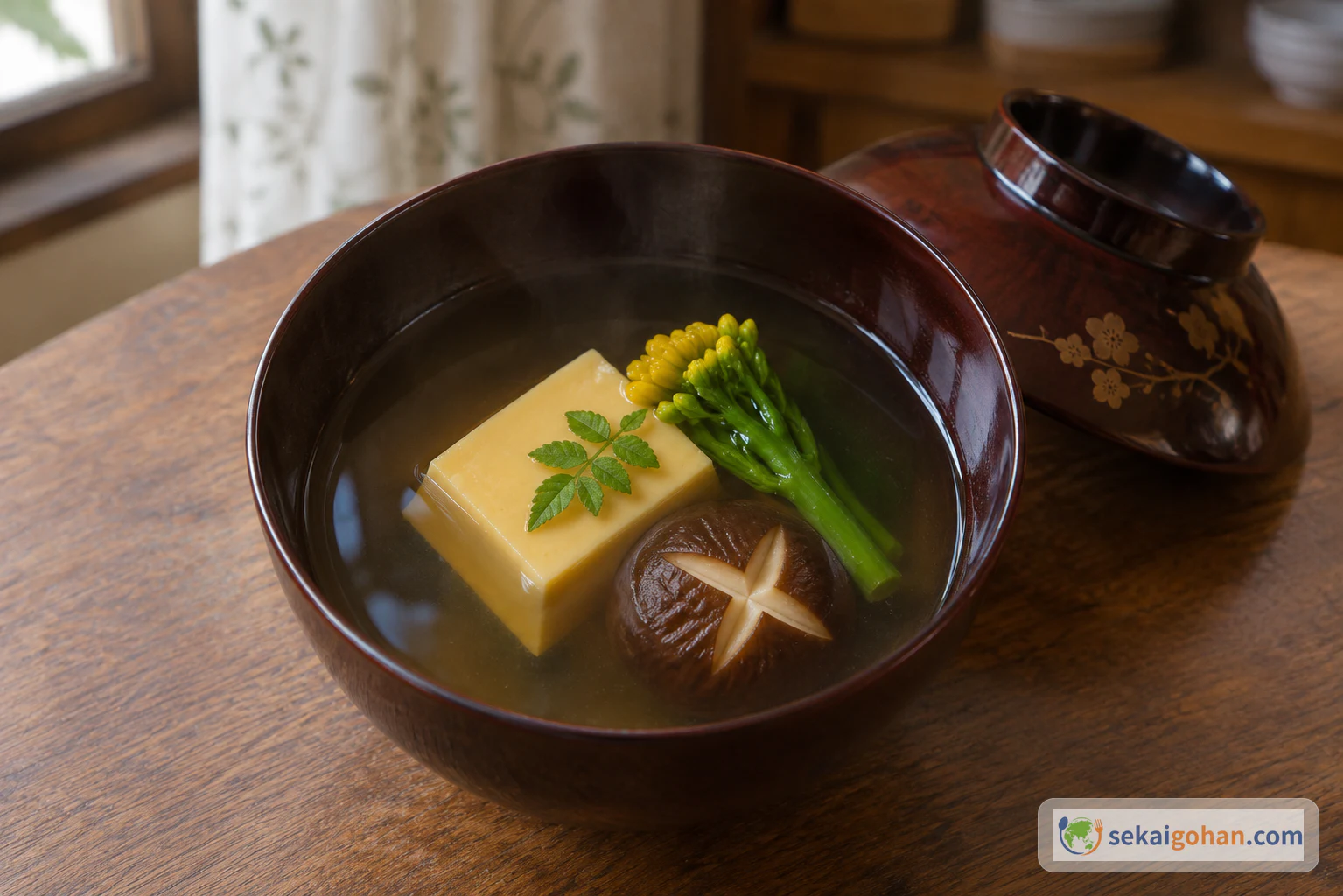
Ingredients
| Ingredient | Amount | Role |
|---|---|---|
| Water | 4¼ cups (1 L) | For the dashi |
| Kombu (昆布), preferably ma-kombu | ¾ oz (20 g) | Glutamate base of the dashi |
| Katsuobushi (鰹節), pale flakes without the dark bloodline | ¾ oz (20 g) | Smoky aroma and depth |
| Dashi, from above | 3⅓ cups (800 ml) | The soup itself |
| Salt, fine and free-flowing | ½–⅔ tsp | Main seasoning |
| Usukuchi (light-coloured) soy sauce (薄口醤油) | 2 tsp | Seasoning that keeps the broth pale |
| Egg tofu (卵豆腐) | as needed | Wandane, the centre of the bowl |
| Rape blossoms (菜の花) | as needed | Tsuma, green and slightly bitter |
| Fresh shiitake (しいたけ) | as needed | Tsuma, earthy and meaty |
| Kinome (木の芽), young sansho leaves | as needed | Suikuchi, the final scent |
| Salt for the blanching water | a little | Separate from the seasoning salt |
Steps
1Soak the kombu
Put 4¼ cups (1 L) water in the saucepan and add the weighed kombu. Let it soak for 30 minutes to 1 hour, with no heat. Use this time to cut the egg tofu into neat pieces, wipe the shiitake, and trim the rape blossoms.
2Bring it to 150°F (65°C) and let it rest
Put the pan over high heat with the thermometer in the water. When it reads 150°F (65°C), turn off the heat. Leave the kombu in the warm water for 10 minutes. The water should look clear, perhaps faintly golden, with no bubbles at all.
3Heat gently to 195°F (90°C) and lift out the kombu
Turn the heat to low and warm the pot again. When the thermometer reads 195°F (90°C), lift out the kombu with chopsticks right away. If it stays in hotter water, the kombu turns bitter and harsh. Without a thermometer, small bubbles starting to rise from the bottom of the pot, at about 175°F (80°C), are a rougher guide. Lift the kombu out at that point. The liquid should still be clear, with only a few bubbles and no rolling boil.
4Add the bonito flakes off the heat
Turn off the heat. Add the katsuobushi all at once and leave it alone, with no stirring or pressing. Let it steep for 5 minutes, and do not go longer. If the dashi still smells and tastes faint at 5 minutes, turn the heat on for about 5 seconds and then off again.
5Strain without squeezing
Line the fine strainer with a paper towel and set it over a bowl. Pour the dashi through gently and let it drain on its own. Do not squeeze or press the flakes in the paper, since that is what clouds the dashi. Measure out 3⅓ cups (800 ml) for the soup. The dashi in the bowl should be clear, pale amber and smell of the sea and smoke.
Never squeeze the flakesSqueezing the flakes wrings out a little more dashi, but it also pushes fine particles into the bowl and clouds the dashi. If you want to use the spent flakes, make a second dashi with them.
6Blanch the fillings
Bring a pan of water to a full boil and add a little salt. Dip the egg tofu and shiitake in briefly, then lift them out. Cook the rape blossoms for 40 seconds, then lift them out and drain them. Blanching keeps the greens from tinting the dashi green.
7Warm the egg tofu and shiitake, then season
Pour the measured dashi into a clean pan and add the blanched egg tofu and shiitake. Heat gently. Season with the 2 tsp usukuchi soy sauce and salt, starting with ½ tsp salt and tasting before you add more, up to ⅔ tsp. Rape blossoms do not go in this pan. Turn off the heat as soon as the egg tofu and shiitake are hot through, with the surface barely moving.
Keep it from boilingA hard boil clouds the dashi and drives off the bonito aroma you worked to keep. Bring the soup just to hot, taste, and turn off the heat.
8Build the bowls
Set a piece of egg tofu in each bowl as the base. Lean the rape blossoms upright against it and place the shiitake beside. Ladle the hot broth in gently along the side so the fillings stay where you put them. Add the kinome last, so its scent reaches the table fresh. Put the lid on and serve while steam fogs the inside of the lid.