Ingredients and steps on one page. Print it, or choose “Save as PDF” in the print dialog.
Sekai Gohan
Sushi: Tokyo-Style Nigiri with Soy-Marinated Tuna (Zuke Maguro Nigiri)
Ingredients
| Ingredient | Amount | Role |
|---|---|---|
| Rice (kome) | 2 gō | The base of the sushi rice |
| Water | A little less than the 2-gō line on the rice cooker pot | Cooks the rice slightly firmer than usual |
| Sake | 2 tbsp | Added when cooking the rice |
| Kombu (dried kelp) | 10–15 cm | Adds savoriness to the rice as it cooks |
| Red vinegar (akazu) | 4 tbsp | Acidity and aroma for the sushi vinegar |
| Sugar | 1/2 tsp | Sweetness in the sushi vinegar |
| Salt | 1 tsp | Saltiness in the sushi vinegar |
| Lean red tuna, sashimi grade (maguro akami) | 1 saku | The nigiri topping |
| Dark soy sauce (koikuchi shōyu) | 2 tbsp | The marinade (tare) |
| Mirin | 2 tsp | Sweetness and aroma in the tare; heated before use |
Steps
1Rinse the rice and drain it
Rinse the rice, then tip it into a sieve and let it drain for 5–10 minutes. Draining well means the water you add next is the water that counts, so the slightly-less-than-usual amount is easier to judge.
2Prepare the kombu and cook the rice
Wipe the kombu lightly with a damp cloth and cut a few slits into it with scissors. Put the rice in the rice cooker pot, add water to a little below the 2-gō line, then add the 2 tbsp sake and the kombu, and cook. Do not top the water back up to the line afterward. The slightly lower level keeps the rice a little firmer for sushi.
If your rice cooker has a dedicated sushi-rice line or setting, check the machine's instructions. Leave the cooking time to the rice cooker.
3Dissolve the sushi vinegar
While the rice cooks, stir together the red vinegar, sugar and salt in a small bowl until the sugar and salt dissolve. Undissolved crystals won't spread evenly through the rice, so give it time.
4Season the hot rice and fan it
When the rice is cooked, remove the kombu and turn the rice out into a sushi tub or wide bowl while it is still hot. Pour the sushi vinegar over it in a circle, then mix quickly with the paddle using a cutting, slicing motion rather than stirring, so the grains are not crushed. Keep turning the rice lightly while fanning it with the uchiwa. Fanning as you mix helps keep the rice from turning sticky.
When the worst of the heat has gone and the rice has a gloss, cover it with a damp, well-wrung cloth and keep it that way until you shape the nigiri.
5Cook off the mirin and cool the tare
Heat the mirin in a small saucepan to cook off the alcohol, then add the dark soy sauce and let the tare cool completely. Cool it fully before the fish goes in; warm tare should not touch raw tuna.
6Slice and marinate the tuna in the refrigerator
Cut the tuna into thin slices. Lay them in the cooled tare in a shallow dish and leave them in the refrigerator for about 10 minutes. Then lift the slices out and drain off the excess liquid.
Discard the tare that touched the raw fish, and don't reuse it as dipping sauce. The marinade adds flavor, but it does not make the fish safe.
7Shape the nigiri lightly
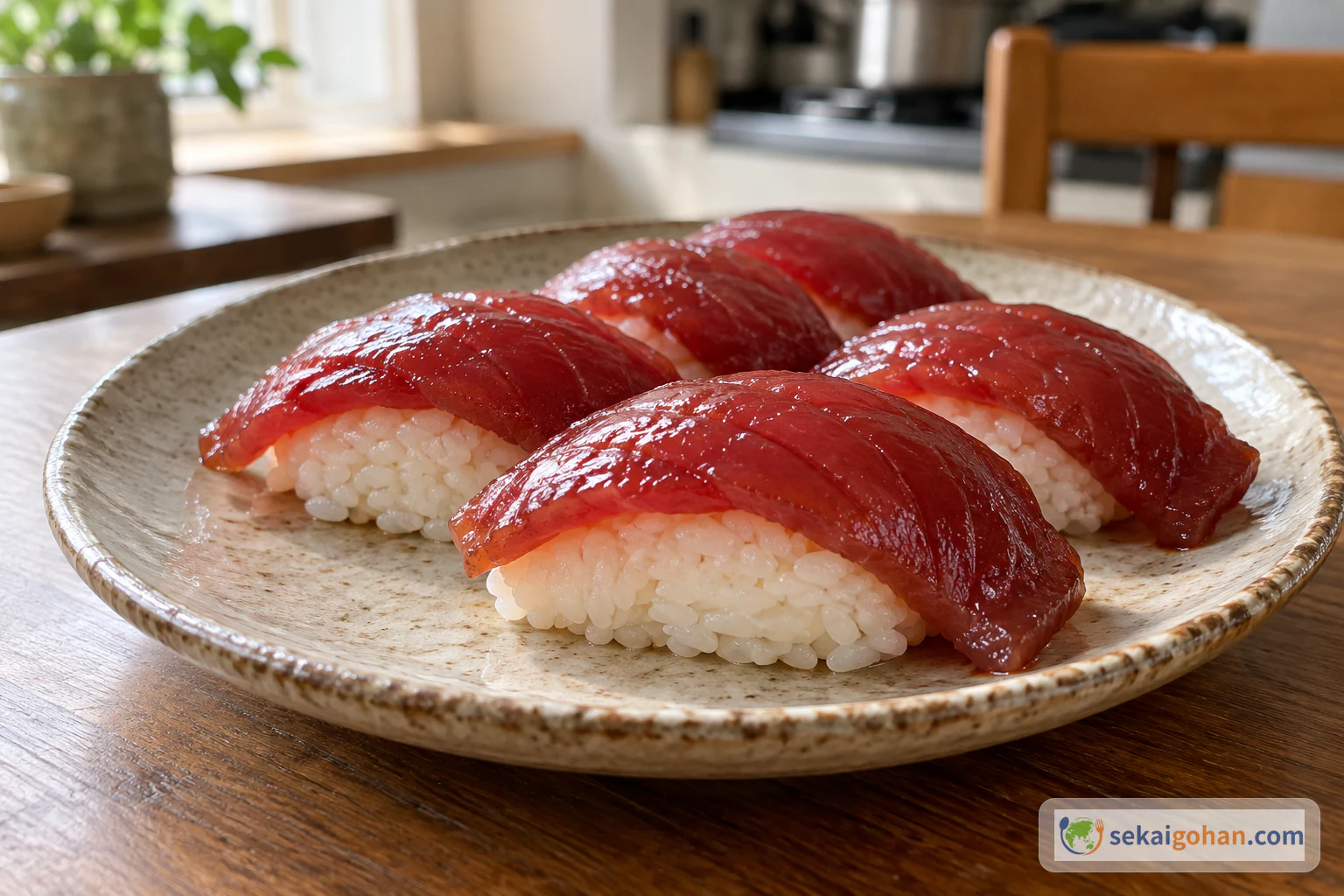
With clean hands, place a slice of marinated tuna near the second joint of your fingers and set a bite-size portion of sushi rice on it. Press lightly while rolling your fingers sideways to form the piece. If you squeeze hard, the grains get crushed; use only enough pressure for the piece to hold its shape. If you dip your hands in water while shaping, keep it to a small, separate bowl of plain water.
Shape only what you are about to serve, and eat the nigiri soon after it is made. Don't let chilled fish sit on warm rice for a long time. One saku varies in size, so the number of pieces varies too. Match fish and rice as you go rather than expecting both to come out even.