Ingredients and steps on one page. Print it, or choose “Save as PDF” in the print dialog.
Sekai Gohan
Taiyaki: Crisp Japanese Fish-Shaped Cakes with Red Bean Paste
Ingredients
| Ingredient | Amount | Role |
|---|---|---|
| Cake flour (hakurikiko) | 5¼ oz (150 g) | Body of the batter; low gluten keeps the crust light |
| Baking soda (jūsō) | 0.1 oz (3 g) | Deep browning and a thin crust |
| Baking powder | 0.1 oz (3 g) | Lift |
| Granulated sugar | ½ oz (15 g) | Color and gentle sweetness in the crust |
| Milk | 2⅔ oz (75 g) | Richness and browning |
| Water | 2⅔ oz (75 g) | Loosens the batter |
| Egg | 1 | Binds the batter and adds richness and color |
| Salt | a pinch | Sharpens the sweetness |
| Vegetable oil | 1 tsp | Mixed into the batter |
| Sweet red bean paste, chunky (tsubuan) | 10½ oz (300 g), 1¾ oz (50 g) per fish | The filling |
Steps
1Portion and shape the bean paste
Weigh the bean paste into six 1¾ oz (50 g) portions. Roll each one between your palms into a short log, a little shorter than the fish cavity in your pan. Hold a log against the mold to check: it should sit inside the outline with a margin at both ends. Line them up on a tray. They are ready when all six are the same size and hold their shape.
2Sift the dry ingredients
Put the cake flour, baking soda and baking powder together in a sieve. Sift them into a mixing bowl. Sifting spreads the small amounts of leavening evenly through the flour so no single fish gets a bitter pocket of soda. The flour should sit in a soft, even mound with no clumps.
3Make the egg mixture
In a second bowl, beat the egg until the white and yolk are fully blended. Add the water, milk, sugar and salt. Whisk well until the sugar dissolves. The mixture is ready when it looks pale, even and slightly foamy, with no streaks of egg white.
4Combine the batter and let it rest
Pour the egg mixture into the flour a little at a time, whisking gently so lumps do not form. Add the oil last and stir just until it disappears. Do not overmix: worked gluten gives a chewy crust instead of a crisp one. Cover the bowl with plastic wrap and refrigerate for about 30 minutes. The batter should pour easily and look smooth, not whipped.
5Heat the pan and pour the first layer
Season and grease the taiyaki pan as its instructions direct. Set it over low heat on the gas burner and heat both halves of the mold through. Pour about 1 tbsp of batter into one side, spreading it thinly. The batter should sizzle softly at the edges as it lands. Wait until this layer has set and no longer runs.
6Fill and cover the paste completely
Pour about 1 tbsp of batter into the other half of the mold. Lay a paste log on it, pushing it gently toward the tail first. Spoon a scant 1 tbsp of batter over the top and smooth it until the paste is completely hidden. Fill any gap at the edges with batter from around it. The step is done when the surface is solid pale batter with no dark paste showing anywhere.
7Close the pan and bake both sides
Fold the pan shut and keep it on low heat. Bake about 3–5 minutes on one side, then flip the pan and bake the second side for about the same time. Low, steady heat browns the crust evenly without scorching it. Each side is done when it has turned a deep, even golden brown.
8Unmold, wipe the pan and repeat
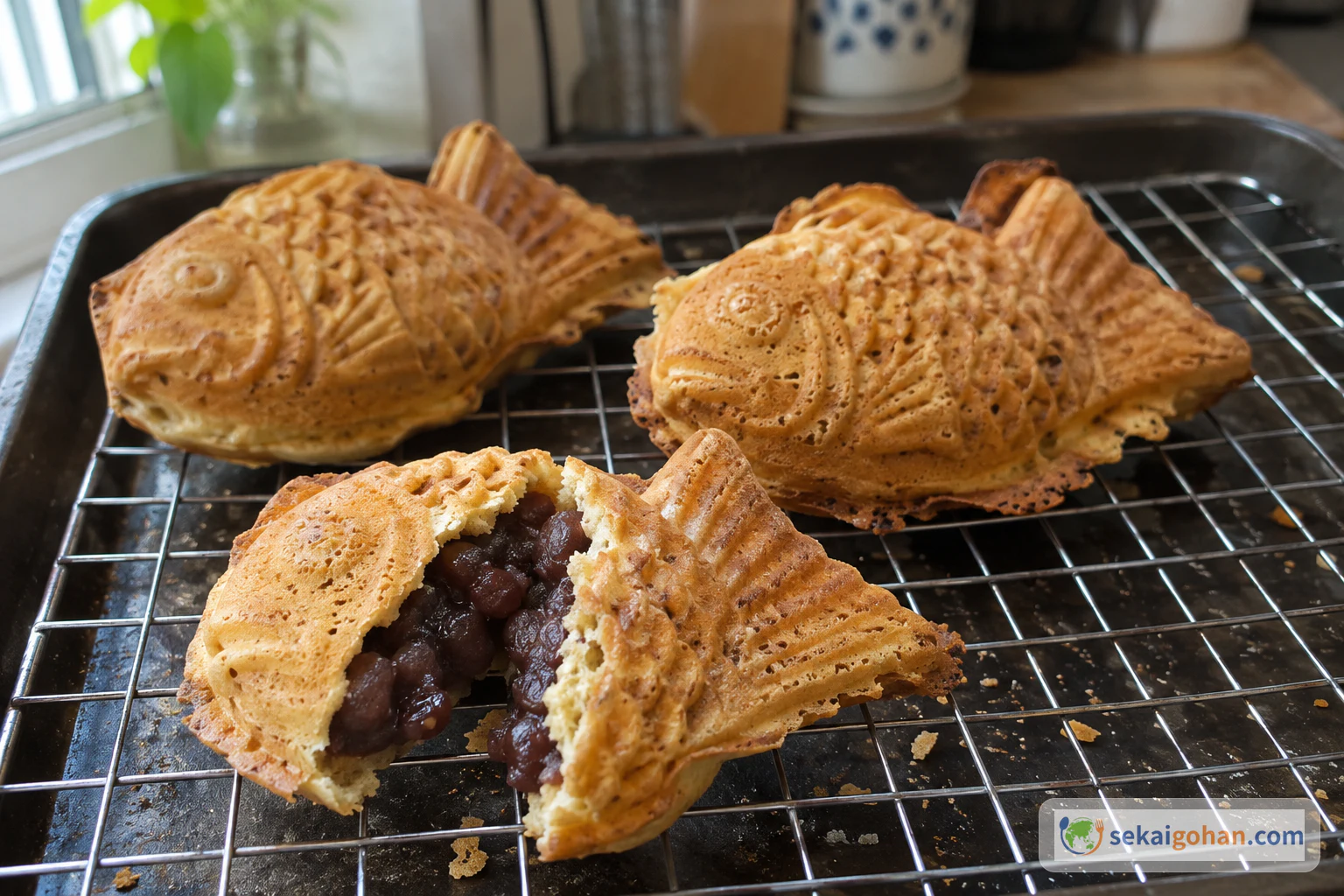
Open the pan. A finished fish slides out of the mold cleanly. Move it to the wire rack. If the crust is still pale and clings to the iron, close the pan and keep baking on low. Wipe off any scorched batter or paste with a paper towel before you pour the next fish. Carry on until all six are baked, each one golden on both sides with warm paste inside.