Ingredients and steps on one page. Print it, or choose “Save as PDF” in the print dialog.
Sekai Gohan
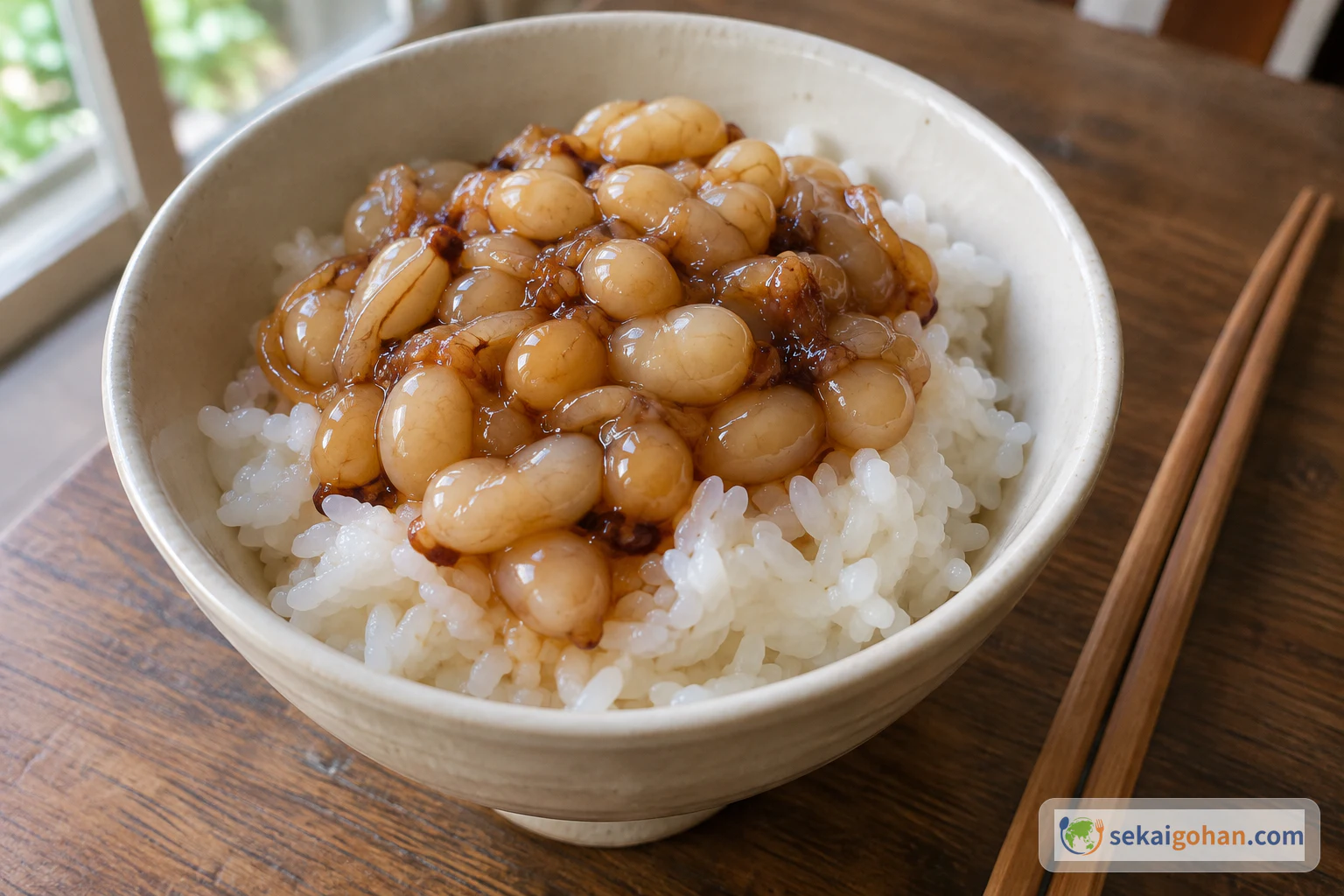
Takomanma: Hokkaido Octopus Roe Marinated in Sake and Soy
Ingredients
| Ingredient | Amount | Role |
|---|---|---|
| Takomanma (yanagidako ovary, たこまんま), labeled for raw eating | 1 (about 9–10½ oz / 250–300 g; go by the pack label) | The main ingredient: rich savor and the pop of each grain |
| Sake (日本酒), for boiling | 4 tbsp (60 ml) | Sweetness and aroma in the marinade, boiled once to drive off the alcohol |
| Soy sauce, dark (koikuchi, 濃口醤油) | 2 tbsp (30 ml) | The salt and savory backbone |
| Hot cooked rice | 2 rice bowls (about 10½ oz / 300 g) | The base it is eaten on |
Steps
1Shrink the skin with boiling water
Set the whole ovary in a stainless bowl and bring a kettle to a full boil. Pour the water slowly over the entire surface, turning the ovary so every side gets wet. The hot water tightens the skin so it tears cleanly. Rinse it under running tap water as soon as the skin has puckered and turned white all over.
2Tear the skin and turn out the eggs
Lay the ovary on a clean board and break the skin with your fingertips. It is thicker than it looks; if it will not tear, nick it shallowly with the tip of a knife. Turn the skin inside out like a sleeve so the egg clusters roll out, and discard the skin and membrane. The clusters should come out in long, unbroken strands.
3Rinse the eggs under running water
Move the clusters into a fine-mesh colander and rinse them under the running tap. The water runs cloudy and milky, which is normal, so keep going. Turn the clusters gently with your fingers so the stream reaches every side. Move on when every cluster has been under the water and drained.
Keep the seafood tools separateUse this colander, bowl and board for the roe only, and wash them before anything else touches them. Do not cut vegetables on them afterward.
4Loosen the eggs grain by grain
Over a bowl, strip the clusters between your fingers so the grains come apart. Snip out the knots where strands meet and the thin white connecting cords with scissors or pick them off by hand. Rough loosening leaves lumps the marinade cannot reach, and those taste flat beside the seasoned grains. You are done when the eggs are separate grains, like ikura.
Loosen more than you thinkEvery grain that stands apart takes the marinade on its own. Spend the extra minute here; it decides whether every spoonful is evenly seasoned.
5Boil the sake and make the marinade
Pour the sake into a small saucepan and bring it to a boil once to drive off the alcohol. Take it off the heat and let it cool. Stir in the soy sauce at 2 parts sake to 1 part soy. Use it only when the pan is cool to the touch; hot marinade turns the eggs white and firm.
6Pour the marinade over the eggs
Put the loosened eggs in a shallow container and pour the cooled marinade over them until it just covers them. The grains do not soak up liquid, so covering is all you need. If the eggs stick out, mix a little more sake and soy at the same ratio. Stir once gently from the bottom with chopsticks until every grain glistens under the liquid.
7Marinate in the refrigerator
Cover the container and refrigerate it at 39°F (4°C) or below. Stir gently from the bottom once or twice while it marinates. Taste after about half a day: if the flavor is thin, give it longer. The marinade is ready when the grains taste seasoned all the way through.
Fix salt with rice, not waterIf it tastes too salty, put it on more rice. Water thins the soy and sake both and leaves the grains bland.
8Spoon it onto hot rice
Fill bowls with hot rice. Lift the eggs out with a spoon, letting some marinade come too, and pile them on generously. The heat of the rice warms the grains slightly and releases their sea aroma. Eat it while the rice still steams and the grains still shine.