Ingredients and steps on one page. Print it, or choose “Save as PDF” in the print dialog.
Sekai Gohan
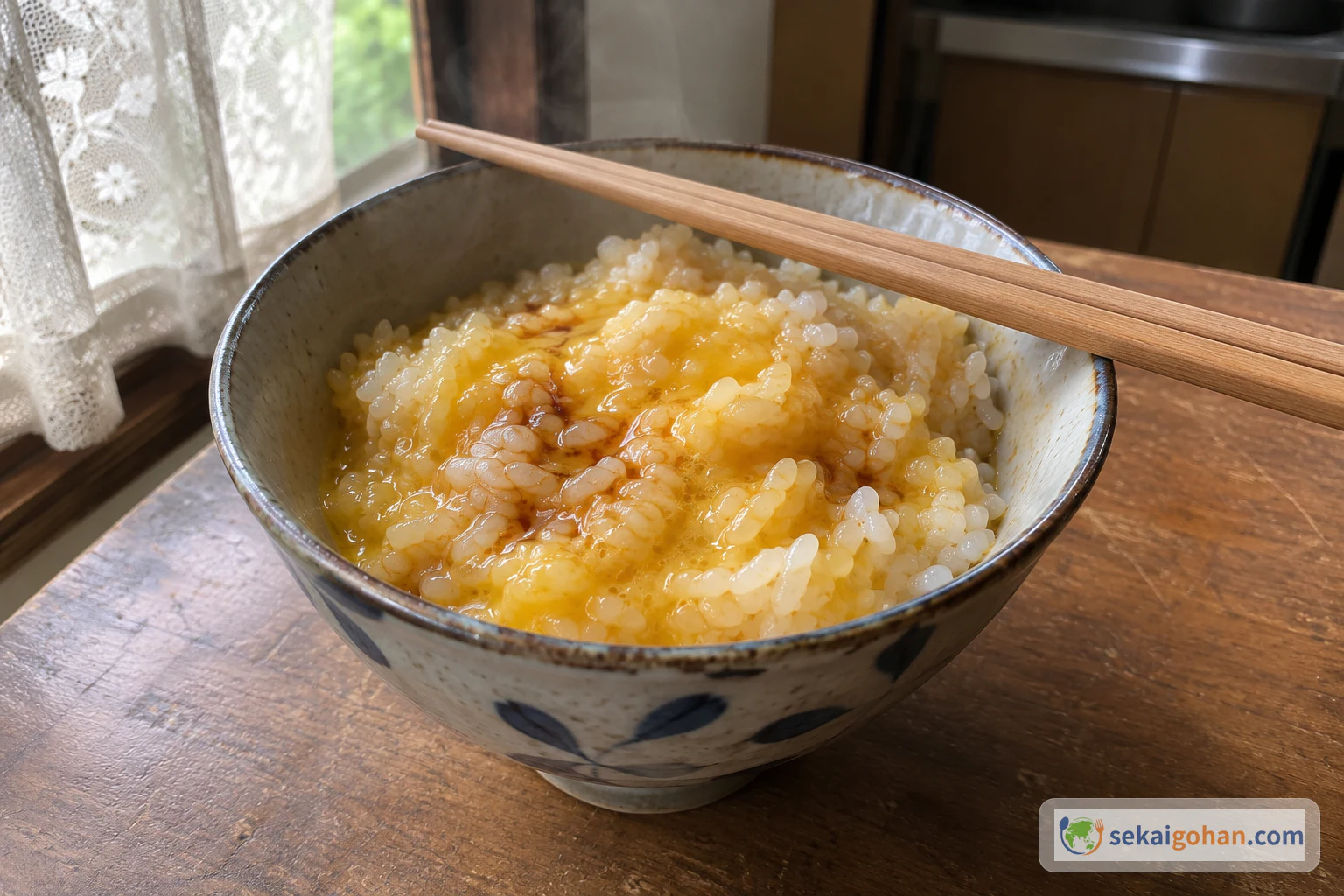
Tamago Kake Gohan: Japanese Raw Egg and Soy Sauce Rice
Ingredients
| Ingredient | Amount | Role |
|---|---|---|
| Warm cooked short-grain rice (gohan) | 5¼ oz (150 g) | The base: sweetness, warmth, and grains for the egg to coat |
| Egg (tamago) | 1 medium, about 2 oz (60 g) | Richness, body and the glossy yellow coating |
| Soy sauce (shōyu) | ¼ oz (7 g), by weight | Salt, savoriness and aroma, mixed into the rice first |
Steps
1Mound the hot rice
Scoop the rice into the bowl with a paddle, piling it loosely without pressing it down. Keep the grains whole, because crushed rice turns pasty once the egg goes on. The rice has to be hot. Cold rice will not take the egg, and raw egg cannot be warmed up afterwards. The rice is ready when steam is rising and the grains sit separate and intact.
2Weigh the soy sauce
Set the small dish on the scale and zero it. Pour slowly until the scale reads 7 g, adding the last drops one at a time. Pouring into a dish first, rather than straight over the rice, keeps a heavy hand from flooding the bowl. You are done when the scale shows 7 g and the soy sits as a shallow pool, well below the rim.
3Mix the soy sauce into the rice
Pour the soy sauce over the rice, spreading it across the surface. Use chopsticks to lift rice from the bottom of the bowl and turn it over, working around until every part has been mixed. This seasons the rice before the egg arrives, so the soy sits as a savory layer under the egg's richness. Stop when the grains are evenly tinted light amber, with no clumps and no soy pooled at the bottom.
4Crack the egg into a separate bowl
Take the egg from the refrigerator now and crack it straight into the small bowl, not onto the rice. A separate bowl lets you catch a stray piece of shell or a bad egg before it ruins the rice. Look and smell before you go on. Throw the egg out if it smells off or the white looks cloudy. The egg is good to use when the yolk is whole, the white is clear, and no shell is in the bowl.
5Beat the egg lightly
Use chopsticks to cut through the white a few times and break up the yolk. Keep the motion short and gentle. The point is to loosen the white, not to beat air into it, because whipped egg gives a completely different, foamy bowl. Stop while the egg is still marbled, yellow streaked with clear white and no white foam on top.
6Pour the egg over the rice
Hold the small bowl above the rice and pour the egg in a thin stream. Start at the top of the mound and circle outward toward the edges. Egg dropped in one spot stays in one spot, and the bowl ends up patchy when you mix. Stop pouring when a thin, even layer covers the mound and the amber rice still shows at the rim.
7Fold and eat right away
Fold the rice and egg together with big strokes, lifting from the bottom of the bowl, about 10 to 15 times. Overmixing cools the rice, and the egg turns loose and runny. Eat it as soon as you stop. The bowl is done when it is glossy pale yellow throughout and no liquid separates at the edges.