Ingredients and steps on one page. Print it, or choose “Save as PDF” in the print dialog.
Sekai Gohan
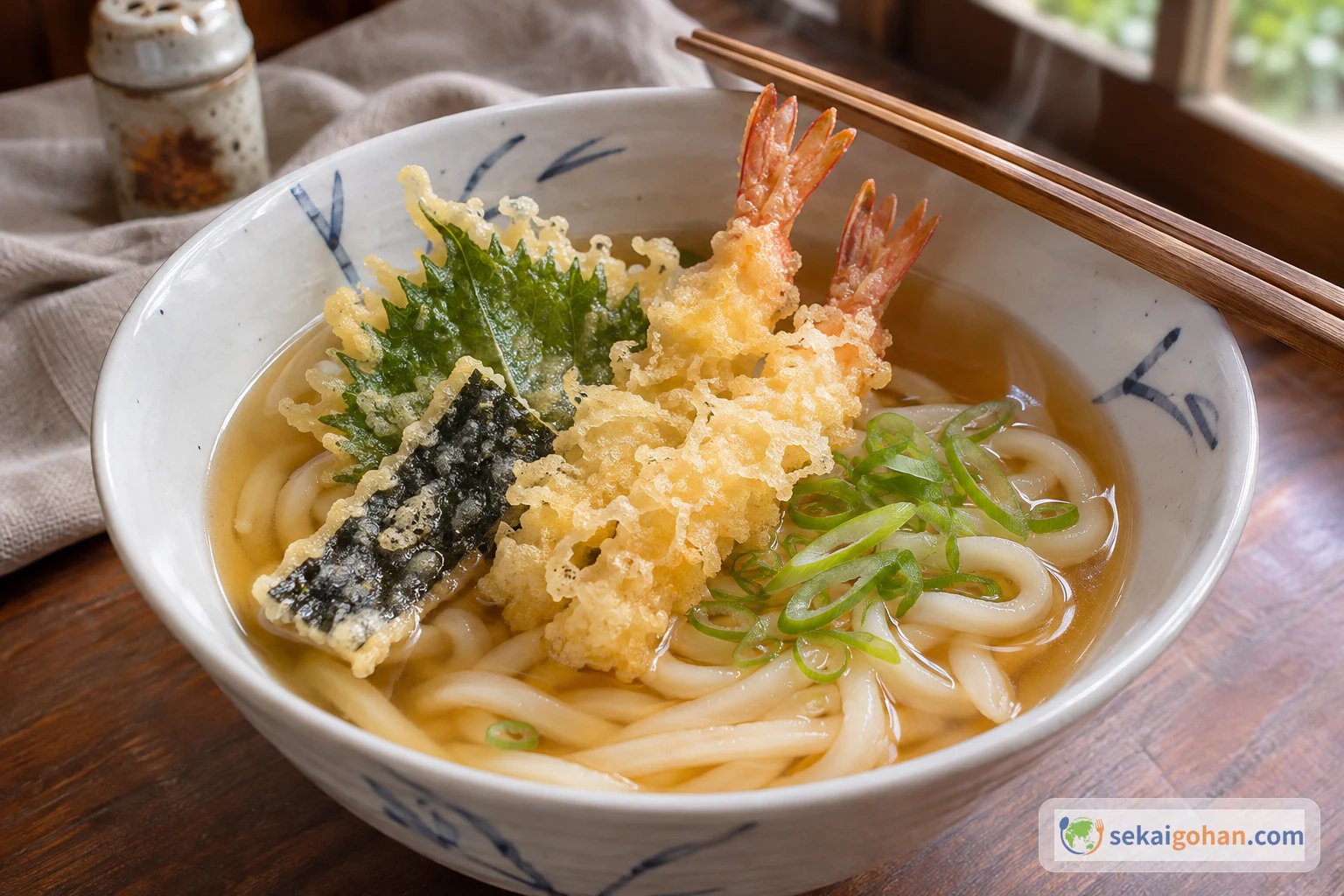
Tempura Udon: Japanese Hot Udon with Shrimp Tempura and Iriko Dashi
Ingredients
| Ingredient | Amount | Role |
|---|---|---|
| Water, for the dashi | 7½ cups (1820 ml) | Base of the stock |
| Iriko (dried small sardines, 煮干し niboshi) | 1¼ oz (35 g) | Deep fish backbone of the broth |
| Katsuobushi (dried bonito flakes, かつお節) | ¾ oz (21 g) | Smoky second layer, added after the iriko |
| Hon mirin (本みりん) | 2 tbsp | Rounds out the broth |
| Sugar | 1 tbsp | Takes the edge off together with the mirin |
| Salt | 1½ tsp | The saltiness the soy sauce alone does not give |
| Usukuchi soy sauce (light soy sauce, 薄口しょうゆ) | 2 tbsp | Seasons while keeping the broth pale |
| Udon noodles (うどん), boiled or frozen | 4 portions, about 7 oz (200 g) each | One portion per bowl |
| Shrimp, shell and tail on | 8 | Two per bowl |
| Shiso leaves (大葉 ōba) | 4 | Fried in batter |
| Nori | ¼ sheet | Cut into 4 strips and fried in batter |
| Cake flour (薄力粉 hakurikiko), for the batter | 1¾ oz (50 g) | Light, crisp coating |
| Beaten egg | ½ egg | Binds the batter |
| Ice-cold water | ⅓ cup (80 ml) | Keeps the batter light |
| Flour, for dusting | as needed | Helps the batter grip the shrimp |
| Frying oil | as needed, about 1¼ inches (3 cm) deep | For frying |
| Scallion (青ねぎ) | 1 | Sliced thin on the diagonal |
| Shichimi tōgarashi (七味唐辛子, seven-spice chili) | to taste | Heat and citrus at the table |
Steps
1Simmer the iriko
Put the water and iriko in a deep pot and bring it up slowly. As soon as small bubbles appear around the edge, lower the heat and hold it just below a boil for 20 minutes. A rolling boil pulls harsh, bitter notes out of the fish, so keep the iriko lying quietly on the bottom. Lift them out with a skimmer after the 20 minutes.
2Add the katsuobushi and strain
Scatter the katsuobushi over the stock and keep the pot at a gentle bubble for about 10 minutes. Line a fine strainer with damp paper towel or a cloth and set it over a second pot. Pour the dashi through and let the flakes drain. You should have about 5¾ cups (1400 ml) of dashi; top it up with water to reach that amount if it falls short.
A one-minute rest for more aromaFor a stronger bonito scent, turn off the heat after the 10 minutes and let the pot sit for about 1 minute before straining. The flakes give up the most flavor at 120–160°F (50–70°C), and once the stock falls below 120°F (50°C) they start drawing it back in, so strain soon after the rest.
3Season the kake broth
Add the mirin, sugar, salt and usukuchi soy sauce to the dashi and set the pot over low heat. Stir until the sugar and salt dissolve and warm the broth until it steams, with only small bubbles at the edge. Taste it: the color should stay pale, the fish aroma should come first, and the salt should sit behind it. Keep it warm on the lowest heat and never let it boil, because boiling drives off the aroma and cooks the broth down until it turns salty.
4Peel and devein the shrimp
Peel the shrimp, leaving the tails on. Pull the dark vein out along the back with a bamboo skewer or the tip of a knife. Cut about ¼ inch (5 mm) off the end of each tail, where water hides and spatters in the oil. The shrimp are ready when the backs are clean, with no dark line left.
5Straighten, dry and dust the shrimp
Turn each shrimp belly up and make 3 to 4 shallow cuts across the belly, about ¼ inch (5 mm) apart. Press gently along its length with your fingers until the body lies flat and straight. Pat every shrimp dry with paper towel, the tail especially, then dust lightly with flour. The surface should look dry and evenly dusted, with no wet patches.
6Heat the oil and mix the batter
Pour oil about 1¼ inches (3 cm) deep into a deep pan and start heating it to 355°F (180°C). While it heats, cut the nori into 4 strips. Pour the ice-cold water into a bowl, mix in the beaten egg, then add the cake flour all at once and stir with chopsticks in a few loose strokes. Stop while dry streaks and small lumps remain.
Stop mixing earlyEvery extra stir builds gluten, and gluten makes the batter sticky so it holds water and fries heavy and greasy. Cold water and a few strokes keep it crisp. Never make the batter ahead; mix it while the oil heats.
7Fry the shrimp
Test the oil with a drop of batter: at the right heat it rises to the surface at once. Hold a shrimp by the tail, draw it through the batter and lower it in, sweeping it back and forth twice as it enters so it stays straight. Fry 2 or 3 at a time so the oil stays hot, turning them a few times, for about 1½ minutes. Lift them onto the rack when the batter is crisp and pale gold.
Hot oilOil at 355°F (180°C) burns badly. Dry the shrimp well and trim the tail tips so they do not spatter, lower each piece in gently, and keep children and water away from the pan. Never leave the oil unattended. Dispose of used oil according to your local rules.
8Fry the shiso and nori
Dip the shiso leaves in the batter and slide them into the oil. Coat the nori strips and lower them in slowly, since nori curls and can spit. Fry until the batter is crisp, then drain everything on the rack. If the batter runs out, mix a second batch in the same proportions, or scatter the last nori strips over the bowls uncoated.
9Warm the noodles and bowls
Bring a large pot of water to a boil and slice the scallion thinly on the diagonal. Fill the bowls with hot water to warm them. Drop the udon into the boiling water and warm it just until the strands loosen and are hot through, then drain well. Pour the water out of the bowls; they should feel hot to the touch.
10Build the bowls
Divide the noodles among the bowls. Lay the tempura on top toward one side, scatter over the scallion, then pour the hot broth around the noodles. Leave part of each piece of tempura above the broth. Serve at once with shichimi on the table.
Keep the tempura half out of the brothTempura sitting fully in hot broth turns soft within moments. Leaning it against the rim gives two textures in one bowl: crisp on top, broth-soaked below.