Ingredients and steps on one page. Print it, or choose “Save as PDF” in the print dialog.
Sekai Gohan
Tonjiru: Japanese Pork and Root Vegetable Miso Soup
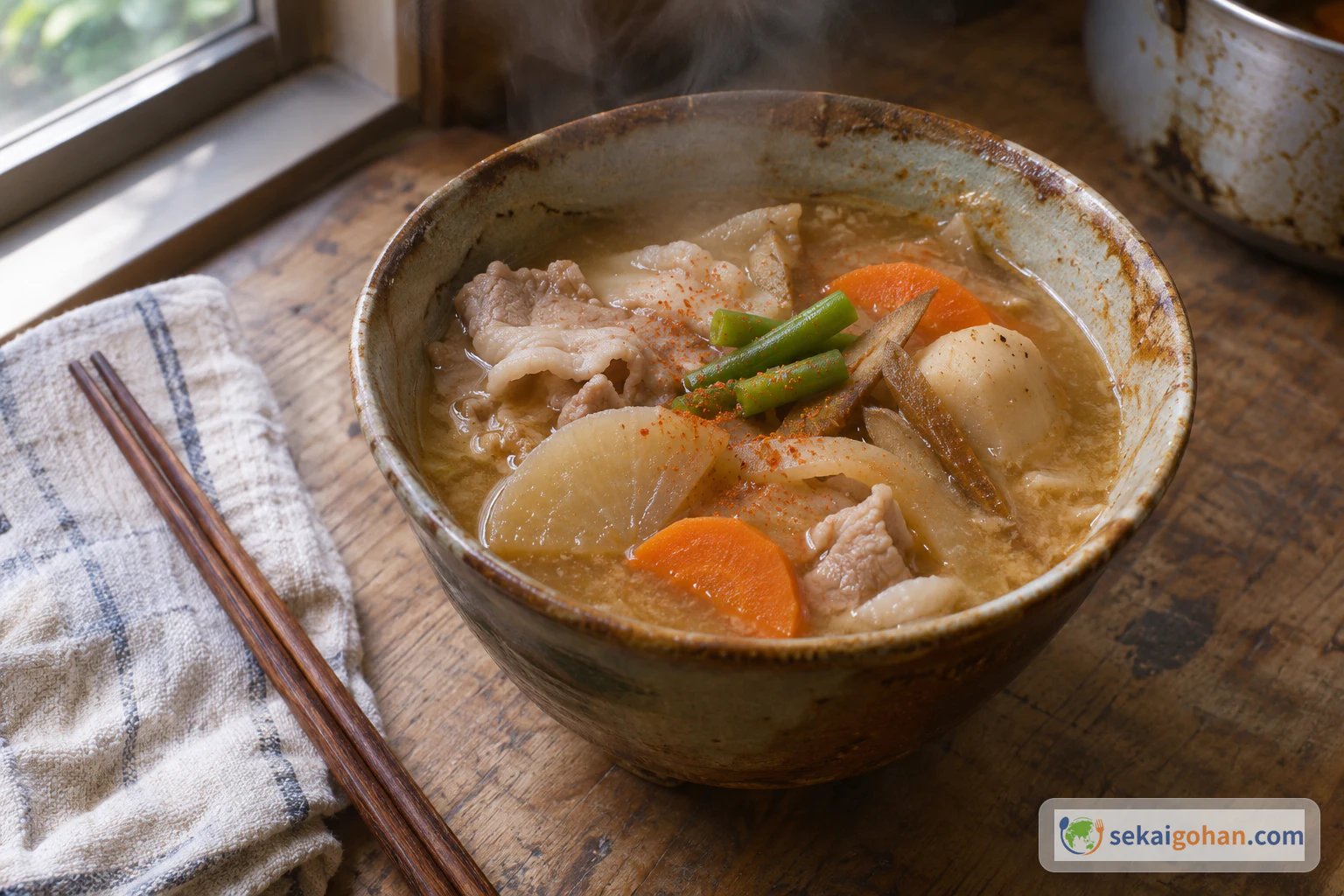
Ingredients
| Ingredient | Amount | Role |
|---|---|---|
| Thinly sliced pork belly | 5–7 oz (150–200 g) | Savory depth and sweet fat that clouds and enriches the broth |
| Daikon radish | 3½ oz (100 g) | Sweetness and a soft bite; soaks up the broth |
| Carrot | ⅓ carrot | Color and sweetness |
| Burdock root (gobo) | ½ root | Earthy aroma, the flavor that makes it taste like tonjiru |
| Onion | ½ onion | Sweetness and a little body |
| Taro (satoimo) | 4 (about 5 oz / 150 g) | Silky body and heft |
| Japanese long leek (naganegi) | 1 | Aroma and sweetness |
| Green beans | 7–8 | Color and crunch, added late |
| Water or dashi | 4¼ cups (1 L) | The broth |
| Miso | 5–6 tbsp | Salt and aroma, added in two stages |
| Salad oil or sesame oil | 1–2 tsp | For stir-frying; carries flavor into the broth |
| Ichimi chili powder | to taste | A little heat at the table |
Steps
1Cut the roots and soak the burdock
Cut the daikon and carrot into ¼-inch (5 mm) half-moons, or quarter-moons if they are thick. Cut the burdock into small rough chunks by rolling it a quarter turn between cuts, and drop the pieces into a bowl of water right away so they keep their color. Peel the taro and cut it into large bite-size pieces. If you wash the taro a few hours ahead and let it dry, it will not slip in your hand while you peel. Within each vegetable, the pieces should be the same thickness, and the taro should be clearly the biggest pieces on the board.
Cut the taro largeSmall taro falls apart in the simmer and clouds the broth. Large bite-size pieces keep their shape through both rounds of miso and turn creamy inside.
2Cut the onion, leek, pork and beans
Slice the onion ¼ inch (5 mm) wide and cut the leek on a sharp diagonal into ⅜-inch (1 cm) pieces. Cut the pork belly into ¾–1-inch (2–3 cm) strips. Wash your hands, knife and board after handling the raw pork. Trim the green beans, cut them on the diagonal and set them on a separate dish, because they go into the pot near the end. Everything is ready when every vegetable except the beans is in one group and the pork is on its own plate.
3Stir-fry the vegetables without the pork
Drain the burdock. Heat 1–2 tsp oil in the pot over medium heat and add every vegetable except the green beans. Toss them for 1–2 minutes, then turn off the heat. You are coating the vegetables in oil here so their flavor moves into it, which gives the finished soup its depth. Stop when the oil coats everything and the onion edges turn translucent, before anything browns.
4Spread the pork over the vegetables
With the heat still off, loosen the pork with chopsticks and spread it over the vegetables. Turn the heat to medium-low and stir everything together for 2–3 minutes. In an aluminum or stainless pot, pork fried on its own sticks to the bottom, and the vegetables underneath prevent that. If some pork still sticks, lift the pot off the heat and scrape it free, which is easier off the flame. The pork is ready when the red color is gone and the fat looks clear.
Vegetables first, pork secondThis order keeps the pork off the bare metal so it cooks gently in the vegetables' oil without gluing itself to the pot. It also means the pork fat runs straight over the roots.
5Add the water and skim
Pour in 4¼ cups (1 L) water or dashi and raise the heat. When the pot reaches a full boil, grey-brown foam rises and gathers on the surface. Skim it off gently with a ladle. Hold back the miso for now. Move on when the foam stops collecting and the broth under it looks cleaner.
6Dissolve half the miso and simmer
Put 3 tbsp miso in a ladle, dip it into the pot and loosen the miso with broth until it melts in. Lower the heat and simmer for 7–8 minutes. This is the first round of miso, and it soaks into the vegetables while they cook. The surface should tremble, with small bubbles rising steadily from the bottom and never a rolling boil.
Two rounds of misoThe first round seasons the vegetables from the inside, and the second brings back the fresh miso aroma that long cooking takes away. Putting all the miso in at the start leaves a flat, cooked taste. Putting it all in at the end leaves the vegetables bland inside.
7Test the taro, then add the green beans
Push a bamboo skewer into the largest piece of taro. If it slides in with no resistance, add the green beans and simmer for 2–3 minutes more. If the taro still resists, give it another 2–3 minutes and test again before adding the beans. The beans are done when they are bright green and soft at the stem end.
8Finish with the remaining miso
With the heat low, dissolve the remaining 2–3 tbsp miso the same way, in a ladle with broth. Taste. If it needs more, add miso a teaspoon at a time. Once the miso is in, do not let the pot boil. Ladle into bowls and sprinkle with ichimi to taste. You have it right when the miso aroma rises from the pot and the broth tastes salty enough to eat with the vegetables.