Ingredients and steps on one page. Print it, or choose “Save as PDF” in the print dialog.
Sekai Gohan
Tonkatsu: Japanese Pork Loin Cutlet (豚カツ) with Shredded Cabbage
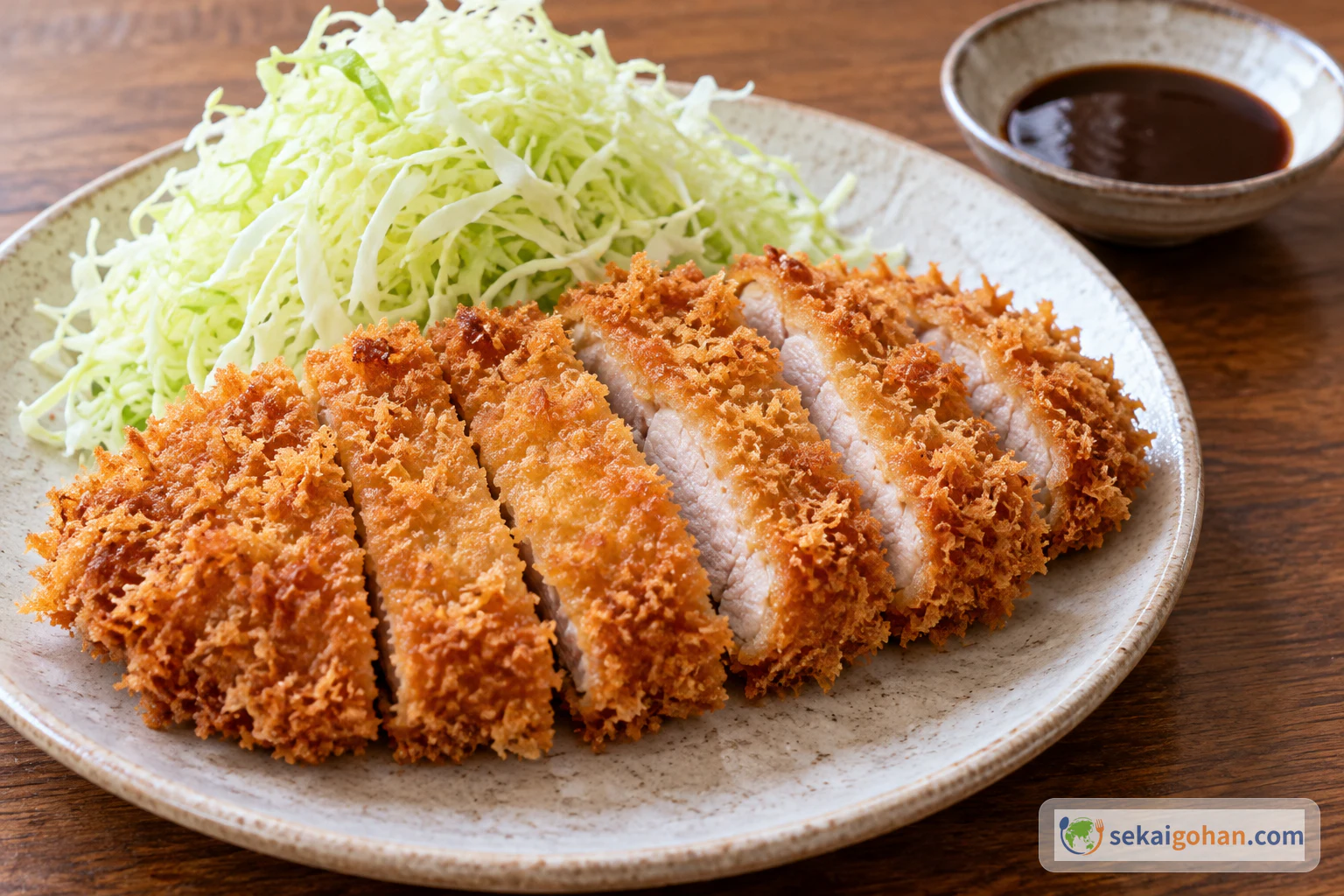
Ingredients
| Ingredient | Amount | Role |
|---|---|---|
| Pork loin, cut for tonkatsu (豚ロース, buta rōsu) | 2 pieces (250 g total) | The main ingredient. The fat along the edge and the lean meat give tonkatsu its richness |
| Salt | 1/4 tsp | Seasoning for the meat. Divide all of it over both sides |
| Pepper | A little | Seasoning for the meat |
| Flour (for dusting) | 1 tbsp | A thin layer on the meat that helps the batter cling |
| Egg | 1 | The binder in the batter. Use the whole egg |
| Flour (for the batter) | 4 tbsp | Mixed into the egg to make a thick batter that wraps the meat |
| Panko breadcrumbs (パン粉) | 1 1/2 cups (60 g) | The outer crust. Contains wheat |
| Cabbage | 2 leaves | Shredded, served alongside |
| Frying oil | As needed | For deep-frying in a pot |
| Chuno sauce (中濃ソース, chūnō sōsu) | As needed | Served with the cutlet at the table |
Steps
1Score the pork, pound it and season
Put the tip of the knife into the border between the lean meat and the fat, and make several cuts there from both the front and the back. Lean meat and fat shrink differently in the oil, and cutting through this connective tissue keeps the cutlet from curling.
Cover the meat with plastic wrap and pound it 30 to 40 times with a meat mallet. Stop when it is about half its original thickness and roughly one size larger. Don't smash it hard; push it back into a neat shape of even thickness so it cooks evenly. Divide the 1/4 tsp salt over both sides of both pieces and season with a little pepper.
2Make the batter
Beat the egg in a bowl, add the 4 tbsp flour and mix until even. Make sure no floury lumps remain, but don't whip in air. The result is a thick batter that will wrap the meat and hold the panko.
3Coat with flour, batter and panko
Dust the meat thinly with the 1 tbsp flour, including the edges, and shake off the excess. Heavy patches of flour separate, so keep the layer thin.
Dip the meat in the batter so it covers both faces and the sides, handling it with a bamboo skewer or chopsticks.
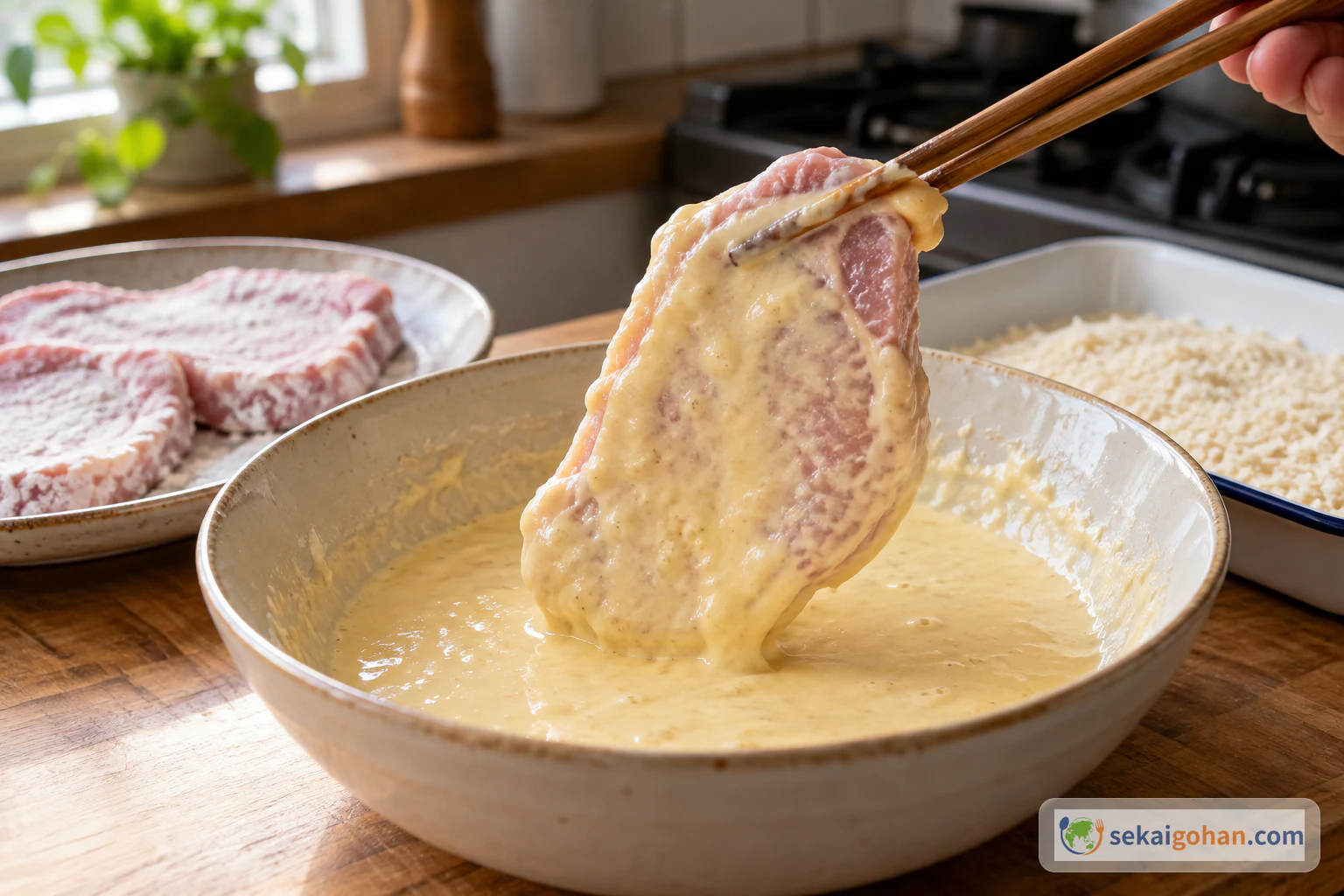
Coat the edges as well as the faces so the crust has nothing bare to peel from Scatter the 2 oz (60 g) panko over the whole piece and press lightly so it adheres. Don't squeeze it hard. Turn the cutlet and check that no bare spots remain on the faces or edges, then move straight on to frying.
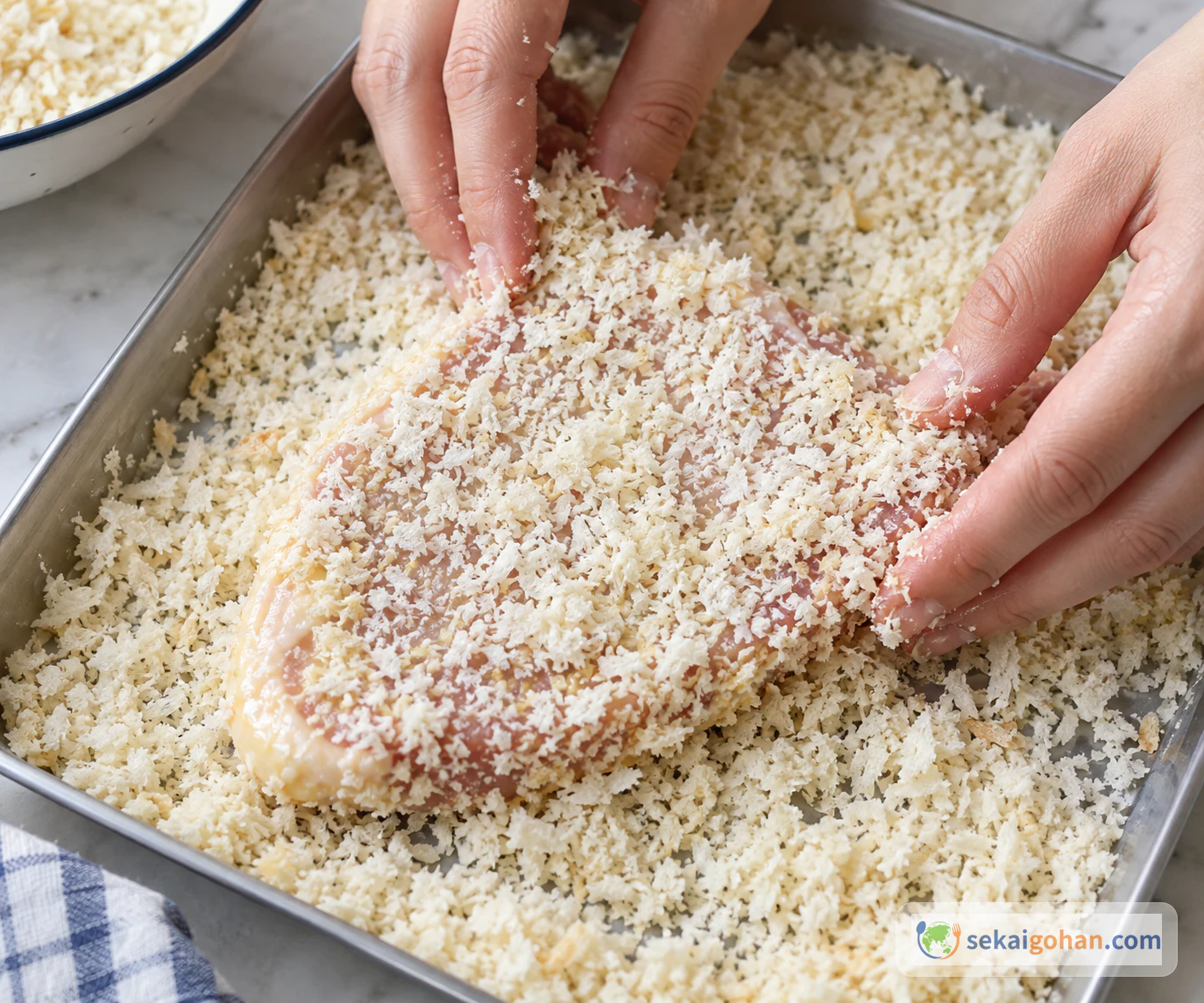
Press gently with your fingertips so the flakes stay airy 4Fry from 325°F (160°C) and check the center
Heat the frying oil in the pot to 325°F (160°C), checking with the oil thermometer. Slide the cutlet in and fry over medium heat for 5 to 6 minutes. Leave it alone until the crust has set; poking it early is a common reason the coating comes away.
Turn it over, raise the oil temperature and fry for another 1 to 2 minutes. Watch the oil rather than aiming for a number.
Optionally, once the cutlet has floated up and begins to color 1 to 2 minutes later, lift it out briefly to let steam escape. If you do this, hold it directly over the pot so hot oil drips back in rather than onto the stovetop, and remember it does not replace checking the center.
Check doneness with a probe thermometer inserted from the side into the thickest part. The target is a center temperature of 167°F (75°C) or higher held for 1 minute. If it is not there yet, keep cooking and check again. Don't judge by frying time, crust color or thickness; check the center.
5Drain on a rack
Lift the cutlet out with tongs reserved for cooked food and set it on a wire rack. Tilt it so the oil runs off. Lay the pieces side by side without stacking so steam can escape and the crust stays crisp. Rest only briefly; don't rely on standing time or residual heat to make the pork safe. The center check in step 4 is what decides that.
6Slice in one push
Cut the cutlet into strips about 0.5 inches (1.5 cm) wide. Rest the tip of the knife on the board and press the whole blade straight down in one stroke, without sawing back and forth. This keeps the crust attached to the meat. Use a clean board, not the one you used for raw pork, and transfer the slices to the plate.
7Shred the cabbage and serve
Soak the cabbage leaves in water first. Then cut out the hard core, cut the leaves in half lengthwise, stack them and roll them up. Slice finely across the fibers. Drain the shredded cabbage very well so it doesn't water down the plate.
Pile the cabbage next to the sliced tonkatsu and serve with chuno sauce as needed. The contrast between the hot cutlet and the cold, crisp cabbage is part of the pleasure of the dish.