Ingredients and steps on one page. Print it, or choose “Save as PDF” in the print dialog.
Sekai Gohan
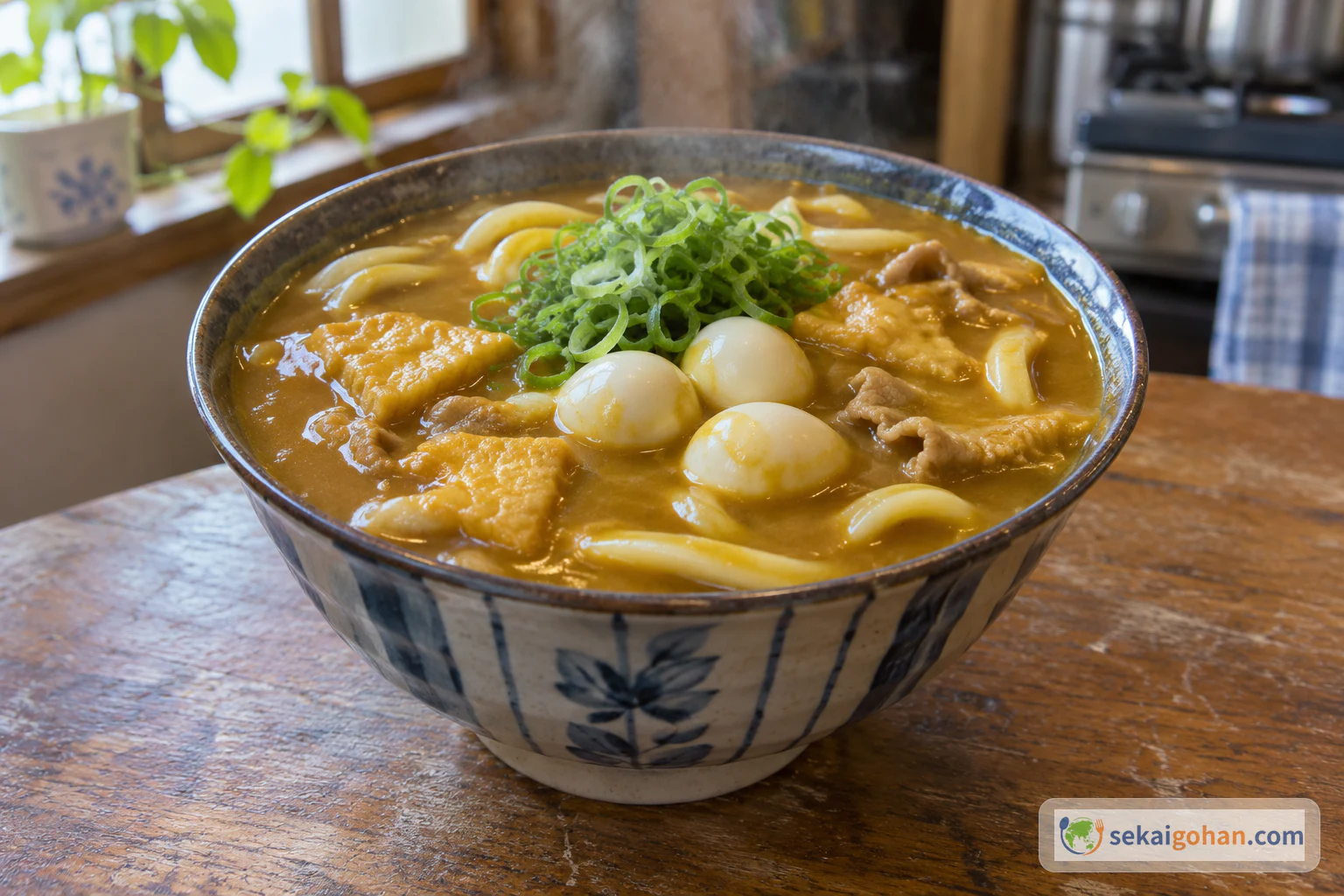
Toyohashi Curry Udon: Aichi Curry Noodles over Tororo Rice
Ingredients
| Ingredient | Amount | Role |
|---|---|---|
| Udon noodles | 1 portion | The top layer; warmed before it goes into the bowl |
| Bonito and kelp dashi (katsuo-kombu dashi), chilled | ¾ cup + 1 tbsp (200 ml) | Loosens the homemade roux into a smooth liquid |
| Bonito and kelp dashi (katsuo-kombu dashi) | ¾ cup + 1 tbsp (200 ml) | The base of the curry broth |
| Mirin | 2 tbsp (30 ml) | Rounded sweetness in the broth |
| Soy sauce | 2 tbsp (30 ml) | The savory backbone of the broth |
| Curry powder | 2 tbsp | Aroma for the homemade roux |
| Wheat flour (komugiko) | 4 tbsp | Body for the homemade roux |
| Curry roux (karē rū) | 2 oz (60 g) | Curry depth and thickness in the broth |
| Thinly sliced pork (butakoma) | 1½ oz (40 g) | Meat and richness in the broth |
| Potato starch slurry (mizutoki katakuriko) | as needed | Final thickening |
| Boiled quail eggs | 3 | Topping |
| Cooked rice | 2 oz (60 g) | Bottom layer |
| Grated raw yam (tororo) | 2 oz (60 g) | The sheet that keeps the curry off the rice |
| Fried tofu pouch (abura-age) | ½ sheet | Soaks up the broth |
| Scallion, cut on the diagonal into 2-inch (5 cm) lengths | ½ stalk | Stirred into the broth |
| Scallion, thinly sliced | as needed | Fresh green garnish |
| Fukujinzuke (red pickled vegetables) | as needed | Served on the side |
Steps
1Toast the curry powder and flour
Put the curry powder and wheat flour into a dry frying pan. Toast them lightly, stirring the whole time and keeping the heat gentle so nothing scorches. The raw, floury smell fades and the curry aroma comes up warm and toasty. Take the pan off the heat when the powder smells cooked and its color has only just begun to deepen.
2Loosen the roux with chilled dashi
Pour the chilled dashi into the toasted powder a little at a time. Stir each splash in fully before adding the next, pressing the paste against the bottom of the pan. Cold liquid lets the flour disperse before it can swell into lumps. Keep going until all the chilled dashi is in and you have a smooth, glossy beige liquid with no lumps.
Cold dashi, small splashesThis step decides the texture of the whole bowl. If you pour all the dashi in at once, the flour clumps and stays gritty however long the broth simmers. The first few splashes should make a thick paste, and only after that should it loosen into a liquid.
3Cut the fillings
Remove the excess oil from the abura-age, then cut the half sheet into 4 pieces. Cut the pork into bite-size pieces. Cut the ½ stalk of scallion on the diagonal into 2-inch (5 cm) lengths for the broth, and slice some scallion into thin rings for garnish. Set each filling in its own pile next to the stove.
4Simmer the broth and cook the pork
Put the remaining dashi, abura-age, mirin and soy sauce into a saucepan and bring it to a boil. Add the pork and skim off the grey foam as it rises. When the pork has changed color all the way through and no pink remains, turn the heat down to low. The broth should be clear of foam and barely moving.
5Add the roux, thicken, finish with scallion
Stir the curry roux well, since the flour settles, and pour it into the pot. Add the potato starch slurry a little at a time, stirring after each addition, until the broth is as thick as you like it. Add the diagonal scallion and stir just enough to mix it in. The broth is ready when it is glossy and coats the back of a spoon.
Thicken in stagesRe-stir the slurry before each addition, because the starch sinks to the bottom of the cup within seconds. Give each addition a moment over the heat before judging the thickness. The broth needs body here because it has to sit on top of the noodles and not run straight down into the bowl.
6Build the base: rice, tororo, udon
Grate the yam now so the tororo goes into the bowl fresh and sticky. Spread the rice over the bottom of the deep bowl. Pour the tororo over it so the rice is covered edge to edge. Pile the warmed udon on top. Stop when no rice shows through the tororo and the noodles sit in a mound above it.
Raw tororoThe tororo is eaten raw and is never cooked. Use a fresh yam, keep it refrigerated until you grate it, and use grated tororo the same day. Grate with clean utensils kept apart from raw meat. Anyone pregnant, elderly, very young or with a weakened immune system may prefer to leave the raw tororo out.
7Pour the curry and top with quail eggs
Pour the hot curry broth over the noodles, letting it settle around them. Place the 3 boiled quail eggs on top. Put the fukujinzuke in a small dish on the side. The bowl is done when the curry covers the noodles and the rice and tororo underneath are completely hidden.
Pour over the noodles, not the edgeAim the broth at the mound of udon so it runs down through the noodles. Pouring down the side of the bowl breaks the tororo sheet and lets curry into the rice before anyone has picked up their chopsticks.