Ingredients and steps on one page. Print it, or choose “Save as PDF” in the print dialog.
Sekai Gohan
Kake Udon: A Basic Bowl of Udon in Niboshi, Kombu and Bonito Dashi (かけうどん)
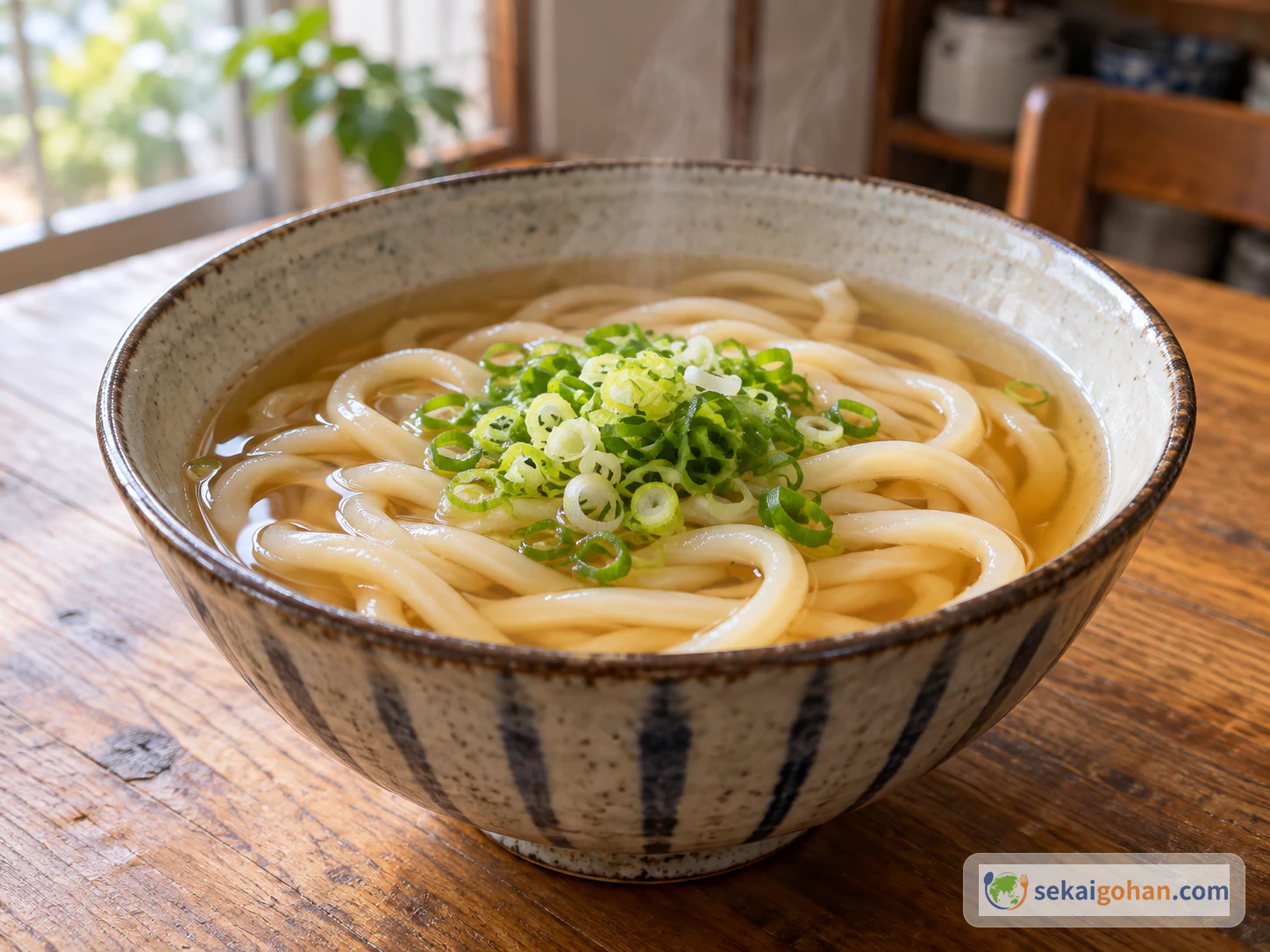
Ingredients
| Ingredient | Amount | Role |
|---|---|---|
| Dried sardines (niboshi / iriko) | 1 oz (30 g) | Gives the dashi its outline. Weigh 1 oz (30 g) first, then remove heads and guts; do not top back up to 1 oz (30 g) after cleaning |
| Water, preferably soft (for the first extraction) | 4¼ cups (1000 ml) | Soaks and extracts the niboshi and kombu |
| Kombu, dried | 10 g | Soaked with the water and niboshi, lifted out before boiling |
| Cold water (added during the dashi step) | about ¼ cup (70 mL) (about one ladleful) | Lowers the boiled dashi before the bonito goes in. Prepare separately from the 4¼ cups (1000 ml); do not take it from that water |
| Katsuobushi (dried bonito flakes), thinly shaved | 15 g | Short infusion for aroma |
| Mirin | 3½ tbsp | Heated first, then joined by the dashi |
| Japanese koikuchi (dark) soy sauce (koikuchi shoyu) | 3½ tbsp | Seasons the broth; added once the liquid has cooled to lukewarm |
| Udon noodles (dried) | 5 portions | Follow the serving count and cooking time on the package |
| Green onions, finely chopped | 5 tbsp | Scattered on top to finish |
| Water for boiling the noodles | at least 10 times the weight of the noodles | Boiling the noodles without crowding them |
| Water for rinsing, chilling, reheating and warming bowls | as needed | Separate from the dashi water |
| Shichimi togarashi (Japanese seven-spice) | to taste, at the table | Optional condiment |
Steps
1Clean the niboshi and soak them with the kombu
Weigh 1 oz (30 g) niboshi, then remove the heads and the black guts from each one, opening the back to reach them. This takes away the most bitter parts. Put the cleaned niboshi, 10 g kombu and 4¼ cups (1000 ml) water in a saucepan and leave to soak for 30 minutes. No heat yet.
2Warm the dashi slowly and lift out the kombu and niboshi
Set the pan over medium-low heat and warm it slowly for about 10 minutes, until small bubbles form around the rim of the pot. When the dashi has a clear, distinct flavor, lift out the kombu and niboshi together. Do not let it boil with the kombu in: kombu kept at a boil turns the dashi slimy and cloudy. Judge by taste, not only by the clock.
3Infuse the katsuobushi and strain without squeezing
Bring the dashi to a boil, then pour in about ¼ cup (70 mL) of cold water, the separate ladleful you set aside. This brings the dashi down to 203°F (95°C).
Add 15 g katsuobushi all at once. When small bubbles rise again, turn off the heat; this takes about 10 seconds. Strain through a sieve lined with kitchen paper or cloth and let the dashi drip through on its own. Do not press or squeeze the flakes, which brings harsh flavors into the dashi.
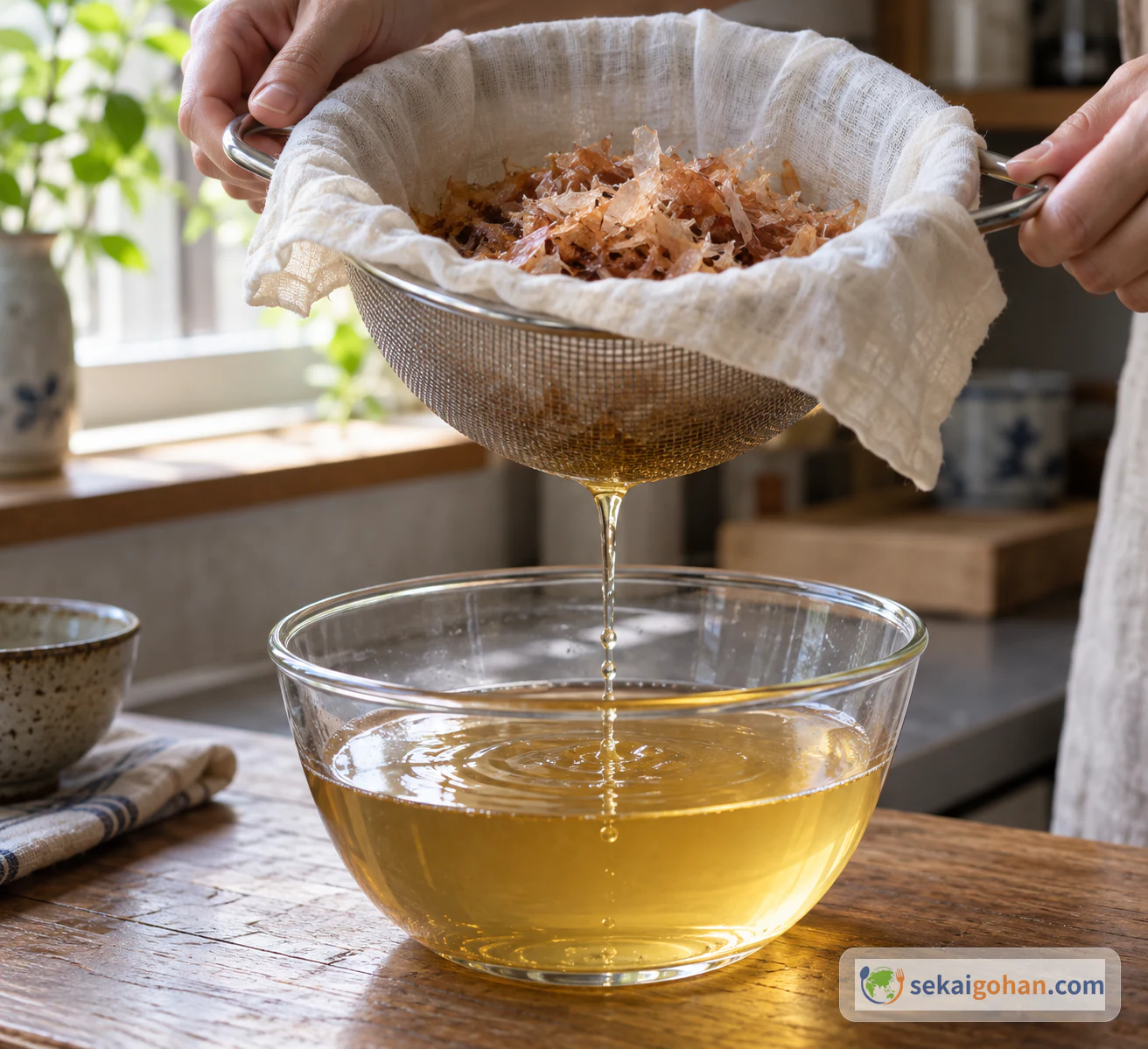
Let the dashi fall through on its own; squeezing the flakes clouds the flavor 4Season the broth: mirin first, soy sauce last
Rinse the saucepan lightly. Heat 3½ tbsp mirin over medium heat and let it bubble for 30 seconds to 1 minute.
Add the strained dashi. Once the liquid has cooled to lukewarm, stir in 3½ tbsp koikuchi soy sauce. Warm it to eating temperature without letting it boil, since boiling soy sauce hard changes its aroma. Taste a slightly cooled sip. If you want it stronger, add a little more soy sauce in small amounts, tasting after each addition. Do not try to fix a weak dashi with a lot of soy sauce (see the troubleshooting table). Keep the broth warm over low heat.
5Boil the noodles in a separate pot and rinse them
Cook the noodles only after the broth is finished, so their texture holds. In a large pot, bring water to a boil, using at least 10 times the weight of the noodles. Do not add cold water while they cook.
For dried or fresh udon, boil for the time on the package. Drain, rub the noodles gently under running water to wash off the surface starch, chill them in cold water, and drain in a colander. For frozen udon, follow the package instead.
6Reheat, assemble and serve right away
Just before eating, return the rinsed noodles to boiling water for about 15–30 seconds to warm them through, then drain well.
Warm the bowls with hot water and pour it out. Divide the broth among the 5 bowls first, then loosen the drained noodles and lay them in the broth. Top with the green onions and serve at once, with shichimi togarashi at the table for anyone who wants it.
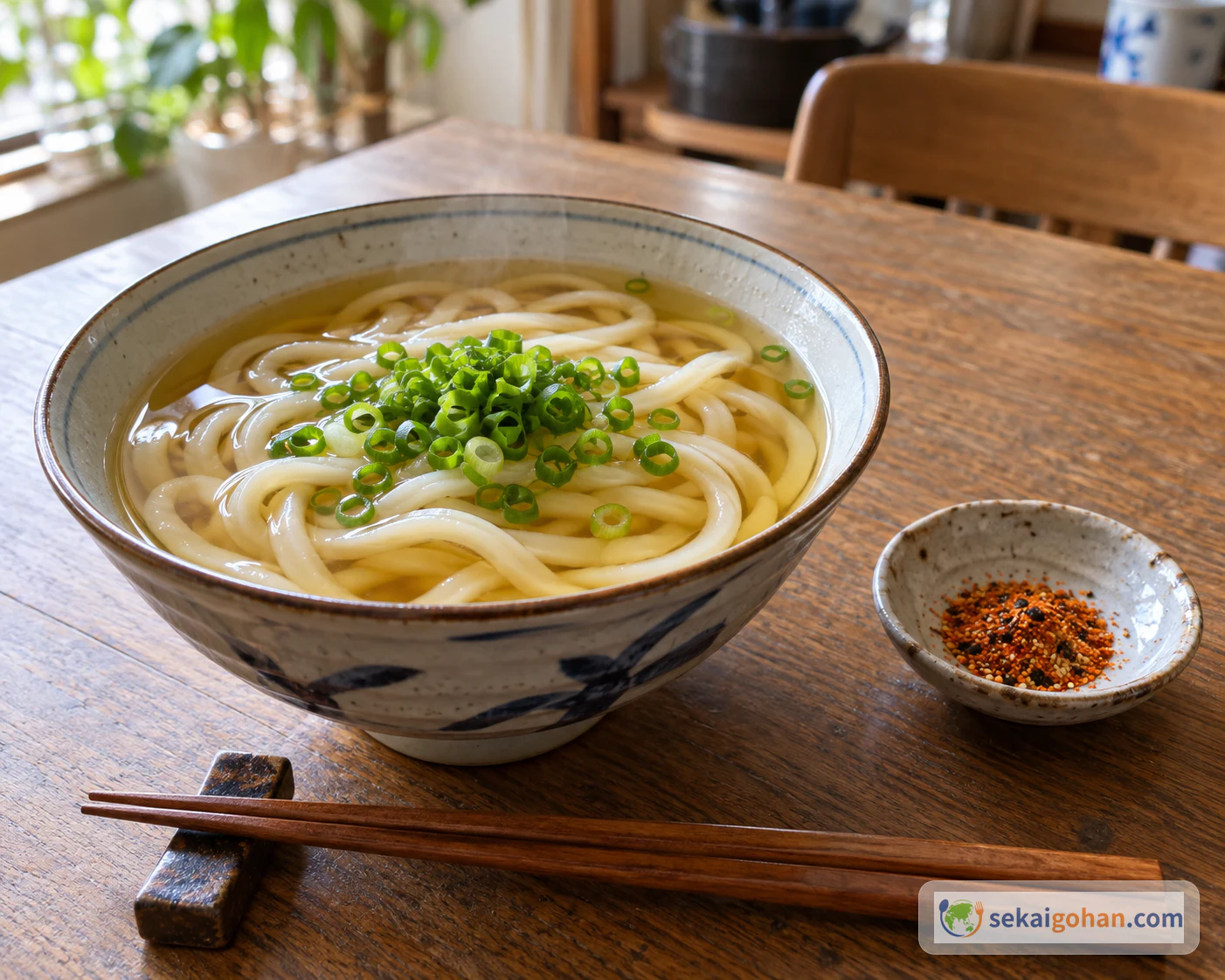
Top with green onions and serve immediately; shichimi is optional at the table