Ingredients and steps on one page. Print it, or choose “Save as PDF” in the print dialog.
Sekai Gohan
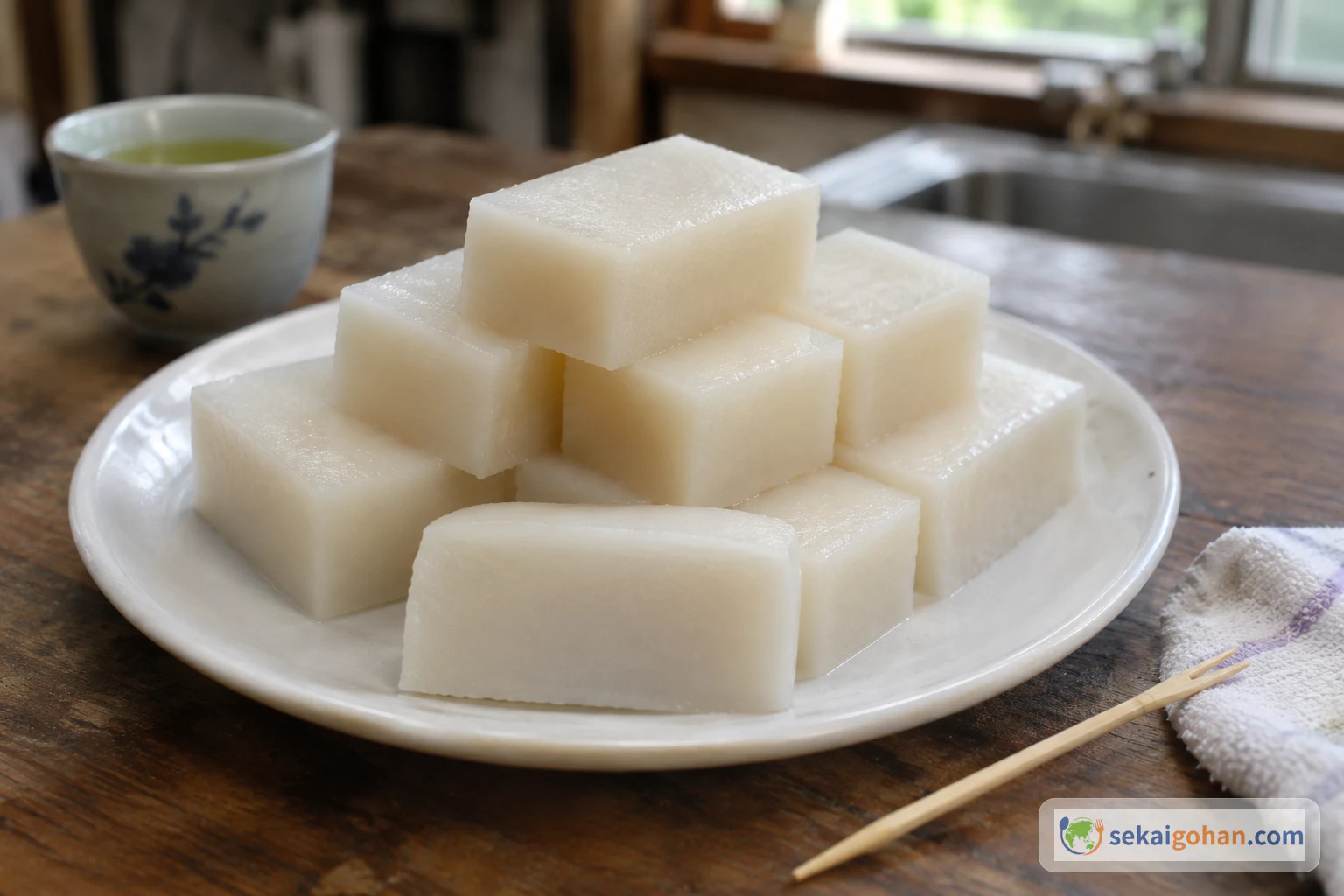
Uirō: Nagoya-Style Steamed Rice Flour Sweet
Ingredients
| Ingredient | Amount | Role |
|---|---|---|
| Rice flour for confectionery (seika-yō komeko) | 3½ oz (100 g) | The body of the sweet; its starch sets into the chewy block |
| Sugar | 2¾ oz (80 g) | Sweetness, and keeps the uirō soft for longer |
| Water | 1 cup + 2 tsp (250 ml) | Hydrates the flour so it can set |
| Salt | a pinch | Sharpens the sweetness |
Steps
1Heat the steamer and mix the batter
Fill the steamer base 50 to 70 percent full with water and bring it to full steam. In a bowl, combine the rice flour, sugar and salt. Pour in the water a little at a time, whisking constantly, until no lumps remain.
2Strain through a tea strainer
Hold a fine-mesh tea strainer over a second bowl and pour the batter through it. Undissolved flour collects on the mesh. Leave it there instead of pressing it through, then throw it away. Those bits stay grainy even after steaming and leave the cut faces rough. The strained batter is smooth and even, with nothing settled on the bottom of the bowl.
Straining sets the textureThis one step decides whether the cut face is glassy or gritty. Adding the water slowly in step 1 keeps lumps from forming, and the strainer catches the ones that formed anyway.
3Oil the pan and pour in the batter
Brush the inside of the pan with a thin film of neutral oil, or line it with parchment. Hold the bowl low over the pan and pour in the strained batter so it does not splash. It should settle to an even depth of 1–1¼ inches (2.5–3 cm). The surface should be flat and level.
4Steam over high heat with a cloth under the lid
Wrap a clean cotton cloth across the underside of the steamer lid, keeping the corners away from the flame. Set the pan on the rack, close the lid and steam over high heat for 25–30 minutes. The cloth catches condensation that would otherwise drip onto the batter and leave holes and watery patches. Check the water during steaming and top it up if it drops.
The cloth keeps the surface smoothWithout it, drops from the lid land on the soft batter and leave pits. Stretch the cloth tight so it does not sag onto the pan.
Steam and water levelKeep the steamer base 50 to 70 percent full, and never leave a steamer running unattended. If it boils dry, it scorches. Tilt the lid away from you when you open it, so the burst of steam goes away from your face and hands.
5Test with a wet bamboo skewer
Lift the lid, dip a bamboo skewer in water and push it into the centre of the block. Pull it straight out. If the skewer comes out clean, the uirō is done. If raw batter clings to it, close the lid, steam about 5 minutes more (a rule of thumb) and test again.
6Cool and cut into eight
Take the pan out of the steamer and let it cool in the pan until it is just warm. If it is still too soft to cut, a short chill in the refrigerator is fine. Do not store it there. Turn the block out onto a board and cut it into 8 equal pieces, wiping the knife on a damp cloth between cuts. The cut faces should be smooth and slightly translucent, with clean, square edges.