Ingredients and steps on one page. Print it, or choose “Save as PDF” in the print dialog.
Sekai Gohan
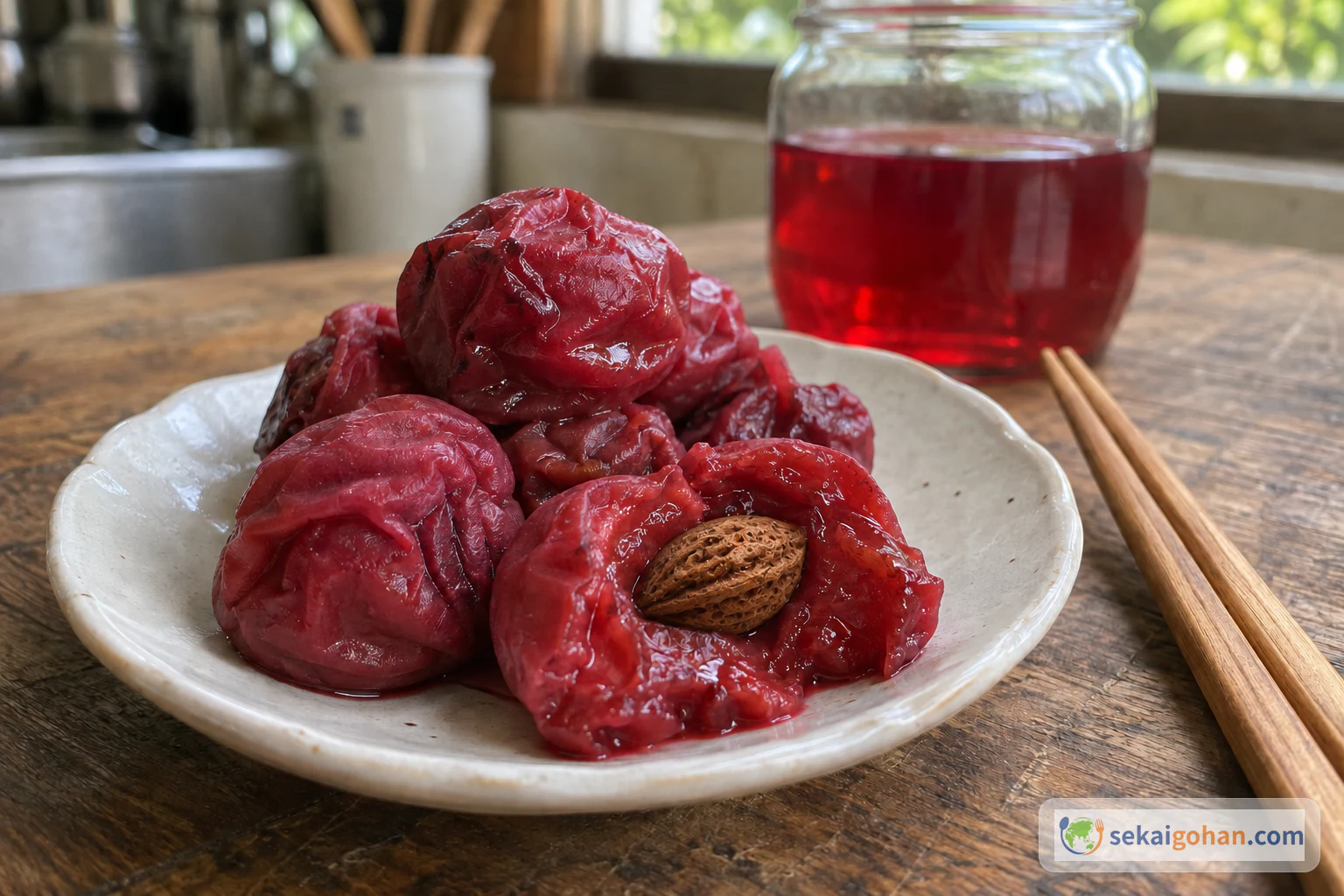
Umeboshi: Sun-Dried Japanese Salt Plums with Red Shiso
Ingredients
| Ingredient | Amount | Role |
|---|---|---|
| Nanko ume (南高梅), fully ripe and yellow | 2.2 lb (1 kg) | The fruit. Ripe yellow plums release their brine readily |
| Coarse salt (粗塩), for the plums | 7 oz (200 g), 20% of the plums' weight | Draws out the brine and keeps mold and spoilage away. Used half in the bag and half on top |
| Red shiso leaves (赤じそ), stems removed | 1 lb 2 oz (500 g), 50% of the plums' weight | Color and fragrance |
| Coarse salt, for the shiso | 3½ oz (100 g), 20% of the shiso's weight | Draws out the shiso's bitter juice. Kept separate from the plum salt |
| Shochu or white liquor, 35% ABV or stronger (焼酎) | As needed, in a spray bottle | Sanitizes the crock and the surface of the fruit |
| Ume brine (梅酢), from the crock | As needed | Loosens the salted shiso and turns it into red brine |
| Rice vinegar or grain vinegar (酢), optional | About 3½ tbsp (50 ml), 5% of the plums' weight | Extra protection against white mold on the brine surface |
Steps
1Rinse the plums and leave them damp
Rinse the yellow ume under running water and tip them into a colander. Shake off the water only lightly. A little moisture left on the skin helps the salt stick. Do not dry them with a cloth, because wiping bruises the fruit and spreads germs that lead to mold. Long soaking is not needed for Nanko ume, and leaving them in water discolors them. The plums are ready when water droplets still bead on the skins.
2Roll the plums in half the salt
Put about half the plum salt, 3½ oz (100 g), into a thick plastic bag and add the plums. Close the bag and roll and tilt it until salt clings to every plum. Leave the stems on: pulling them off nicks the skin, and the plums keep fine with them. The plums are ready when salt crystals dot every surface and none have piled up loose in the bottom of the bag.
3Pack the crock and weight it
Mist the bottom of the crock with shochu. If you line it with a plastic bag, mist the inside of the bag. Tip in the salted plums, then scatter the remaining 3½ oz (100 g) of plum salt over the top. Set the drop lid on the fruit, center the 2.2 lb (1 kg) weight on it, put the lid on the crock and move it to your cool, dark spot. A heavier weight only crushes the plums. Everything is in place when the salt layer covers the top plums evenly under the drop lid.
4Check the brine and seal its surface
After 2–3 days, lift the lid and look. Fully ripe yellow plums release enough brine to cover themselves in about two days. Brine can start rising the very next day and is usually at its fullest by day 4 or 5. Once the plums are covered, smooth plastic wrap directly onto the surface of the brine so no air touches it. If you like, add the optional vinegar now too. Every plum should sit under clear liquid, because mold starts wherever fruit meets air.
Shiso goes in only after the brineWait until the brine has risen before adding any shiso. Adding the shiso at the start keeps the brine from rising.
5Salt the shiso and discard the first juices
When red shiso appears in early July, keep only the large leaves that are purple-red on both faces, with the stems removed. Wash them and drain them thoroughly, since wet leaves invite mold. Put all the leaves in a wide bowl with a scant 1 oz (25 g) of the shiso salt and knead hard. Squeeze out the dark, bitter juice and throw it away. The leaves are ready for the next round when they have collapsed and gone glossy and purple juice runs between your fingers.
6Finish the shiso with the plum brine
Add another scant 1 oz (25 g) of shiso salt and knead and squeeze again, discarding the juice. Then add the last 1¾ oz (50 g) and work the leaves the same way, discarding that juice too. Ladle in enough brine from the crock to loosen the compressed leaves and knead them apart in it. The brine turns vivid red as it soaks into the shiso. The shiso is ready when the leaves have loosened into a soft, wet mass in red liquid.
Two juices, two fatesThe juice squeezed out in the three salt rounds is bitter and goes down the drain. The red liquid you get after loosening the leaves with plum brine is red ume brine, and it goes into the crock.
7Cover the plums with shiso and pickle for a month
Lift off the weight, drop lid and plastic wrap. Spread the shiso over the plums in a flat layer with no gaps, then pour the red brine over it. Put the drop lid, weight and lid back, and leave the crock in its cool, dark spot for about a month. Check now and then that no shiso or fruit pokes above the liquid, since any part exposed to air molds easily. The crock is right when the plums are completely hidden under shiso and the shiso is completely under red brine.
8Lay the plums out in the sun
Watch the forecast for a run of sunny days, ideally three or four in a row. Lift the plums from the crock, rinse them lightly under running water and lay them on the shallow basket. Space them so none of them overlap, because overlapping plums miss the sun and color unevenly. Set the basket on blocks rather than on the ground so air moves underneath. They are set up right when every plum lies in a single layer with sun on it and air below.
9Turn them daily and judge by weight
Turn each plum about once a day, in the morning or evening while they are cool, so the skins do not stick. Bring the basket indoors at night and cover it with cloth or newspaper. Medium-large plums (L to 2L grade) take 3 days, extra-large (3L) take 3–4 days, and koume take 2, counting each day as about ten hours of sun. Stop when the plums weigh about 55 percent of what went into the crock, roughly 1¼ lb (550 g) from 2.2 lb (1 kg). Anywhere in the 50–60 percent range is right. Pinch one: when the flesh slips cleanly away from the skin, they are done.
10Cool, jar and strain the brine
Let the dried plums cool, then pack them into a glass or plastic jar with a tight lid. Metal rusts from the salt and acid, and the rust ends up in the umeboshi. Strain the red brine through a clean cloth or a coffee filter into a separate bottle. Store both somewhere cool and dark, sealed so the plums do not dry out further. They are finished when the cooled plums sit snugly in their jar and the brine runs clear red.