Ingredients and steps on one page. Print it, or choose “Save as PDF” in the print dialog.
Sekai Gohan
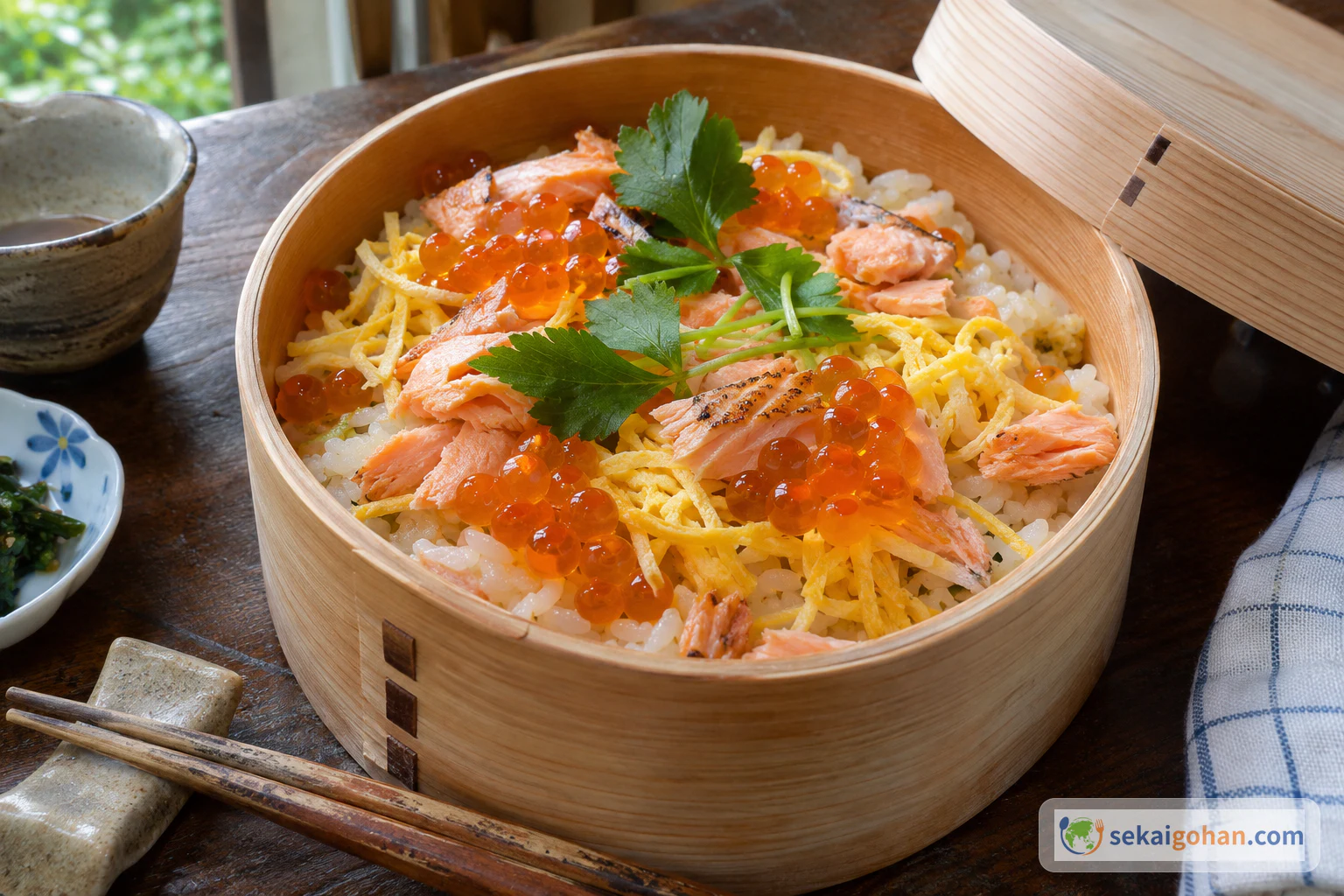
Wappameshi: Niigata Salmon and Ikura Rice in a Cedar Box
Ingredients
| Ingredient | Amount | Role |
|---|---|---|
| Salmon fillet (sake / shake) | 1–2 fillets | Seared, cooked with the rice, then returned on top |
| Soy-marinated salmon roe (ikura no shoyu-zuke) | 1–2 tbsp | Final topping. It goes on as it is, with no heating |
| Kinshi tamago (thin shredded omelette) | made from 1 egg | Yellow ribbons laid over the rice. Store-bought works |
| Mitsuba (Japanese wild parsley) | as needed | Scattered raw at the end for a fresh, green note |
| Japanese short-grain rice | 1 go (one Japanese rice-cooker cup) | The base. Rinsed and soaked first |
| Water | generous ¾ cup (200 ml) | Cooking water for the rice |
| Sake | 1 tbsp | Added with the rice |
| Salt | a pinch | Added with the rice |
| Granulated dashi | ½ tsp | Seasons the rice |
Steps
1Rinse and soak the rice
Put 1 go of rice in a bowl, pour in water, swirl the grains with your hand and pour the cloudy water off. Repeat until the water runs much clearer. Transfer the rice to the rice-cooker pot, add the generous ¾ cup (200 ml) water and leave it to soak for at least 30 minutes. The rice is ready when the grains have taken up water and turned an even, opaque white.
2Cut the salmon and the mitsuba
While the rice soaks, cut the salmon fillet into bite-size pieces on the cutting board. Wash the mitsuba well under running water, since it goes on raw. Shake it dry and cut it into short lengths that are easy to eat. Stop when the salmon pieces are all about the same size, so they cook evenly in the next two steps.
3Sear the salmon
Heat the frying pan and lay the salmon pieces in it. Let them sit until the underside colours, then turn them. Sear until the surface is lightly golden on all sides. The inside can still be pale, because the cooking finishes in the rice cooker.
4Cook the rice with the salmon
Add 1 tbsp sake, a pinch of salt and ½ tsp granulated dashi to the soaked rice in the rice-cooker pot. Lay the seared salmon on top in a single layer, put each piece in once and leave them unstirred. Close the lid and start the cooker. The rice is done when the cooker finishes its cycle.
5Lift out the salmon and check it
When the rice is cooked, open the lid and lift the salmon pieces out with chopsticks onto a plate. Break one of the thickest pieces open. The flesh should be cooked through to the centre. If any piece is still raw in the middle, put it back on the rice, close the lid and keep it hot until it is cooked through.
Salmon and anisakisAnisakis parasites live in salmon too. Vinegar, salt, soy sauce and wasabi do not kill them. Heat kills them at 158°F (70°C) or above, or at 140°F (60°C) for 1 minute. Those figures apply to anisakis only. Whatever the parasite, cook the salmon through to the centre before it goes on the rice.
6Mix the rice and pack the box
Turn the rice over gently with the paddle, cutting through it rather than pressing, so the dashi and salmon juices on top spread evenly. Spoon it into the wappa while it is still steaming. Level the surface lightly with the back of the paddle. The rice is right when it sits flat and glossy and the grains are still separate, not mashed together.
7Lay on the kinshi tamago
Scatter the kinshi tamago over the rice, letting the ribbons fall loosely rather than packing them down. Leave a little white rice showing at the edge of the box. Spread the egg evenly so every spoonful gets some. Stop when the surface is a soft yellow bed, ready for the salmon and the roe.
8Return the salmon and add the ikura
Arrange the cooked salmon pieces over the egg, leaving the centre open. Spoon 1–2 tbsp ikura straight from the cold pack into that open space. Set the roe down gently and leave it unpressed. Each bead should stay round and glossy.
Ikura goes on last and coldAdd the roe only once the salmon is in place, so you are not reaching over it and knocking it. Heating would turn it cloudy and firm. It belongs cold on the hot rice, where it warms just slightly as you eat.
9Scatter the mitsuba
Scatter the washed, cut mitsuba over the salmon, roe and egg. Use a light hand, a few leaves here and there. Serve right away, or put the lid on the box. The box is finished when green, orange, pink and yellow all show across the top.