Ingredients and steps on one page. Print it, or choose “Save as PDF” in the print dialog.
Sekai Gohan
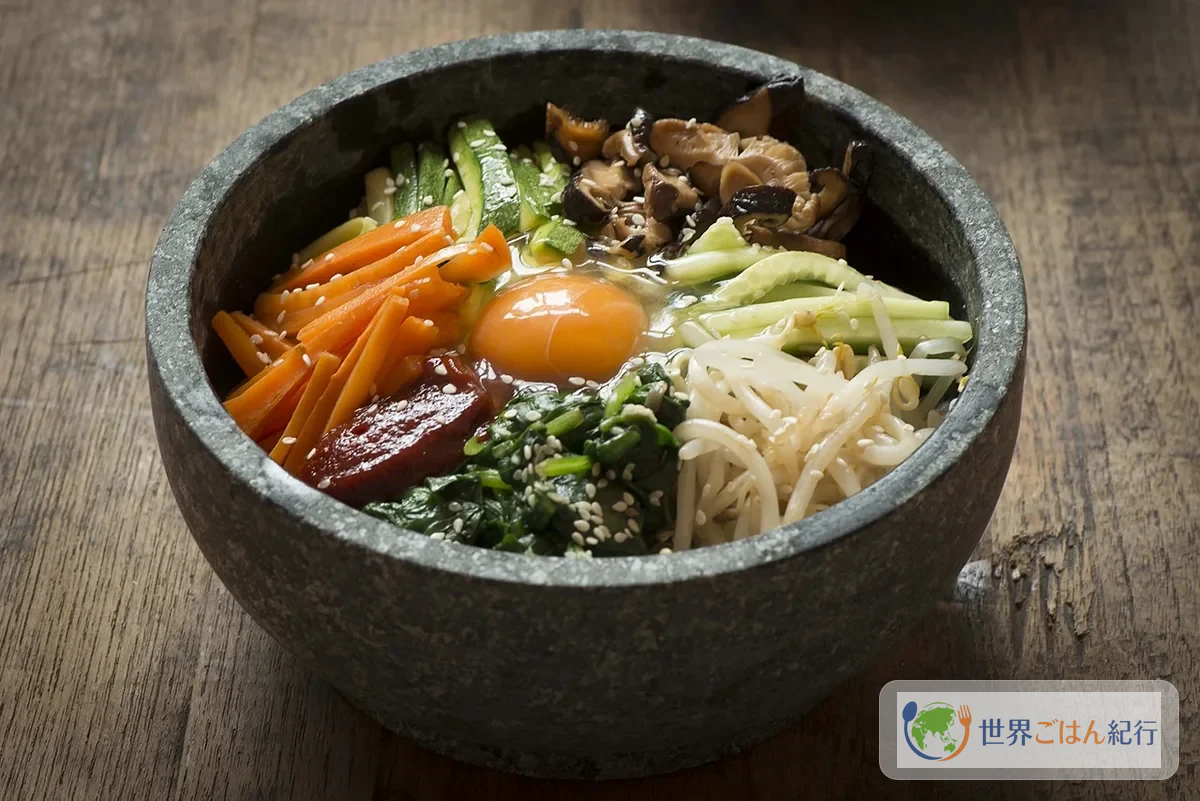
Bibimbap: Korean Rice Bowl with Five-Color Namul
Ingredients
Rice and the main topping
| Ingredient | Amount | Substitutes & notes |
|---|---|---|
| Warm cooked rice | 4 bowls, about 1.75 lb (800 g) | Cook it slightly firm. Multigrain rice also works |
| Thinly sliced beef | 9 oz (250 g) | Ground beef, thin pork, chicken mince or grilled tofu also work |
| Eggs | 4 | Soft fried eggs. Avoid raw egg at home |
| White sesame seeds | 2 tbsp | For finishing |
| Toasted nori | 1 sheet | Korean seasoned seaweed also works |
Seasoning for the beef
| Ingredient | Amount | Substitutes & notes |
|---|---|---|
| Soy sauce | 1 1/2 tbsp | It needn't be Korean soy sauce |
| Sugar | 2 tsp | 2 tsp honey also works |
| Sesame oil | 2 tsp | The center of the aroma |
| Sake or rice wine | 1 tbsp | Mirin also works; if so, reduce the sugar slightly |
| Grated garlic | 1 tsp | Garlic paste from a tube is fine |
| Black pepper | a little | You can add more at the end |
Gochujang sauce
| Ingredient | Amount | Substitutes & notes |
|---|---|---|
| Gochujang | 4 tbsp | If it is very hot, start with 2 tbsp |
| Sesame oil | 1 tbsp | Aroma and easier mixing |
| Vinegar | 2 tsp | Rice vinegar is fine. Cuts the heaviness |
| Sugar | 2 tsp | Honey also works |
| Soy sauce | 2 tsp | Adjusts saltiness |
| Water | 1–2 tbsp | Thin to an easy-to-mix consistency |
Steps
1Cook the rice slightly firm
30 min
Cook 2 rice-cooker cups (360 ml) of rice with slightly less water than usual. When it is done, turn it from the bottom with a rice paddle to loosen the grains, then open the lid a little for about 5 minutes to let excess steam escape. The grains should stand up one by one and not cling heavily to the paddle. If the rice is too soft, it turns heavy when mixed with the namul and sauce.
2Blanch the soybean sprouts
5 min
Bring water to a boil over high heat, add a pinch of salt, and boil the soybean sprouts for 2–3 minutes. Drain when the raw bean smell has softened and the stems keep a crisp bite. Let them cool slightly, then squeeze lightly by hand until no drops fall when you grip them. Toss with 1 tsp sesame oil, 1/4 tsp salt, a little grated garlic and white sesame; they are ready when a thin sheen of oil coats the surface. Ordinary bean sprouts need only 1 minute of boiling.
3Blanch the spinach
4 min
Add a pinch of salt to boiling water, put the spinach in root end first and boil 30–40 seconds. When the leaves are bright green and the stems bend lightly, move to cold water. Squeeze out the water firmly and cut into 1.5 inches (4 cm) lengths. Toss with 1 tsp sesame oil, 1/4 tsp salt, 1/2 tsp soy sauce and a little grated garlic until the leaves loosen fluffily without clumping. The more water you squeeze out, the less the flavor blurs.
4Stir-fry the carrot and shiitake
8 min
Cut the carrot into 3–4 cm matchsticks and the shiitake into 0.125 inch (3 mm) slices after removing the stems. Heat a little oil in a skillet over medium heat, stir-fry the carrot for 2 minutes until slightly soft with a bright color, sprinkle a little salt and remove. In the same skillet, stir-fry the shiitake for 2–3 minutes; when surface moisture has cooked off and they look glossy, season lightly with 1 tsp soy sauce and a pinch of sugar. Take each out separately and don't mix them.
5Stir-fry the bracken
5 min
Rinse the canned bracken and cut into 1.5 inches (4 cm) lengths if long. Heat 1 tsp sesame oil in a skillet over medium heat and stir-fry the bracken for 2–3 minutes. When the surface water has gone and a light oil sheen appears, season with 1 tsp soy sauce, 1 tsp sake and a little grated garlic. Cook until almost no liquid is left and no watery seasoning drips when you lift it with chopsticks. If you don't like the aroma of mountain greens, substitute shiitake or dried daikon strips.
6Stir-fry the beef
6 min
Work the soy sauce, sugar, sesame oil, sake, garlic and black pepper into the beef, mixing until the seasoning coats the surface evenly, and leave for 10 minutes. Heat a skillet over medium-high and add the beef with all its liquid, stir-frying 2–3 minutes. Stop when the red is gone and about 2 tbsp of glossy sauce remains; this spreads umami when it is mixed with the rice.
7Make the gochujang sauce
2 min
Mix the gochujang, sesame oil, vinegar, sugar, soy sauce and 1 tbsp water. It should have no lumps and a thick consistency that drips slowly from a spoon. If it is stiff, add water 1 tsp at a time. Don't pour all of it on from the start; put it on a separate dish so people can add a little at a time at the table. For those who dislike heat, prepare a "mild mixing sauce" of 2 tbsp miso, 2 tsp sugar, 2 tsp sesame oil, 1 tsp vinegar and 1 tbsp water.
8Assemble and top with the egg
5 min
Put the rice in a bowl and arrange the namul in radiating sections by color. In the center put the beef and a fried egg cooked over medium-low heat until the white is set. Scatter white sesame and nori cut into 2–3 mm strips. Just before eating, add the gochujang sauce and mix widely from the bottom with a spoon.