Ingredients and steps on one page. Print it, or choose “Save as PDF” in the print dialog.
Sekai Gohan
Doenjang Jjigae: Korean Soybean Paste Stew with Tofu and Zucchini
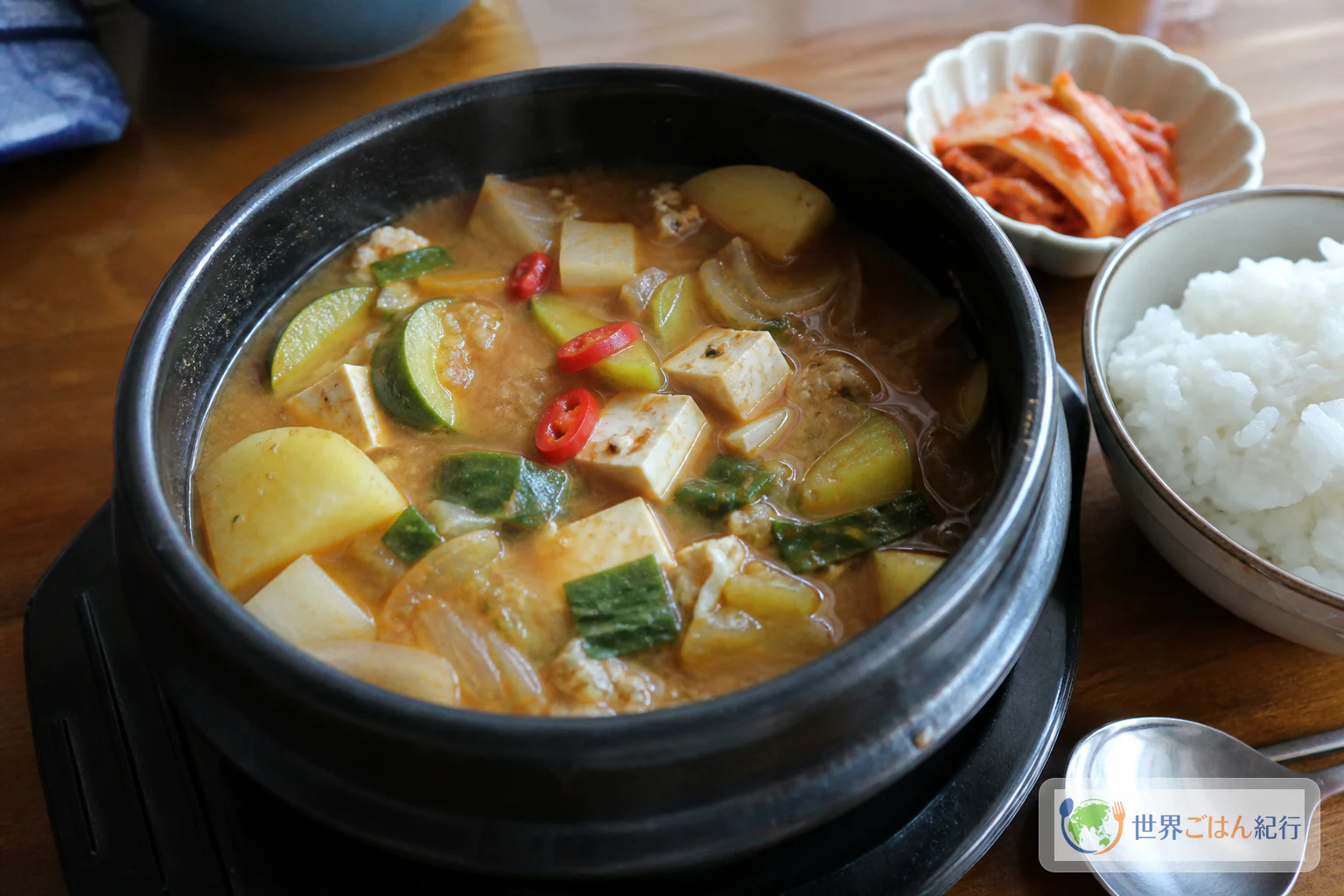
Ingredients
Main ingredients
| Ingredient | Amount | Substitutes & notes |
|---|---|---|
| Doenjang | 60 g | About 2 oz. To use Japanese miso instead: 2 tbsp red miso plus 1 tbsp rice miso |
| Firm tofu | 300 g | About 10.5 oz. Cut into 2.5 cm (1 inch) cubes. Silken tofu breaks easily, so cut it larger |
| Thinly sliced pork belly | 120 g | Cut into 3 cm strips. 80 g thinly sliced beef or 200 g clams also work |
| Potatoes | 250 g | Half-moons 2 cm thick. Waxy potatoes hold their shape best |
| Daikon radish | 160 g | Quarter-rounds 1.5 cm thick. Regular daikon is fine if you can't find Korean radish (mu) |
| Onion | 150 g | Wedges 1.5 cm wide |
| Zucchini | 180 g | Half-moons 7 mm thick. Or 150 g eggplant |
| Mushrooms | 100 g | A mix of shimeji, enoki and shiitake |
| Scallions | 2 (about 40 g) | Sliced on the diagonal |
| Green chile | 1 (about 10 g) | If you don't like heat, seed it and use half |
| Red chile | 1/2 (about 4 g) | For color. If omitting, add more scallion |
| Garlic | 1 clove (about 8 g) | Grated |
| Gochugaru | 1/2 tsp | Korean coarse red pepper flakes. For milder heat, 1/4 tsp |
| Toasted sesame oil | 1 tsp | Helps the pork and doenjang come together |
| Cooked rice | 4 bowls (about 600 g) | Keep it hot until just before eating |
Broth
| Ingredient | Amount | Substitutes & notes |
|---|---|---|
| Water | 900 ml | About 3 3/4 cups. About 750 ml goes into the stew |
| Dried anchovies | 20 g | Remove heads and innards. Small dried sardines also work |
| Kelp (kombu) | 8 g | One 8 cm square |
Steps
1Make the broth
12 min
Put 3¾ cups (900 ml) water, 20 g dried anchovies (heads and innards removed) and 8 g kelp in a pot and warm over medium heat for about 7 minutes. Just before it boils, when fine bubbles rise from the bottom and the edges of the kelp soften, take the kelp out. Turn the heat down to low, simmer the anchovies another 5 minutes, and turn off the heat once it smells fragrant. A hard boil makes it bitter, so stop while the surface is just trembling, strain through a sieve and measure out 3 cups (750 ml).
2Fry the pork and doenjang
4 min
Put 1 tsp sesame oil in a heavy pot and heat over medium for 30 seconds. Add 4 oz (120 g) pork belly cut into 1 inches (3 cm) strips and stir-fry for 2 minutes, until the meat turns pale. Add 2 oz (60 g) doenjang and stir-fry for 1 minute 30 seconds, coating the meat thinly with a wooden spatula. You're looking for the paste to smell fragrant and a little oil to seep out on the bottom of the pot. If it looks like it's about to scorch black, lower the heat and add 1 tbsp broth to loosen the bottom.
3Add the broth and root vegetables
10 min
Pour in the 3 cups (750 ml) strained broth and warm over medium heat for about 3 minutes, until it bubbles gently. Add 9 oz (250 g) potatoes cut into 1 inches (2 cm) half-moons, 5.5 oz (160 g) daikon cut into 0.5 inches (1.5 cm) quarter-rounds, and 5.5 oz (150 g) onion cut into 0.5 inches (1.5 cm) wedges. When it bubbles again, turn the heat to medium-low and simmer for 7 minutes. The cue to move on is when the corners of the potatoes turn slightly translucent and a skewer stops lightly just short of the center. If they get fully tender now, they'll fall apart later.
4Add the tofu and vegetables
6 min
Cut 10.5 oz (300 g) firm tofu into 1 inches (2.5 cm) cubes and add it along with 6.5 oz (180 g) zucchini cut into 0.25 inch (7 mm) half-moons, 3.5 oz (100 g) mushrooms pulled apart into bite-size pieces, and 1 green chile sliced on the diagonal. Simmer over medium-low heat for 5 minutes, until the tofu sways in the pot and the zucchini is hot through to the center while staying green. A rolling boil breaks up the tofu and roughens the paste's aroma, so keep the bubbles small and at the edge of the pot.
5Adjust the heat and salt
3 min
Add 8 g grated garlic, 1/2 tsp gochugaru, 1/2 red chile sliced on the diagonal, and the 2 scallions. Warm over low heat for 2 minutes, then taste once the raw edge of the garlic is gone and a little red oil seeps to the surface. Don't judge the salt from the pot alone; check it with a mouthful of rice. A hard boil makes the heat too sharp, so keep the heat low while you adjust. If it's too mild, dissolve 1 tsp doenjang in 1 tbsp broth and add it.
6Serve it hot
2 min
Turn off the heat and let the pot rest for just 1 minute. Once the bubbles on the surface settle and the tofu sits without breaking, set the pot on a trivet and bring it to the table. A small pot or earthenware pot keeps cooking in its residual heat, so turn off the heat before the potatoes fully break down. When serving, don't break up the tofu too much; alternating bites of hot broth, rice and kimchi keeps the saltiness from feeling too strong.