Ingredients and steps on one page. Print it, or choose “Save as PDF” in the print dialog.
Sekai Gohan
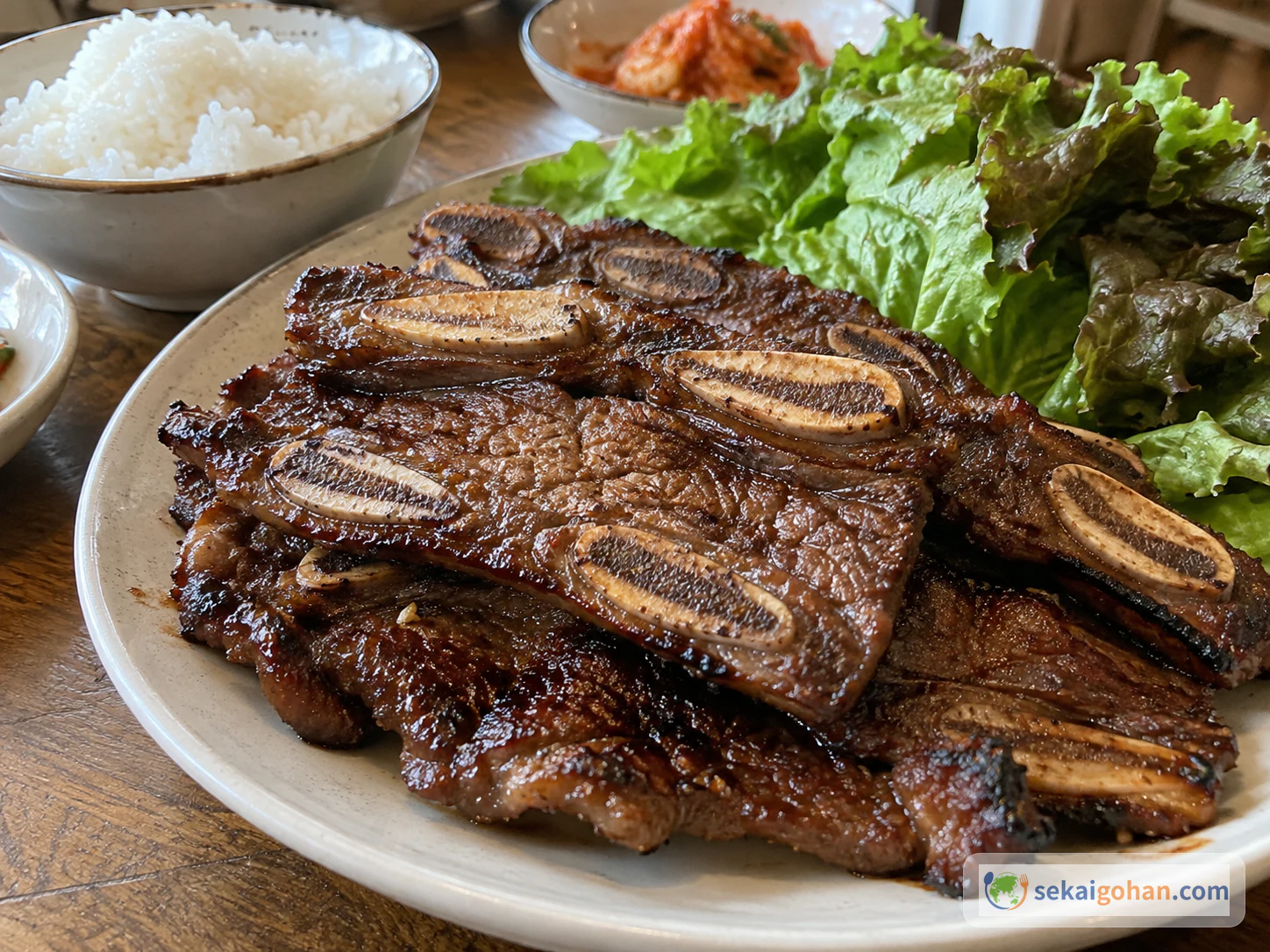
Galbi: Korean LA-Style Short Ribs with Pear Marinade (LA 갈비)
Ingredients
Meat
| Ingredient | Amount | Role and how to choose |
|---|---|---|
| LA galbi / flanken-cut beef short ribs (LA갈비 / 소갈비) | about 454 g | 1 lb. Bone-in short ribs sliced thin across the bone, with several bone cross-sections per piece. Check the shape when buying |
Marinade
| Ingredient | Amount | Role and how to choose |
|---|---|---|
| Asian pear / Korean pear (배) | 1 | Sweetness and juice for the marinade. Core it before blending |
| Ginger (생강) | about 5 cm | About 2 inches. Aroma. Scrape off the skin with a spoon and chop roughly |
| Garlic (마늘) | 7 cloves | The backbone of the aromatics |
| Sugar (설탕) | 6 tbsp | Sweetness and browning. Also the reason the meat burns easily |
| Mirin (미림) | about 60 ml | 1/4 cup. Sweetness and a rice-wine aroma |
| Soy sauce / ganjang (간장) | 6 tbsp (90 ml) | Salt and savoriness |
| Sake | about 120 ml | 1/2 cup. Liquid and aroma for the marinade |
For cooking and serving
| Ingredient | Amount | Role and how to choose |
|---|---|---|
| Grapeseed or vegetable oil | 2 tbsp | For the pan, used in two batches |
| Scallions (파) | To finish, as needed | Thinly sliced, for color and aroma |
| Lettuce | For serving | For wrapping bites of meat |
| White rice | For serving | Alongside, instead of or as well as lettuce |
Steps
1Rinse off bone fragments and pat dry
Sawing across the bone can leave small bone fragments on the cut faces of the ribs, so wash the meat well. Rinse the ribs in a bowl, paying attention to the cut edges around each bone, and keep splashing to a minimum so raw-meat water doesn't spread around the sink and counter. Pat the meat dry with paper towels.
2Make the marinade and coat the ribs
Core the pear and put it in a food processor with the ginger and garlic; process until finely chopped. Add the sugar, mirin, soy sauce and sake and mix. It doesn't need to become a smooth liquid; what matters is that the bits of pear and aromatics can reach the meat evenly. Without a food processor, grate the pear and ginger and mince the garlic. This works, though the texture and aroma will differ.
Lay the ribs in a clean lidded container without piling them up too much, and pour on enough marinade to coat every piece, stopping once they are coated.
3Refrigerate for 12–24 hours
Close the lid and refrigerate for 12–24 hours. Keep the container on a lower shelf so nothing drips onto other food, and don't leave the raw meat out at room temperature for long. Wash the bowl, processor and anything else that touched raw meat.
4Drain, heat the pan and sear the first side
Drain the ribs in a colander to let the excess marinade fall away. That marinade has touched raw meat, so discard it; don't reuse it or serve it uncooked. Slice the scallions and set out the lettuce, rice and clean serving plates now, before you start cooking.
Heat the frying pan well over medium-high heat and spread 1 tbsp oil thinly. Lay the ribs in one piece at a time without overlapping. Leave them alone until the underside is browned with a good sear, about 2 minutes. Because the marinade contains sugar, it burns easily, so turn the heat down a little if it seems too strong.
5Flip and cook through
Turn the ribs and sear the other side the same way, about 1–2 minutes. Even though the meat is thin, make sure it is cooked through, including the thicker parts and the meat around the bones. Use the raw-meat tongs only for the pan, and don't eat with them or use them to serve.
6Cook the rest and serve
Wipe any burnt marinade out of the pan with paper towels, add the remaining 1 tbsp oil, and repeat with the rest of the ribs. Scatter the scallions over the cooked meat. Wrap bite-size pieces in lettuce, or serve with white rice. Put cooked meat on clean plates, never back on the plate that held it raw.