Ingredients and steps on one page. Print it, or choose “Save as PDF” in the print dialog.
Sekai Gohan
Haejang-guk: Korean Ox Bone and Napa Cabbage Soup with Doenjang (Ppyeo-haejangguk, 뼈해장국)
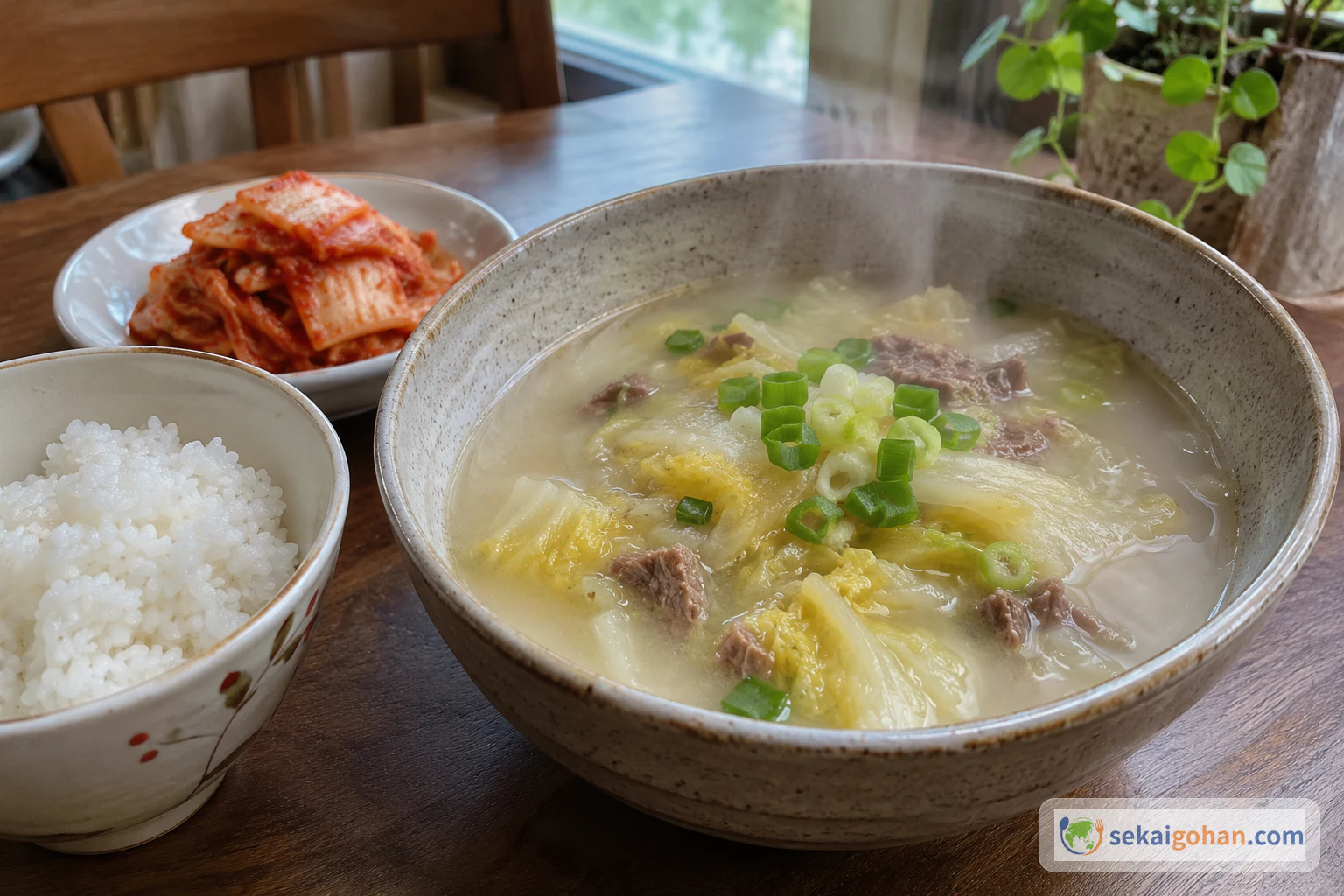
Ingredients
| Ingredient | Amount | Role |
|---|---|---|
| Sliced ox bones (beef bones) | 2 lb | Simmered for the broth; the meat and ligaments left on them go into the soup |
| Water | 6 qt (US) | For boiling the bones |
| Cold water | as needed | For soaking the bones and topping up the broth pot |
| Napa cabbage (or chard) | 2 lb | Blanched, chopped and seasoned before it goes into the broth |
| Water for blanching | as needed | In a separate pot for the cabbage |
| Doenjang (된장, Korean soybean paste) | 1/4 cup (US) | Main seasoning for the cabbage |
| Garlic | 8 cloves | Minced, for the cabbage |
| Green chili peppers | 2 | Chopped, for the cabbage. Heat varies by variety |
| Fish sauce | 1 tbsp | Seasoning for the cabbage |
| Green onions | 2 | Chopped, scattered over each bowl last |
| Gochugaru (고춧가루, Korean chili flakes) | to taste (optional) | Added at the table |
| Cooked rice | as needed | To serve alongside |
| Kimchi | as needed | To serve alongside |
Steps
1Rinse the bones and soak them in cold water
Rinse the sliced ox bones to wash off any small bone fragments, then submerge them in a bowl of cold water to draw out the blood. Rinsing and soaking do not make raw meat safe. Work in an area kept for raw bones, avoid splashing the water onto nearby food or surfaces, and clean the surfaces, bowl and your hands afterward.
2Boil the bones covered for 4 hours
Bring 6 qt water to a boil over high heat in a large pot. Drain the bones and lower them carefully into the boiling water.
Cover the pot and cook over medium heat for 4 hours.
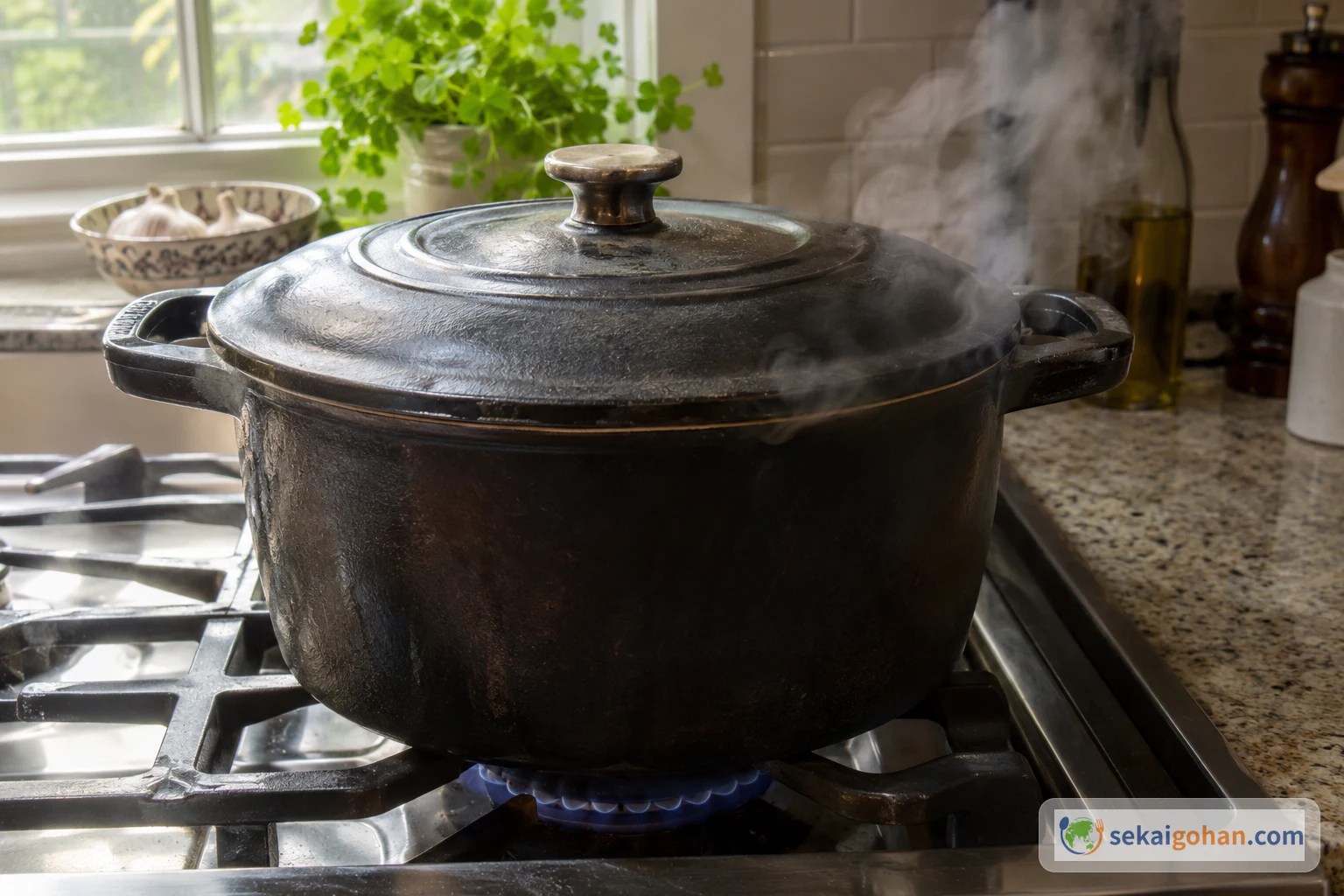
Keep the lid on for the long boil Check the level from time to time. The broth turns milky as it cooks. You need at least 6 cups of broth at the end.
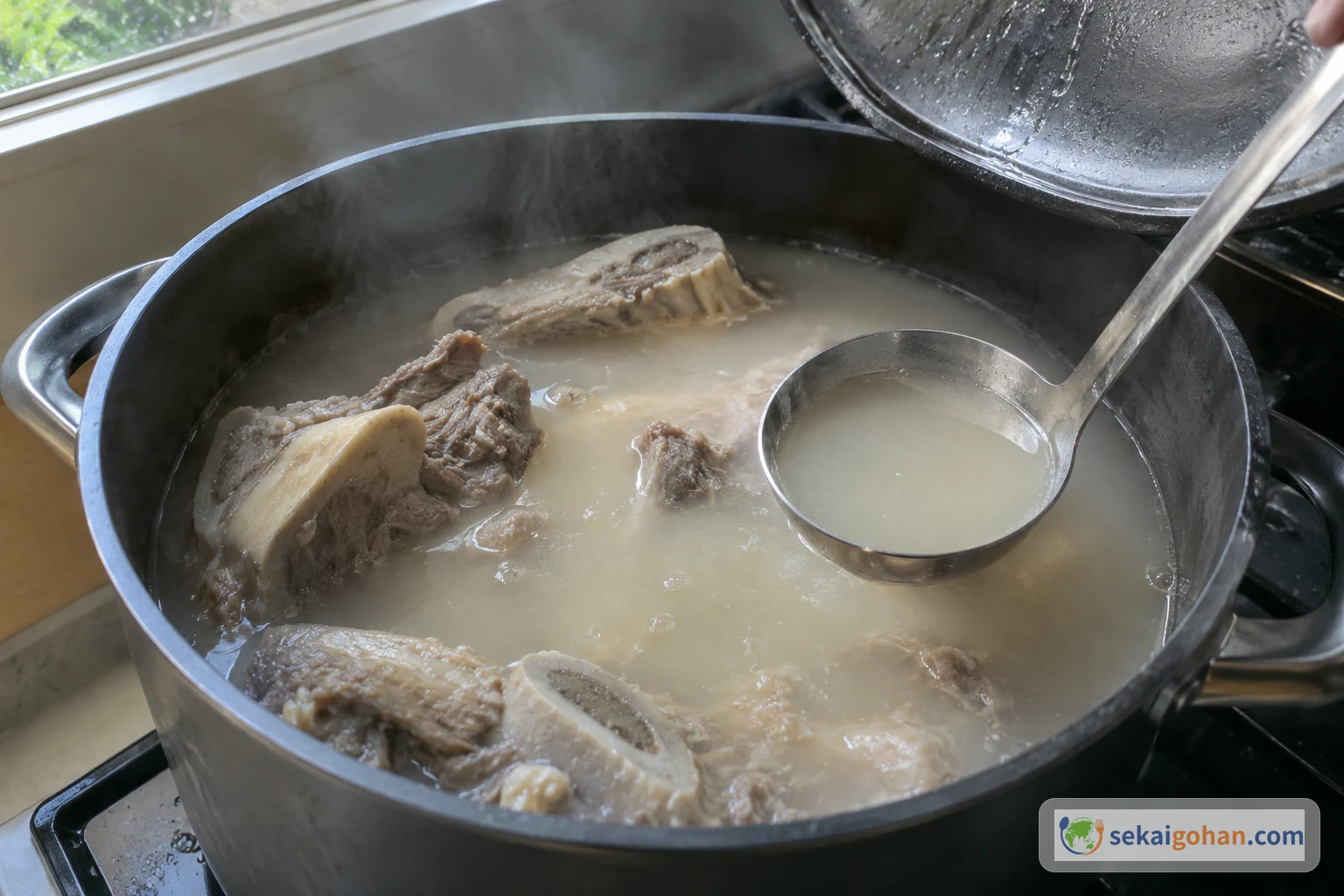
Check the level of the milky broth during the boil If the broth looks like it will drop below 6 cups, add cold water.
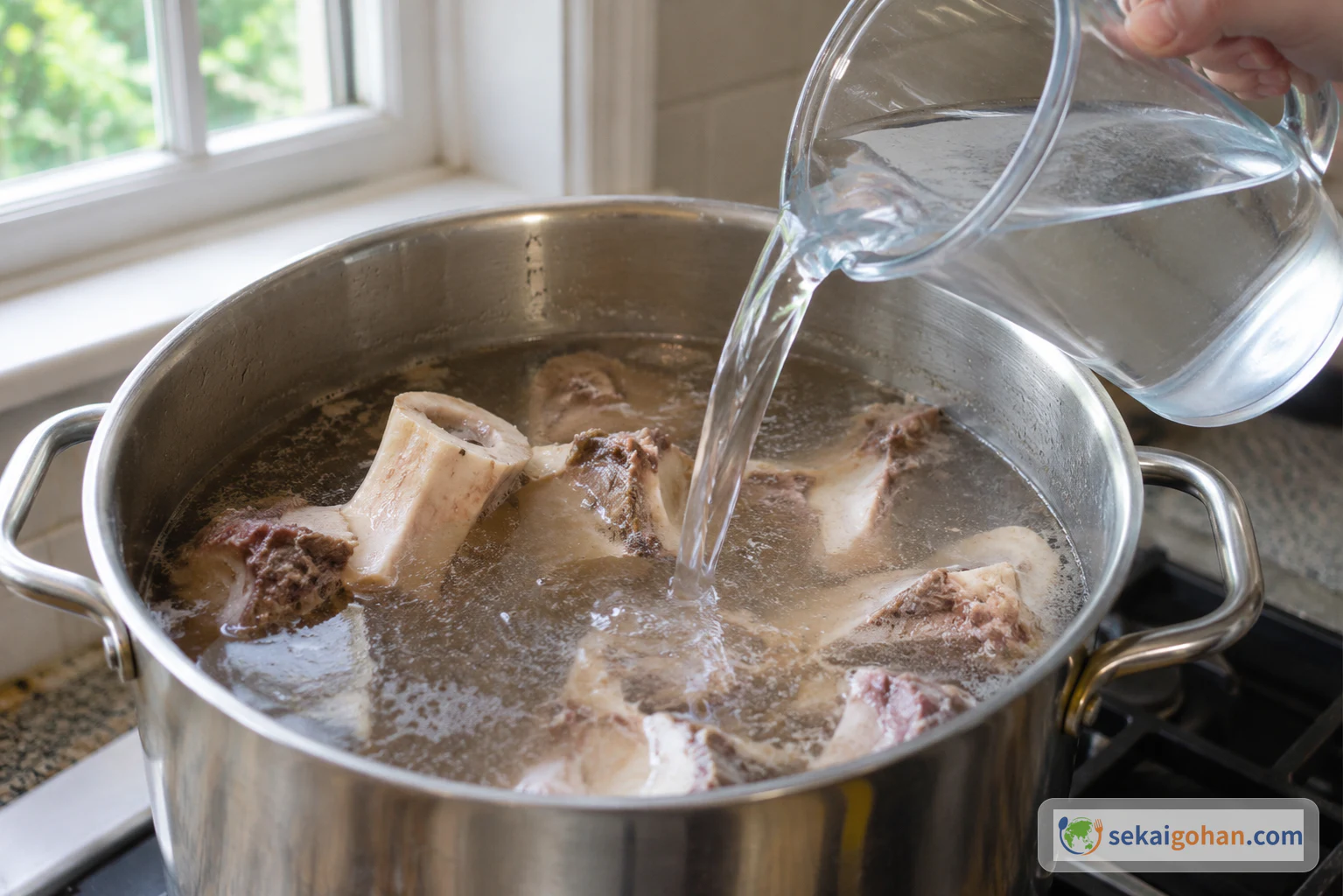
Top up with cold water so at least 6 cups of broth remain 3Strain, pick the meat, chill quickly and skim the fat
Strain the broth through a heat-safe colander into a heat-safe bowl to separate the bones.
When the bones are cool enough to handle, pick off the remaining meat and ligaments and set them aside in a separate bowl.
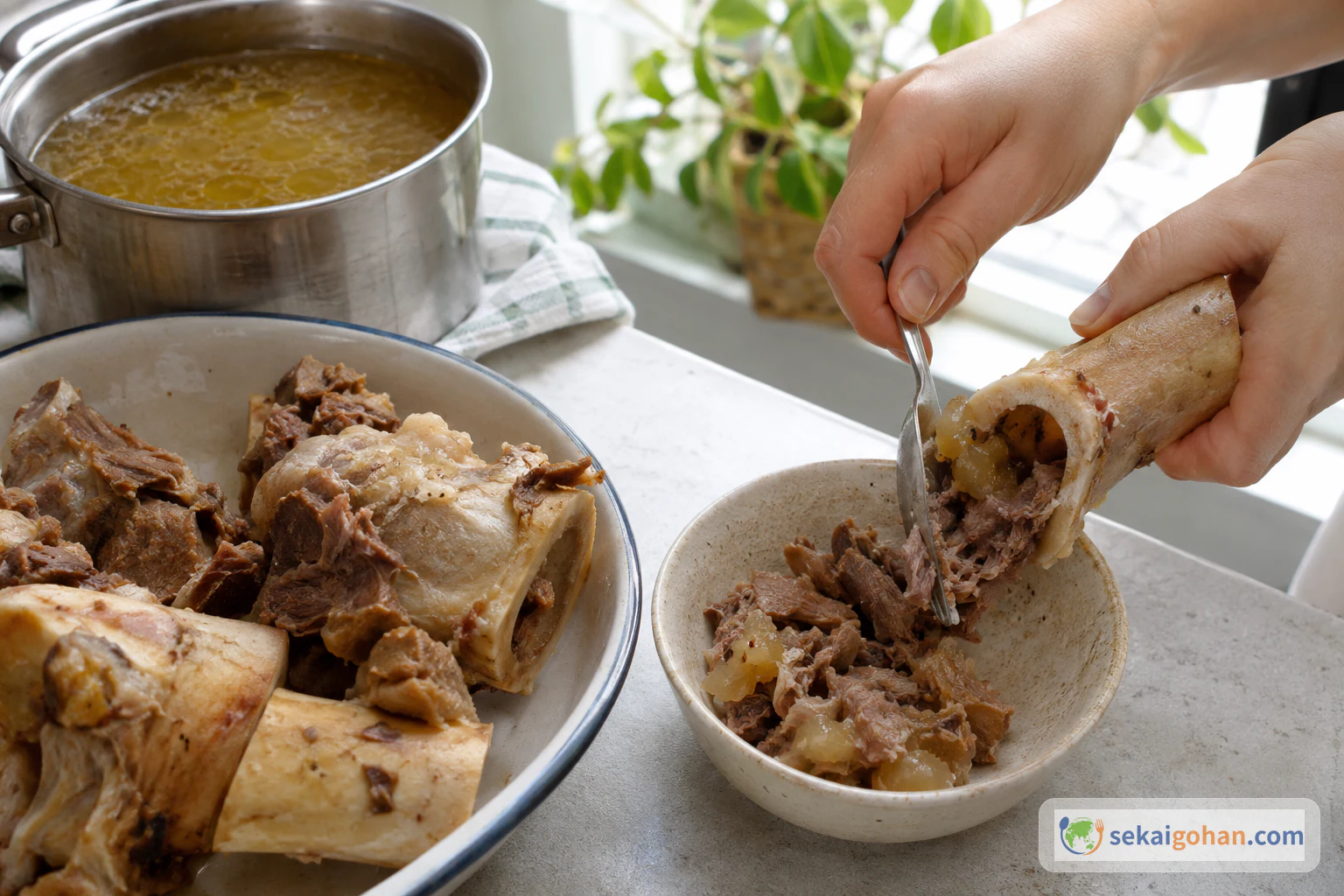
Pick off the meat and ligaments and keep them for the soup Right away, divide the strained broth into several shallow food-safe containers, and put the recovered meat in its own shallow container. Do not leave the big pot of broth on the counter to cool overnight.
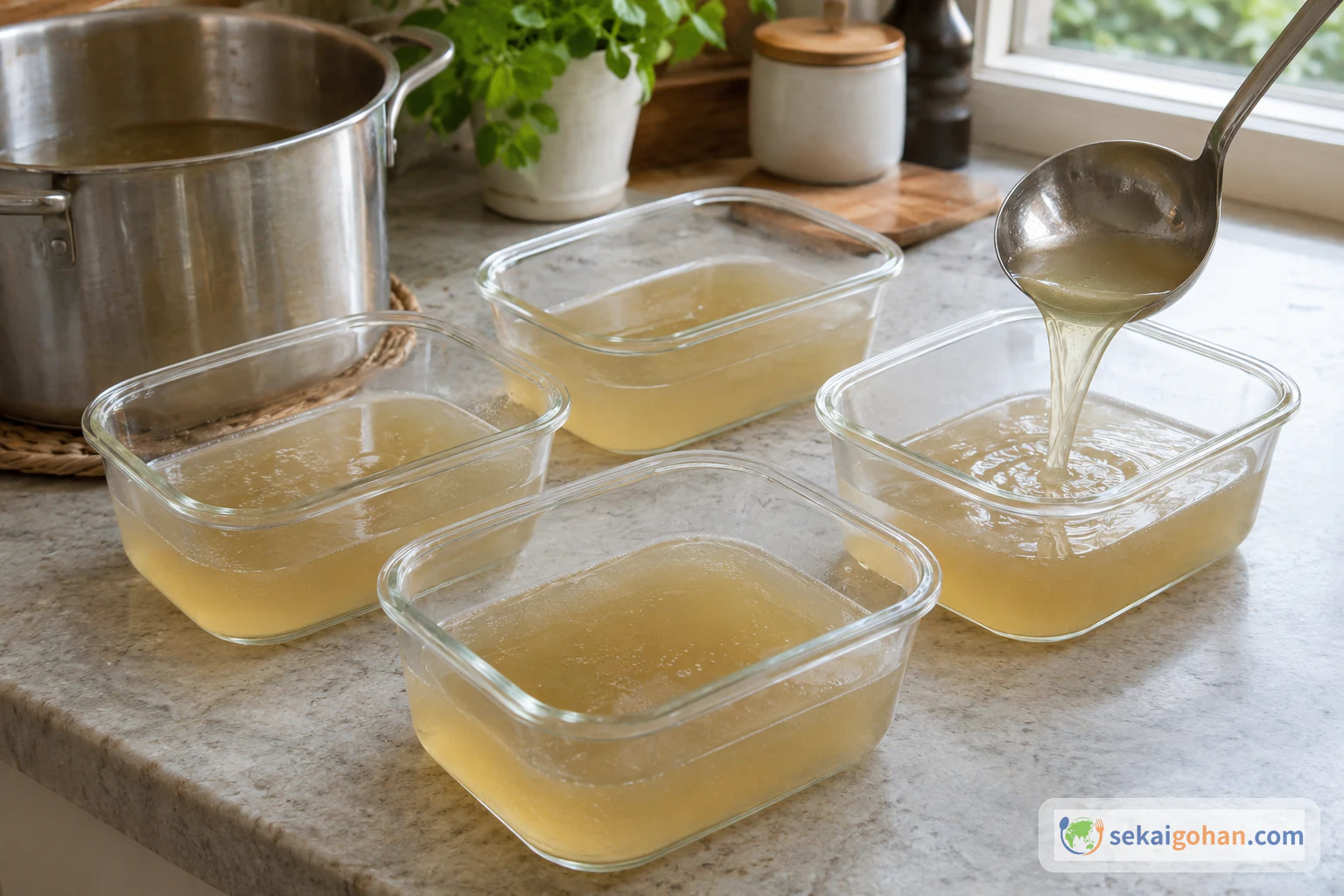
Shallow containers cool faster than one deep pot Refrigerate the broth and meat within 2 hours of cooking, or within 1 hour if the room is above 90°F (32°C). Keep the refrigerator at 39°F (4°C) or below. Leave space between the containers on the shelf.
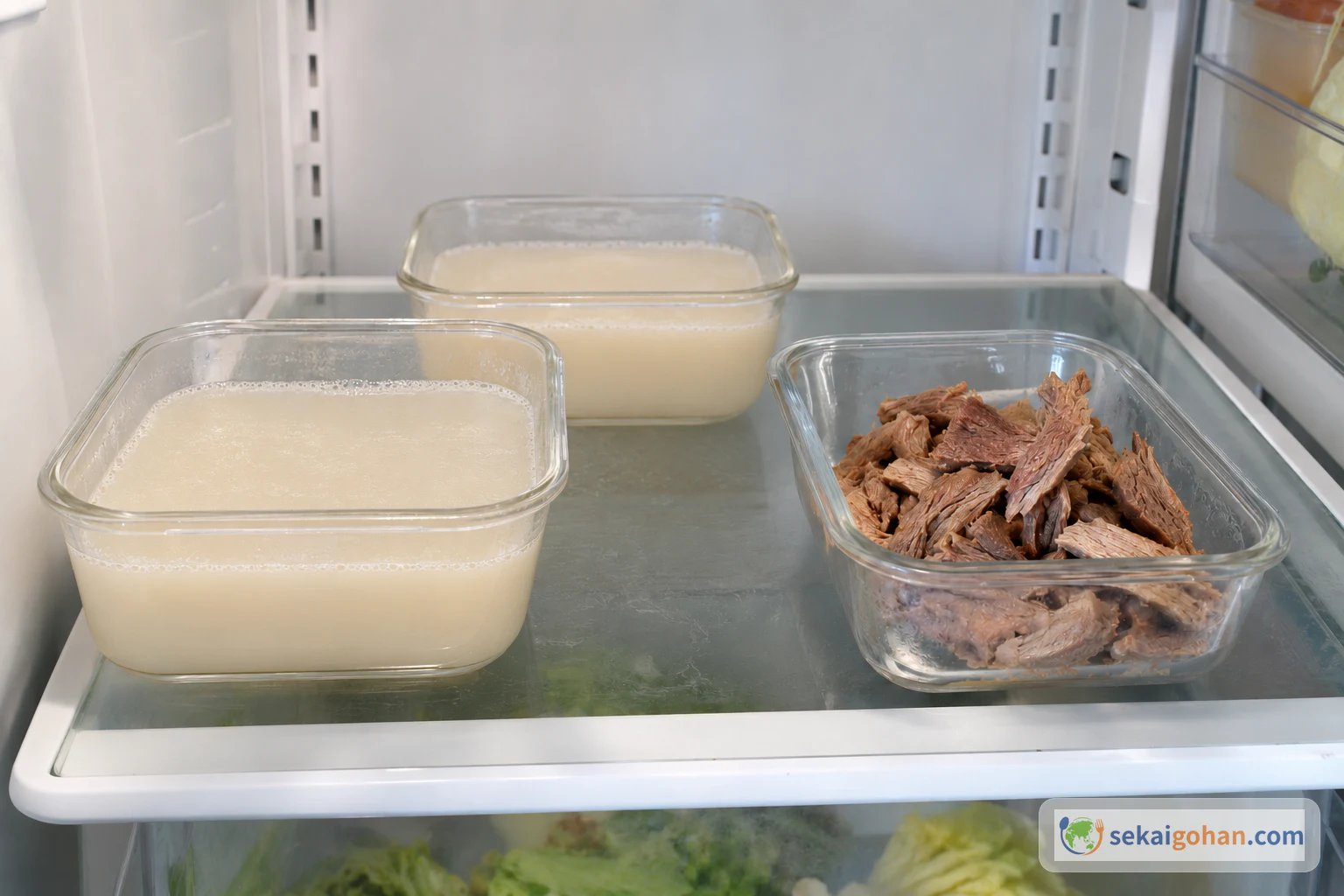
Refrigerate the broth and meat in separate shallow containers Keep the broth in the refrigerator for several hours or overnight, until the fat sets in a solid layer on the surface. The fat is pale or brownish-yellow. Lift it off with a spoon and discard it.
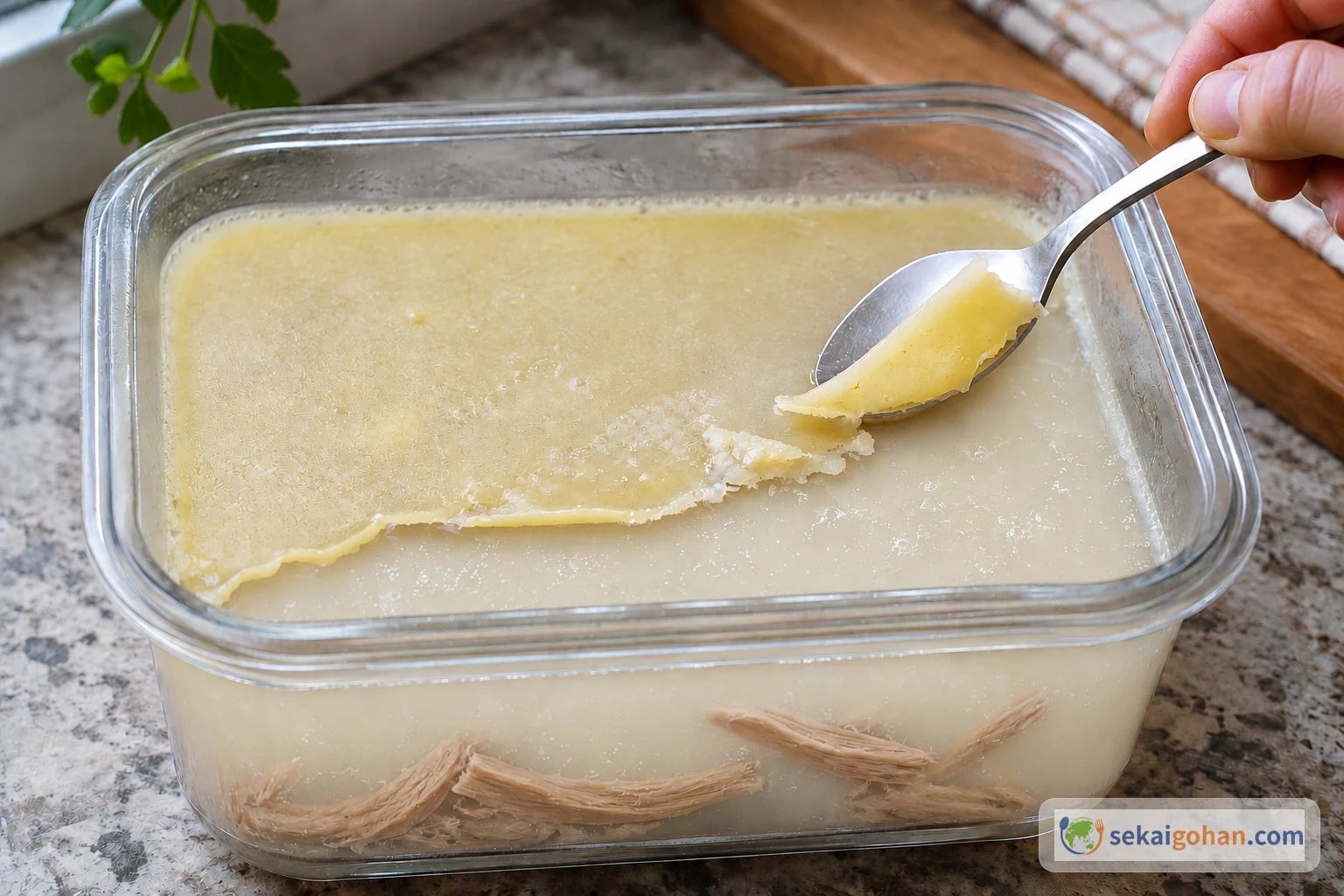
Remove the set fat from the chilled broth 4Blanch, rinse, drain and chop the cabbage
Bring a separate pot of water to a boil and blanch the napa cabbage for 5 minutes.
Rinse the cabbage in cold water several times.
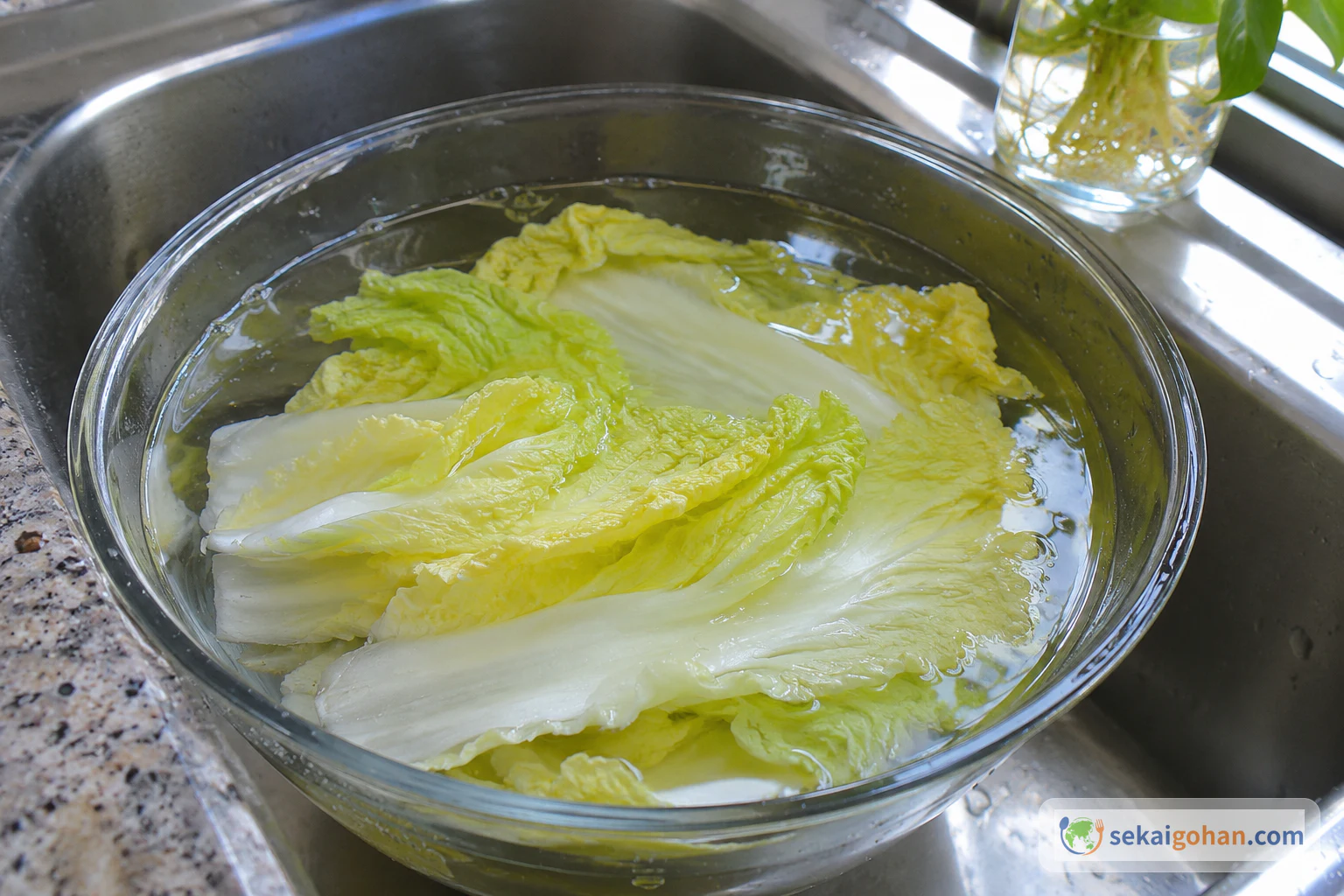
Rinse the blanched cabbage a few times Drain well.
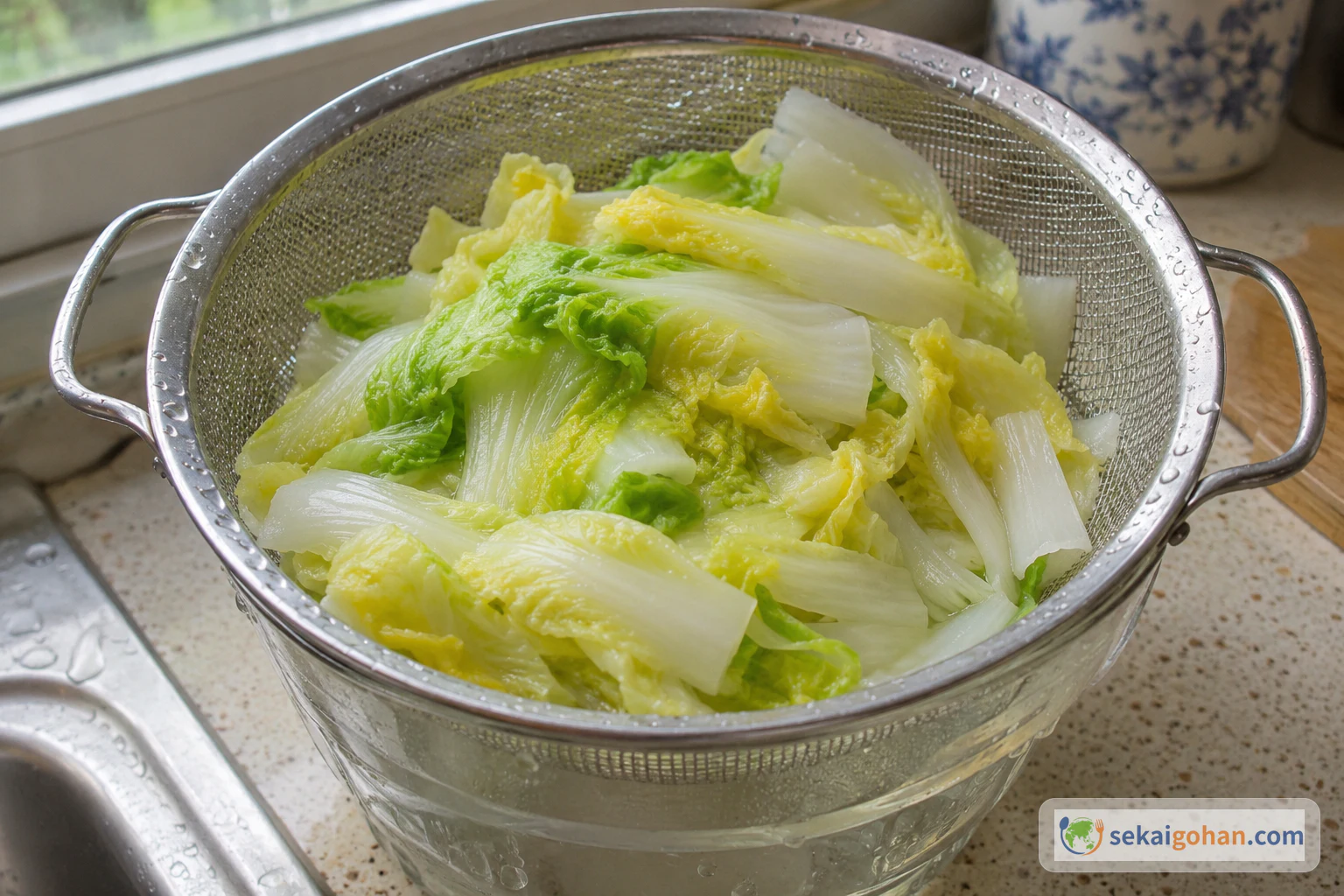
Let the cabbage drain Cut the cabbage into small pieces on a clean board used for vegetables.
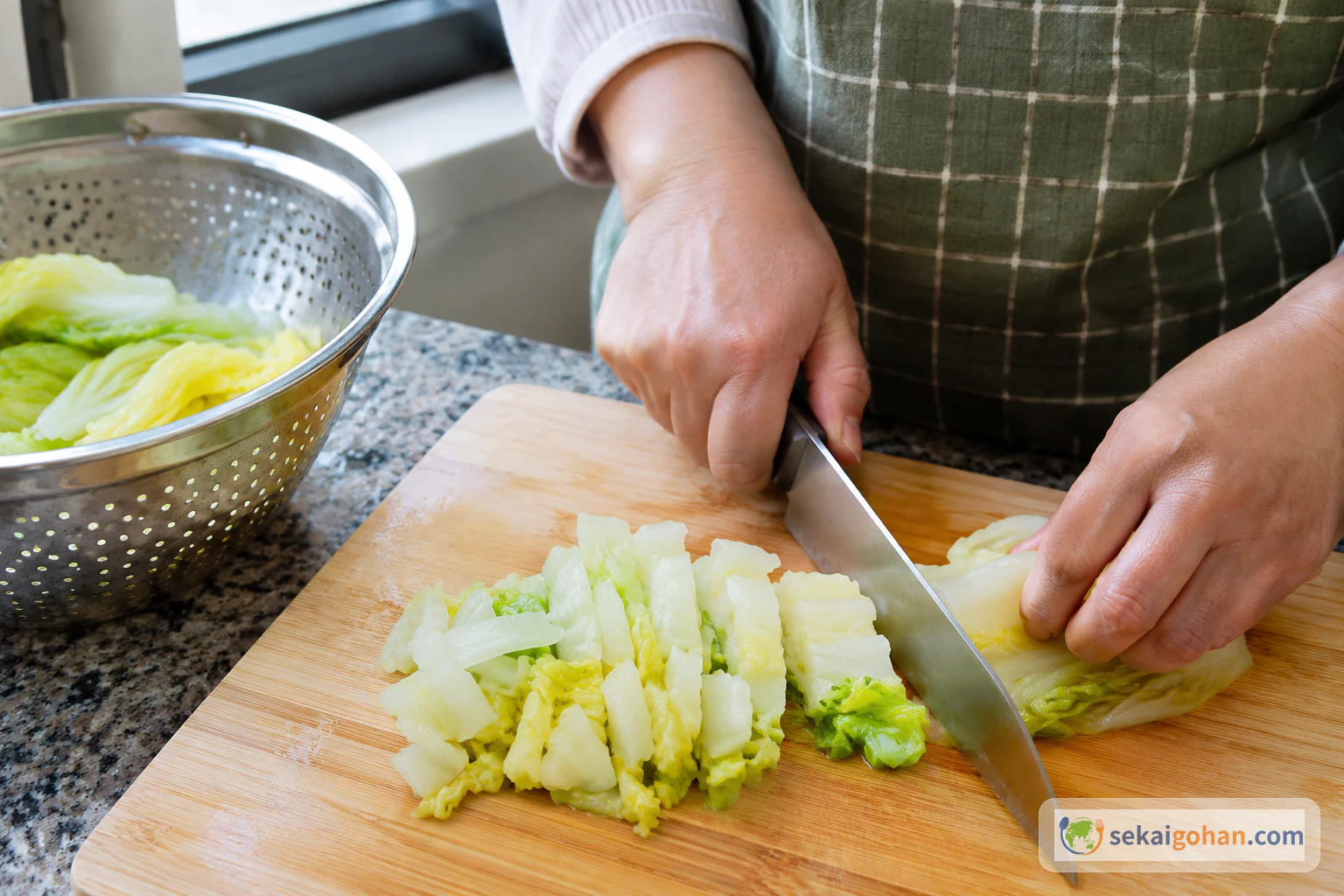
Chop the cabbage small on a clean board 5Season the cabbage
In a large bowl, mix the chopped cabbage with 1/4 cup doenjang, the 8 minced garlic cloves, the 2 chopped green chilies and 1 tbsp fish sauce until the cabbage is evenly coated.
6Simmer the cabbage in the broth
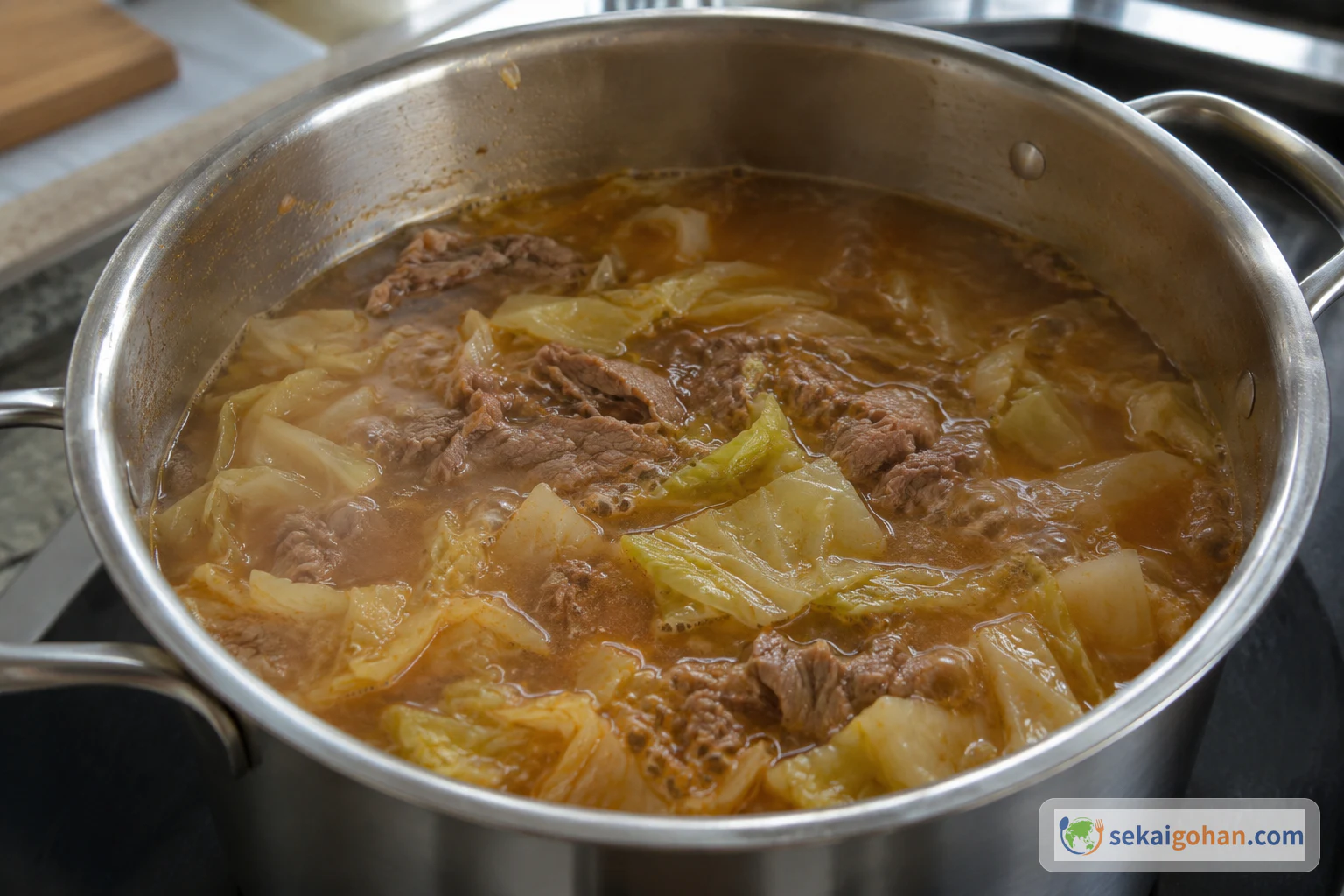
Put the seasoned cabbage, 6 cups of the skimmed beef bone broth and the reserved meat and ligaments in a pot.
Cover and cook over medium-high heat for 20 minutes.
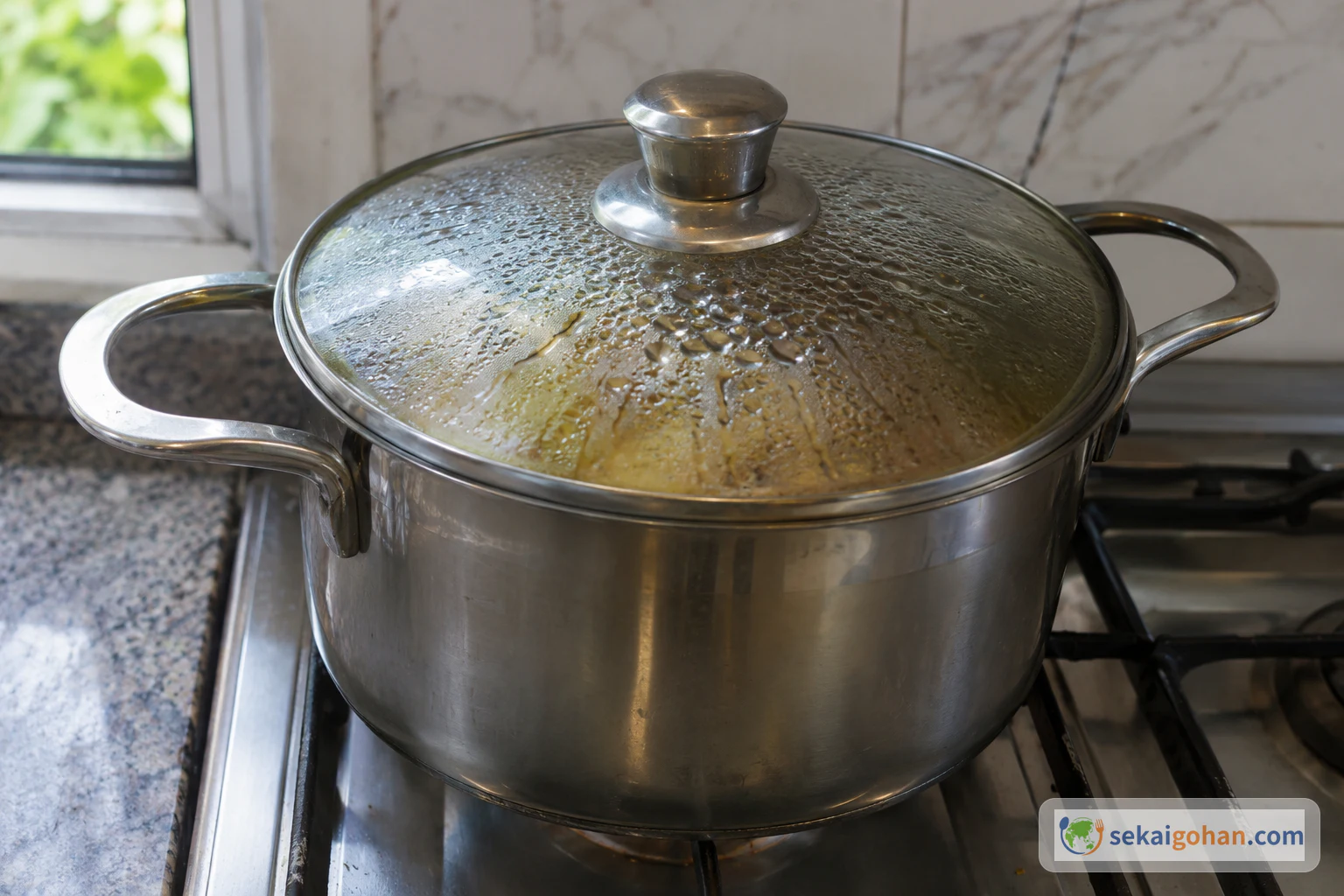
Cook covered over medium-high heat Turn the heat to low and simmer for another 10 minutes. Make sure the soup is heated through, since the broth and meat came out of the refrigerator.
Finish over low heat 7Ladle into bowls and finish with green onion
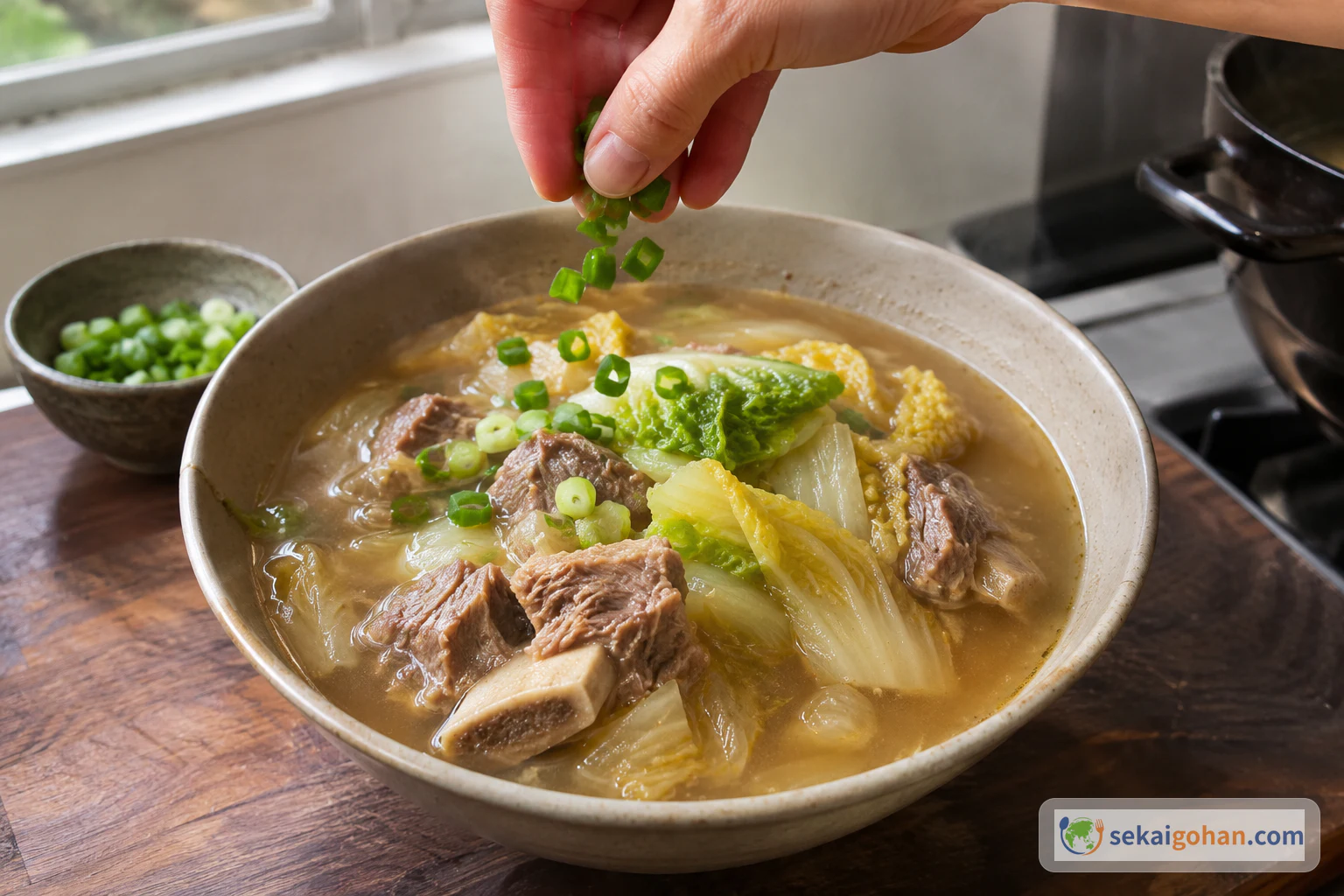
Ladle the hot soup into bowls.
Scatter the chopped green onions over each bowl. Serve with rice and kimchi, and set out gochugaru so each person can add it to taste.
Green onion goes on last