Ingredients and steps on one page. Print it, or choose “Save as PDF” in the print dialog.
Sekai Gohan
Kimchi Jjigae (김치찌개): Korean Stew with Well-Fermented Kimchi
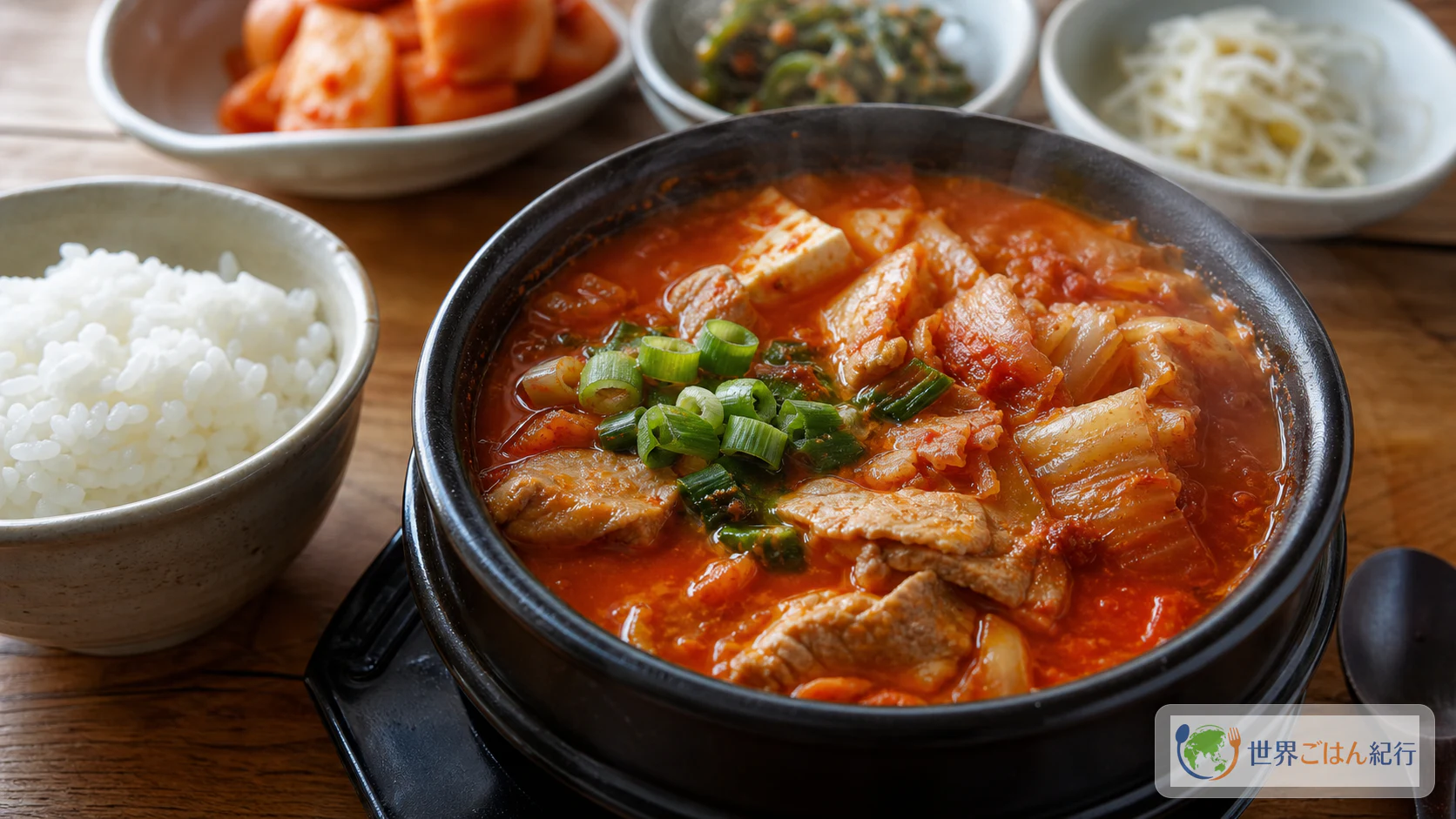
Ingredients
Main ingredients
| Ingredient | Amount | Substitutes & notes |
|---|---|---|
| Well-fermented napa cabbage kimchi | 1 lb (500 g) | Cut in 1 inches (3 cm) widths. Also uses ¼ cup (80 ml) of the brine |
| Pork belly, thinly sliced | 8 oz (220 g) | In 1.5 inches (4 cm) widths. 8.5 oz (240 g) if using thinly sliced shoulder |
| Firm tofu | 10.5 oz (300 g) | Cut 1 inches (2.5 cm) thick. Silken tofu breaks easily, so cut larger |
| Onion | 1/2 (3.5 oz [100 g]) | In 0.5 inches (1 cm) wedges |
| Long green onion (or large scallion) | 1 (3.5 oz [100 g]) | White part on the diagonal, green part for finishing |
| Garlic | 2 cloves (12 g) | Grated |
| Ginger | 8 g | Grated. Softens the pork smell |
| Green chili | 1 (10 g) | Seed it and use half if you do not like heat |
| Cooked rice | 4 bowls (about 1.25 lb [600 g]) | Cooking it a little firm helps it take the broth |
Broth and seasoning
| Ingredient | Amount | Substitutes & notes |
|---|---|---|
| Anchovy-kelp stock | 2¾ cups (650 ml) | Made from 2¾ cups (650 ml) water with 15 g dried anchovies and 6 g kelp |
| Kimchi brine | ¼ cup (80 ml) | If short, press the kimchi lightly to get more |
| Gochugaru | 1 tbsp | Korean coarse chili flakes. Color and aroma more than heat |
| Gochujang | 2 tsp | Adds sweetness, so do not overdo it |
| Korean sesame oil | 2 tsp | For frying the pork and kimchi |
| Fish sauce or light soy sauce | 2 tsp | Light soy sauce if you dislike fish sauce |
| Light brown sugar | 1 tsp | For sour kimchi. Do not make it sweet |
| Salt | 1/4 tsp | For final adjustment |
Steps
1Cut the kimchi
5 min
Set a bowl underneath to catch the juice and cut 1 lb (500 g) of well-fermented kimchi in 1 inches (3 cm) widths, across the fibers of the cabbage. For thick core parts, lay the knife flat and even them to 0.5 inches (1 cm) thick. Measure out ¼ cup (80 ml) of brine, and if short, press the kimchi lightly to get more. Chopped too fine it loses its texture when simmered, so leave pieces large enough to pick up with chopsticks.
2Fry the pork
4 min
Put 2 teaspoons of Korean sesame oil in a heavy pot and warm over medium heat for 30 seconds. Spread in 8 oz (220 g) of pork belly cut in 1.5 inches (4 cm) widths and cook without moving for about 2 minutes. When the meat turns whitish, takes a light browning at the edges, and about 1 teaspoon of fat has come out onto the bottom, turn it over and fry 1 minute more. You do not need strong browning here. The aim is to render fat and make a base for frying the kimchi.
3Fry the kimchi
6 min
Keeping the heat at medium, add the kimchi, garlic, ginger, and 1 tablespoon of gochugaru. Turn from the bottom with a wooden spoon and fry 4 minutes, until the edges of the kimchi turn a little translucent and red oil seeps onto the side of the pot. If it looks about to scorch, add 2 tablespoons of stock. Frying the kimchi rounds its sourness and removes the powdery feel of the chili.
4Pour in the stock and simmer
12 min
Add 2¾ cups (650 ml) of anchovy-kelp stock, ¼ cup (80 ml) of kimchi brine, 2 teaspoons of gochujang, and 1 teaspoon of light brown sugar. Bring to a boil over a strong medium heat for about 3 minutes, and when the surface bubbles, drop to a lower medium heat and simmer for 8 minutes. The bubbles should rise small at the center of the pot. A rolling boil toughens the pork and breaks down the kimchi fibers.
5Add the tofu and vegetables
6 min
Add the tofu cut 1 inches (2.5 cm) thick, onion in 0.5 inches (1 cm) widths, the white part of the long green onion cut on the diagonal, and the green chili. Simmer 5 minutes over lower medium heat, until the tofu is hot at the center and the onion begins to turn translucent. The sign is the tofu's corners staying intact as it takes on the red broth. Stirring hard after adding the tofu breaks it, so give the pot a gentle shake and just stroke the bottom with the wooden spoon.
6Adjust the seasoning and rest
4 min
Add 2 teaspoons of fish sauce or light soy sauce and warm over low heat for 1 minute. Taste with a bite of rice, and if it seems thin, add 1/4 teaspoon salt; if the sourness is weak, add 1 tablespoon of kimchi brine. Turn off the heat, rest 2 minutes, and scatter the green part of the long green onion. When the fine surface bubbles have gone and red oil floats on top, bring it to the table.