Ingredients and steps on one page. Print it, or choose “Save as PDF” in the print dialog.
Sekai Gohan
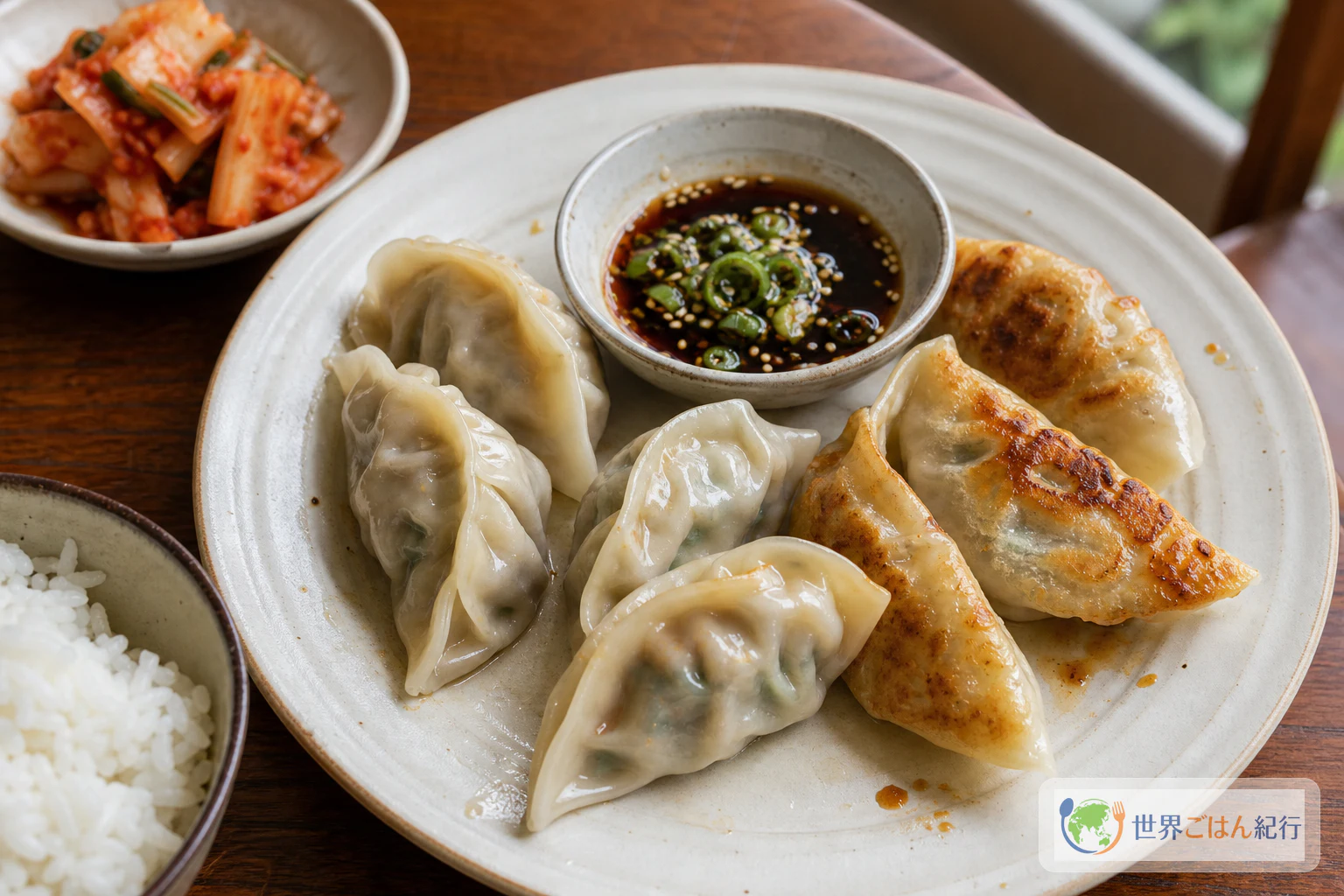
Mandu: Korean Pork, Tofu and Kimchi Dumplings, Steamed, Pan-Fried or in Soup
Ingredients
Filling and wrappers
| Ingredient | Amount | Substitutes & notes |
|---|---|---|
| Large round dumpling wrappers | 40–44 sheets | About 3.5 inches (9 cm) across. Thicker wrappers are easier to steam |
| Ground pork | 10.5 oz (300 g) | Use 11.5 oz (320 g) if substituting ground chicken. If it's lean, add 1 tsp sesame oil |
| Firm tofu | 7 oz (200 g) | Silken tofu holds too much water. Fried tofu makes a different dish |
| Napa cabbage kimchi | 5.5 oz (160 g) | Well-fermented, sour kimchi works best. If it's fresh, add 1 tsp soy sauce |
| Korean glass noodles (dangmyeon) | 1.5 oz (40 g) | Dry weight. With other mung bean or starch noodles, use 1.25 oz (35 g) and cook briefly |
| Garlic chives | 2.5 oz (70 g) | Cut into 0.5 inches (1 cm) pieces. If you don't like chives, use 2.75 oz (80 g) green onions |
| Leek or thick scallion (Japanese negi) | 2 oz (60 g) | Coarsely chopped |
| Egg | 1 | Binds the filling. Without egg, add 1 tbsp potato starch |
| Grated garlic | 10 g | About 2 cloves |
| Grated ginger | 8 g | Lightens the smell of the ground meat |
Seasoning
| Ingredient | Amount | Role |
|---|---|---|
| Soy sauce | 1 1/2 tbsp | Salt for the filling |
| Korean sesame oil | 1 tbsp | Aroma and a smooth mouthfeel |
| Salt | 1/2 tsp | Keeps the filling seasoned despite the tofu and vegetables |
| Black pepper | 1/3 tsp | Sharpens the finish |
| Toasted white sesame seeds | 1 tbsp | Nutty aroma |
| Potato starch | 1 tbsp | Absorbs moisture in the filling |
| Rice bran oil | 1 tbsp | For pan-fried mandu. Any neutral vegetable oil works |
Soy-vinegar dipping sauce
| Ingredient | Amount | Notes |
|---|---|---|
| Soy sauce | 2 tbsp | Add water if it tastes too strong |
| Rice vinegar | 1 tbsp | Black vinegar also works |
| Water | 1 tbsp | Rounds out the flavor |
| Korean sesame oil | 1/2 tsp | Too much makes it heavy |
| Toasted white sesame seeds | 1 tsp | Crush lightly between your fingers as you add them |
| Thinly sliced green onion | 1 tbsp | Let it sink into the sauce |
| Gochugaru (Korean chili flakes) | 1/2 tsp | Optional. Adds a red-pepper aroma more than heat |
For soup
| Ingredient | Amount | Notes |
|---|---|---|
| Anchovy and kelp stock | 700 ml | About 3 cups. Chicken stock also works |
| Soy sauce | 2 tsp | Adjust to the saltiness of the stock |
| Salt | 1/3 tsp | Taste at the end |
| Egg | 1 | Beaten and drizzled in thin strands |
| Leek or thick scallion | 30 g | Thinly sliced on the diagonal |
Steps
1Prepare the tofu and glass noodles
18 min
Bring 1 quart (1 L) water to a boil in a pot and cook the 1.5 oz (40 g) Korean glass noodles over medium heat for 6–7 minutes. When the white core has disappeared and they look translucent when lifted with chopsticks, drain, rinse under running water to remove the slipperiness, and cut into 1 inch (2 cm) lengths. Wrap the 7 oz (200 g) firm tofu in a cloth and squeeze out the water by pressing with both hands. Coarsely chop the 5.5 oz (160 g) napa cabbage kimchi and squeeze it lightly to remove the juice. No water pooling in the bowl, short separated noodles and tofu that crumbles apart are the signs you're ready.
2Mix a filling with no excess liquid
8 min
In a large bowl, combine the 10.5 oz (300 g) ground pork, tofu, kimchi, glass noodles, 2.5 oz (70 g) garlic chives cut into 0.5 inches (1 cm) pieces, 2 oz (60 g) coarsely chopped leek, 1 egg, garlic, ginger, soy sauce, Korean sesame oil, salt, black pepper, sesame seeds and potato starch. No heat is needed. Mix with gloved hands for 2 minutes, and stop when the pink meat and white bits of tofu are evenly distributed and the mixture is just sticky enough to hold together when pressed. If watery seasoning liquid remains at the bottom of the bowl, add 2 tsp more potato starch.
3Wrap the dumplings
22 min
No heat is needed. Place 22–24 g of filling on a large dumpling wrapper and brush a thin line of water around half the edge. Fold the wrapper in half, press the center closed first, then push the air out toward each side and make 5–6 pleats on one side. Dust a tray lightly with potato starch and set the wrapped mandu on it at least 0.5 inches (1 cm) apart. If filling touches the edge of the wrapper, it's hard to seal, so go light on the first 5, and add more water if the edges have dried and won't close.
4Make steamed mandu
14 min
Fill the steamer with water and set it over high heat. Once steam is rising strongly, arrange the mandu with space between them on parchment paper with holes poked in it. Cover and steam over medium-high heat for 10–12 minutes. Turn off the heat when the wrappers look glossy and slightly translucent, the filling springs back when pressed, and the center reaches at least 75°C (167°F). Without a thermometer, cut one open and check that no pink remains and the hot juices run clear. Let them rest for 2 minutes after steaming so the wrappers settle.
5Make pan-fried mandu
10 min
Heat 1 tbsp rice bran oil in a frying pan over medium heat for 1 minute. Arrange the mandu flat side down and fry for 3 minutes. When the bottoms are golden brown, add 70 ml (about 1/3 cup) water, cover immediately and steam-fry over medium heat for 4 minutes. When most of the water is gone, uncover and fry over medium-low heat for 2 minutes to dry the bottoms. Stop when the bubbles in the pan have turned small and the dumplings release easily when nudged with a wooden spatula.
6Add them to soup
9 min
In a pot, bring the 3 cups (700 ml) anchovy and kelp stock, 2 tsp soy sauce and 1/3 tsp salt to a boil over medium heat. When it's simmering, add 6–8 mandu and simmer over medium-low heat for 5–6 minutes. When the mandu float, the wrappers look slightly translucent and the centers are hot, drizzle in the beaten egg in a thin stream. When the egg sets into soft ribbons, add the 1 oz (30 g) leek and turn off the heat after 30 seconds. If adding frozen mandu, simmer over medium-low heat for 8–9 minutes and check the temperature at the center.