Ingredients and steps on one page. Print it, or choose “Save as PDF” in the print dialog.
Sekai Gohan
Tteokbokki Recipe: Korean Street-Style Sweet and Spicy Rice Cakes
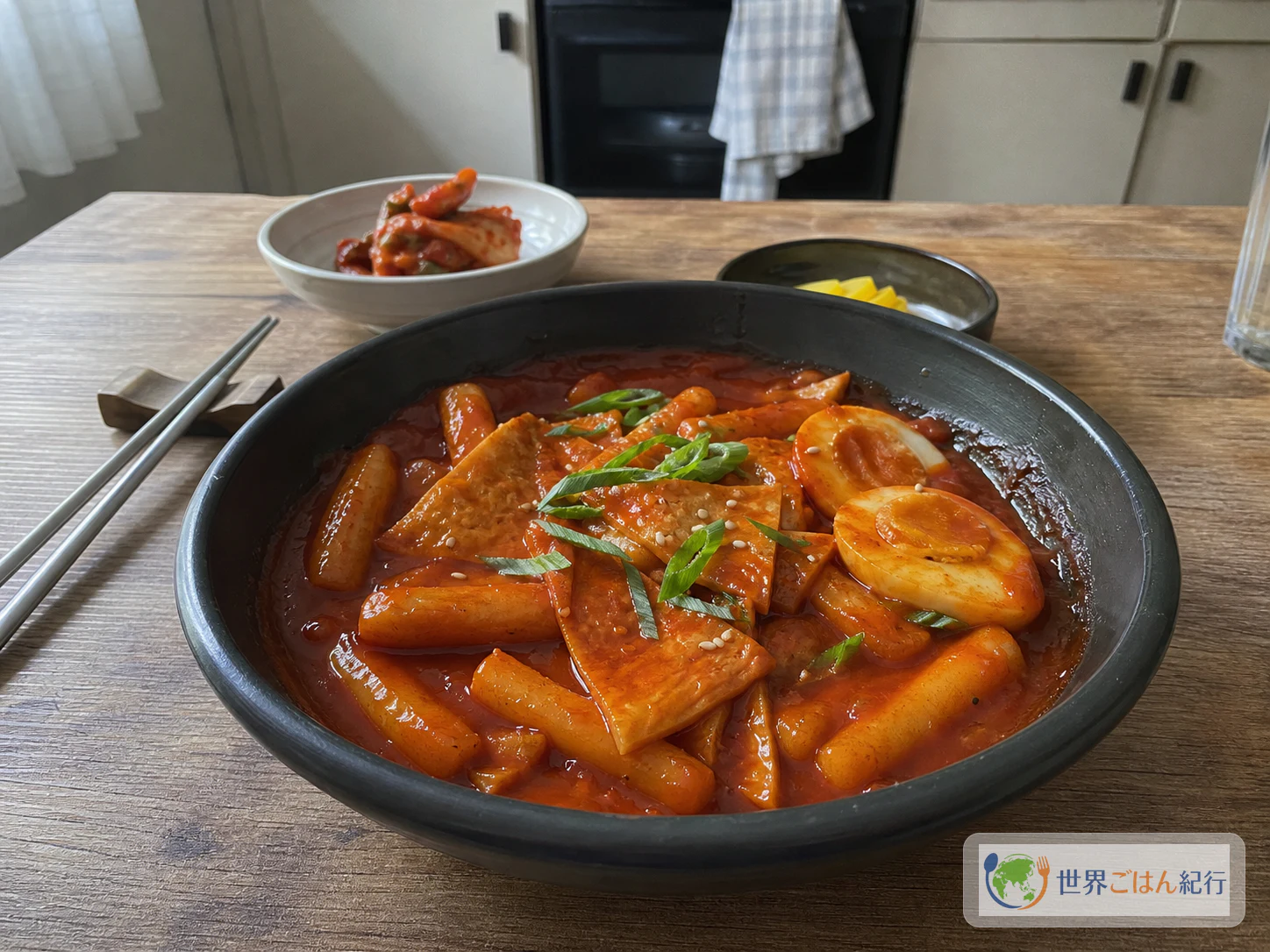
Ingredients
Main ingredients
| Ingredient | Amount | Substitutes & notes |
|---|---|---|
| Korean tteok rice cakes | 1 lb (500 g) | Refrigerated or frozen sticks. If using other rice cakes, cut 1 lb (500 g) into 0.5 inches (1.5 cm) wide, 2 inches (5 cm) long pieces |
| Korean fish cake | 5.5 oz (160 g) | Cut into 1 inches (3 cm) triangles. 5.5 oz (160 g) mild fish cake or 4 oz (120 g) fish sausage also works |
| Cabbage | 5.5 oz (150 g) | 1 inches (3 cm) squares. Too much makes it watery |
| Scallions (leeks) | 2.75 oz (80 g) | White and green parts cut on the diagonal into 1.5 inches (4 cm) lengths |
| Boiled eggs | 4 | Boil 9 minutes after the water boils, then peel |
| White toasted sesame seeds | 2 tsp | For finishing. Omit if allergic to sesame |
Stock
| Ingredient | Amount | Substitutes & notes |
|---|---|---|
| Water | 2¾ cups (650 ml) | Judge the reduction and add 2 to 4 tbsp at the end |
| Dried anchovies | 18g | Removing the heads and guts keeps out bitterness |
| Kelp | 6g | Remove before it boils |
Sweet and spicy sauce
| Ingredient | Amount | Role |
|---|---|---|
| Gochujang | 2.5 oz (70 g) | The center of sweetness, body, and fermented flavor |
| Gochugaru | 10g | Coarse Korean chile flakes. Color and aroma |
| Soy sauce | 1 tbsp | Saltiness and savoriness |
| Raw cane sugar | 1 1/2 tbsp | Street-stall-style sweetness. White sugar also works |
| Grated garlic | 10g | The base of aroma |
| Korean sesame oil | 1 tsp | Aroma at the end |
Steps
1Soak and loosen the rice cakes
10 min
No heat. Put 1 lb (500 g) Korean rice cakes in a bowl, cover with water, and soak 10 minutes. If using frozen rice cakes, thaw them in the refrigerator for half a day before soaking. They are ready when the surface starch has come off and they give a little when pressed with a finger. If substituting other rice cakes, cut them into 0.5 inches (1.5 cm) wide, 2 inches (5 cm) long pieces and soak 15 minutes before using.
2Make the anchovy-kelp stock
12 min
In a pot, combine 2¾ cups (650 ml) water, 18 g dried anchovies with heads and guts removed, and 6 g kelp. Heat over medium heat for 7 minutes. When fine bubbles rise from the bottom and it nears a boil, lift out the kelp. Lower to low heat and simmer 5 minutes, then remove the anchovies. You should have about 2½ cups (600 ml) of stock left.
3Dissolve the red sauce
4 min
Return the stock pot to medium heat and add 2.5 oz (70 g) gochujang, 10 g gochugaru, 1 tbsp soy sauce, 1 1/2 tbsp raw cane sugar, and 10 g grated garlic. Stir 4 minutes, stroking the bottom of the pot with a wooden spatula. Move on when small bubbles appear on the surface, the lumps of gochujang are gone, no red powder floats, and it falls smoothly from the spatula.
4Simmer the rice cakes soft to the center
8 min
Drain the rice cakes, add them to the pot, and set the heat to medium-low. Turn them over from the bottom every 30 seconds and simmer 8 minutes. Keep the bubbles at a simmer at the edge of the pot. They are done when the rice cakes puff a little, bend loosely when lifted with chopsticks, and show no hard white core in the center.
5Add the fish cake and vegetables
5 min
Add 5.5 oz (160 g) fish cake cut into 1 inches (3 cm) triangles, 5.5 oz (150 g) cabbage, 2.75 oz (80 g) scallions, and 4 boiled eggs. Keep medium-low heat and simmer 5 minutes. It is ready when the edges of the fish cake ripple slightly, the cabbage core turns translucent, and the sauce is thick enough to cling heavily to the rice cakes and fish cake. Mixing too much here makes the rice cakes stick to the bottom, so turn them from the bottom only 3 or 4 times.
6Add gloss and serve
3 min
Lower to low heat, drizzle in 1 tsp Korean sesame oil, and reduce for 2 minutes. Turn off the heat when the trail made by drawing the wooden spatula along the bottom slowly closes and the sauce clings thinly to the rice cakes. Sprinkle with 2 tsp white toasted sesame seeds and rest 1 minute before taking to the table. Resting lets the bubbles settle and rounds out the heat in the mouth.