Ingredients and steps on one page. Print it, or choose “Save as PDF” in the print dialog.
Sekai Gohan
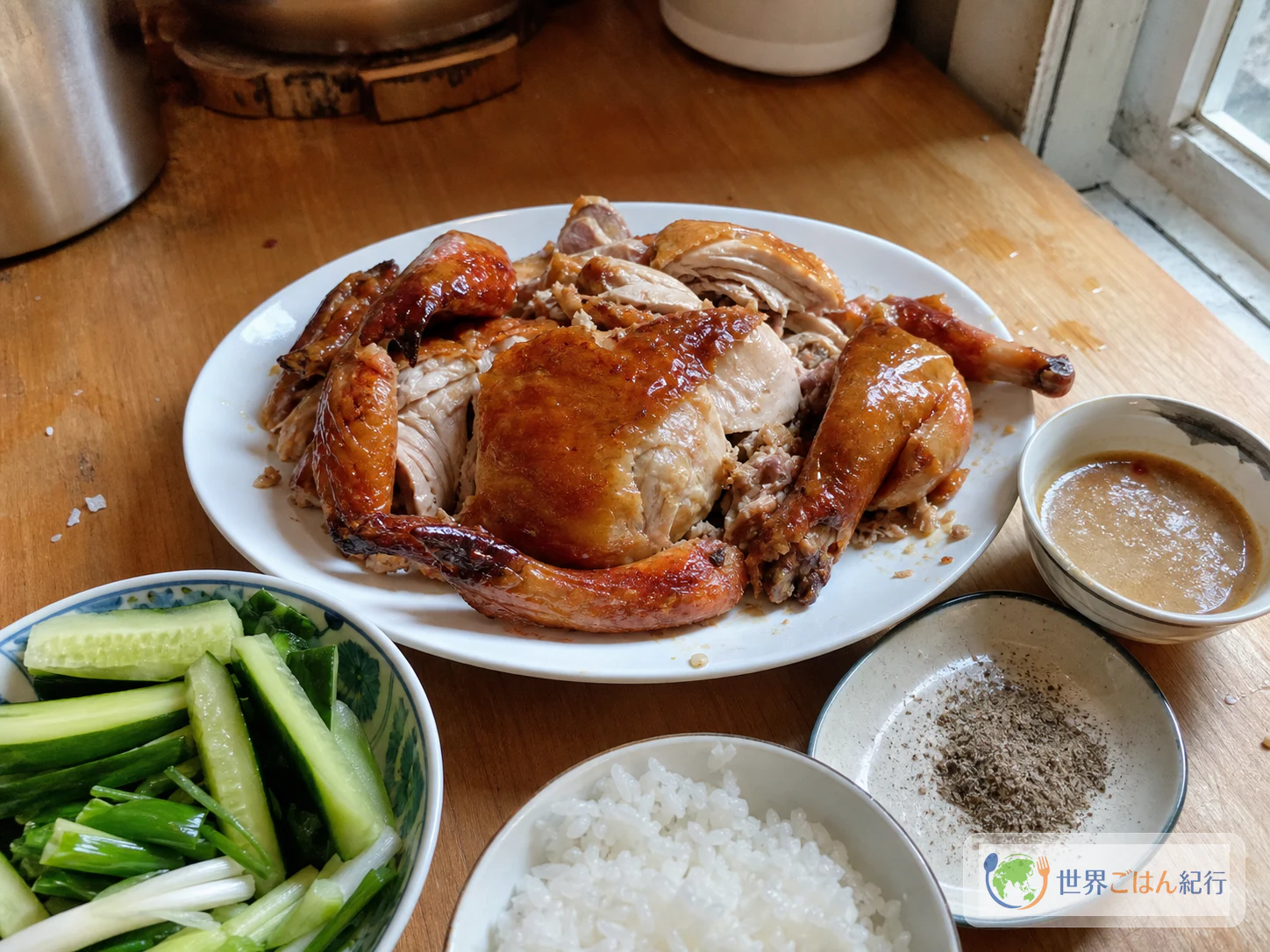
Taiwanese Barrel Chicken (Wengzai Ji, 甕仔雞): Whole Roast Chicken at Home
Ingredients
Main ingredients
| Ingredient | Amount | Substitutes & notes |
|---|---|---|
| Whole chicken, giblets removed | 1 (up to 2.75 lb / 1.1–1.3 kg) | Thaw frozen birds completely in the refrigerator |
| Salt | 1 1/2 tsp | For seasoning. Rub it inside and out |
| Scallions (long green onions) | 2 | 1 for the cavity, 1 for the table |
| Ginger | 1.5 oz (40 g) | 20 g sliced, 20 g grated |
| Garlic | 3 cloves | Grated |
| Cucumber | 1 | At the table, to cut the richness |
| Hot cooked rice | 4 servings | Easier to eat with a little of the chicken fat spooned over |
Marinade
| Ingredient | Amount | Substitutes & notes |
|---|---|---|
| Soy sauce (regular, koikuchi) | 2 tbsp | |
| Dark soy sauce (for color) | 1 tbsp | If you don't have it, use 1 tbsp regular soy sauce plus 1/2 tsp dark brown sugar |
| Shaoxing wine | 2 tbsp | Sake works, 2 tbsp |
| Raw cane sugar | 2 tsp | |
| Sesame oil | 2 tsp | |
| White pepper | 1/2 tsp | |
| Star anise | 1 | Lightly crush it. Don't overdo it |
| Five-spice powder | 1/3 tsp | Only if you have it. Go light on days you use star anise |
| Ginger juice | 1 tbsp | |
| Grated garlic | 3 cloves |
To finish
| Ingredient | Amount | Substitutes & notes |
|---|---|---|
| Pan juices and chicken fat | What collects in the pan | Remove the black burnt specks |
| Coarsely ground black pepper | 1 tsp | |
| Salt | 1/2 tsp | |
| Raw cane sugar | A pinch | Rounds out the pepper salt |
| Lemon or lime | 1/2 | A little at the end, if you have it |
Steps
1Mix the marinade
8 min
No heat is used. Mix the soy sauce, dark soy, Shaoxing wine, raw cane sugar, sesame oil, white pepper, crushed star anise, ginger juice and garlic in a small bowl. It is ready when the sugar crystals don't settle, the aroma of star anise and ginger rises, and the sauce comes together as a thin, dark brown liquid. Crush the star anise into pieces large enough to remove later, not into powder.
2Season the chicken with salt and aromatics
12 min
No heat is used. Pat the surface and cavity of the chicken thoroughly dry with paper towels, then rub 1 1/2 tsp of salt inside and out. Brush half of the sauce thinly onto the skin and put about 1 tbsp inside the cavity. Put the white part of a scallion and sliced ginger into the cavity until the scent of ginger rises. Keep the skin dry, with just enough sauce for a thin gloss. If sauce pools on the skin, the color will be uneven, so spread it thin with gloves or a brush.
3Dry the skin in the refrigerator
10 min, then refrigerate 4 hr to overnight
No heat is used. Set the chicken on a pan, uncovered, and refrigerate it for 4 hours to overnight. The surface is ready when it feels lightly tacky, not sticky. Partway through, brush on a thin layer of the remaining sauce. If sauce collects on the bottom of the pan, save it for brushing on during roasting.
4Set up the rack and the oven
15 min
Set up a metal tray to catch the fat, with a rack on top. Don't line the pan with parchment. Preheat the oven to 180°C (355°F) for 15 minutes, and put the chicken in only after the display reaches 180°C. Hold the chicken upright on a stand only if the stand is stable; if not, lay it on its side on the rack with the breast up. Never use a can or a fragile dish as a prop. Tie the legs loosely with kitchen twine, and fold the wing tips back under if they tend to scorch.
5Cook through at a lower temperature
55 min
Keep the oven at 180°C (355°F). Put the chicken in and roast for 45 minutes. When the skin changes from light brown to amber and chicken fat begins to drip into the pan, pull the pan out once. Avoiding the black burnt specks, brush about 2 tsp of only the clear fat onto the skin. Roast another 10 minutes, then move on once the thickest part of the thigh reaches about 65°C (149°F). Without a thermometer, look for juices running nearly clear from the base of the thigh; the final check is in step 7.
6Tighten the skin with high heat
12 min
Raise the oven to 220°C (430°F). Dilute the reserved sauce, 2 tsp, with 2 tsp of chicken fat, and brush it thinly on the skin. Brush on thick, undiluted sauce and the sugar burns first. Roast at 220°C for 8–12 minutes. Stop when the skin is a deep amber, the edges are crisp, a toasty aroma rises, tiny bubbles appear on the breast, and just before black specks spread. If the back or wing tips darken early, loosely cover only those areas with aluminum foil.
7Check the internal temperature and rest
15 min
Turn off the heat. Take out the chicken and insert a thermometer 2–3 cm (about 1 in) into the thickest part of the thigh, without touching the bone. Serve once the center reads 75°C (167°F) or higher. Aim for 70°C (158°F) or higher in the thick part of the breast too. If it falls short, return it to 180°C and add 5 minutes at a time, checking each time. Once it's done, cover loosely with aluminum foil and rest for 10 minutes. The juices settle during the rest, so they stay in the meat instead of running onto the plate when you tear it.
8Tear by hand and serve with the chicken fat
10 min
No heat is used. Put on gloves and tear the chicken into large pieces. Take the breast in large pieces along the grain, and remove the thighs along the bone. From the fat in the pan, avoiding the black burnt specks, move the clear part to a small bowl. Serve with pepper salt made from black pepper, salt and raw cane sugar, scallion, cucumber and rice. Spooning the chicken fat over the meat a little at a time and eating skin and meat together gives you the drive of barrel chicken.