Ingredients and steps on one page. Print it, or choose “Save as PDF” in the print dialog.
Sekai Gohan
Khinkali Recipe: Georgian Soup Dumplings Bursting with Broth
Ingredients
Dough
| Ingredient | Amount | Substitutes & notes |
|---|---|---|
| Bread flour | 14 oz (400 g) | All-purpose flour also works. Cake (soft) flour does not stretch well and is not suitable |
| Water | ¾ cup (200 ml) | Room temperature is fine |
| Salt | 1 tsp | — |
| Neutral oil | 1 tbsp | Makes the dough supple |
Meat filling
| Ingredient | Amount | Substitutes & notes |
|---|---|---|
| Mixed ground meat (beef and pork) | 14 oz (400 g) | All beef is closer to the original. Lamb is best |
| Onion | 1 (about 7 oz (200 g)) | Finely chopped |
| Garlic | 2 cloves | Grated |
| Cilantro (fresh coriander leaves) | 3 tbsp, finely chopped | Italian parsley can stand in |
| Ground cumin | 1 tsp | — |
| Black pepper | 1 tsp | More is correct. Georgians do not hold back |
| Salt | 1.5 tsp | — |
| Water | ½ cup (100 ml) | Water goes into the filling. This is the secret of khinkali |
| Chili flakes | 1/2 tsp | Omit if you do not like heat |
Steps
1Knead the dough and let it rest
10 min kneading + 30 min resting
Mix 14 oz (400 g) bread flour and 1 tsp salt in a bowl. Make a well in the center, add ¾ cup (200 ml) water and 1 tbsp oil, and stir with chopsticks. When it comes together roughly, turn it out onto the counter and knead by hand for 10 minutes. It is ready when it feels a little firmer than an earlobe and the surface is smooth. Wrap in plastic and rest at room temperature for at least 30 minutes.
The ideal is firmer than a typical dumpling wrapper dough, close to the dough for boiled dumplings. Resting relaxes the gluten, so the dough rolls out thinly more easily.
2Make the filling
5 min
Put 14 oz (400 g) ground meat in a bowl with the chopped onion, grated garlic, chopped cilantro, cumin, black pepper, salt, and chili flakes. Mix by hand for about 2 minutes. It is ready when the mixture turns sticky and spreads in a thin layer on the bottom of the bowl.
The most important point is to add ½ cup (100 ml) water a little at a time while mixing. This water becomes the broth inside the dumpling when it boils. Without it, the khinkali are far less juicy.
Chill the filling in the refrigerator for 30 minutes and it will be easier to handle when you shape the dumplings.
3Roll out the dough and cut rounds
10 min
Turn the rested dough out onto a lightly floured counter and roll it to 2–3 mm thick. If the thickness is uneven, only the thin spots will tear in the boiling water. Cut out rounds 10–12 cm across with a cup or ring cutter, and cover the cut rounds with a cloth so they do not dry out. Gather the scraps, knead them lightly, rest for 5 minutes, and roll again until all the dough is used.
The wrappers are bigger and thicker than ordinary dumpling wrappers. Large store-bought dumpling wrappers can stand in, but homemade dough stretches better and is easier to wrap. For 24 dumplings (6 per person), you get about 24 rounds of 4 inches (10 cm).
4Pleat and wrap
20 min
Lay a round of dough on your palm and put a generous 1 tbsp (about 25 g) of filling in the center. Lift the edge of the dough and, pinching it little by little to make pleats, slowly turn the dumpling with the other hand. Finally, twist the top firmly to close it.
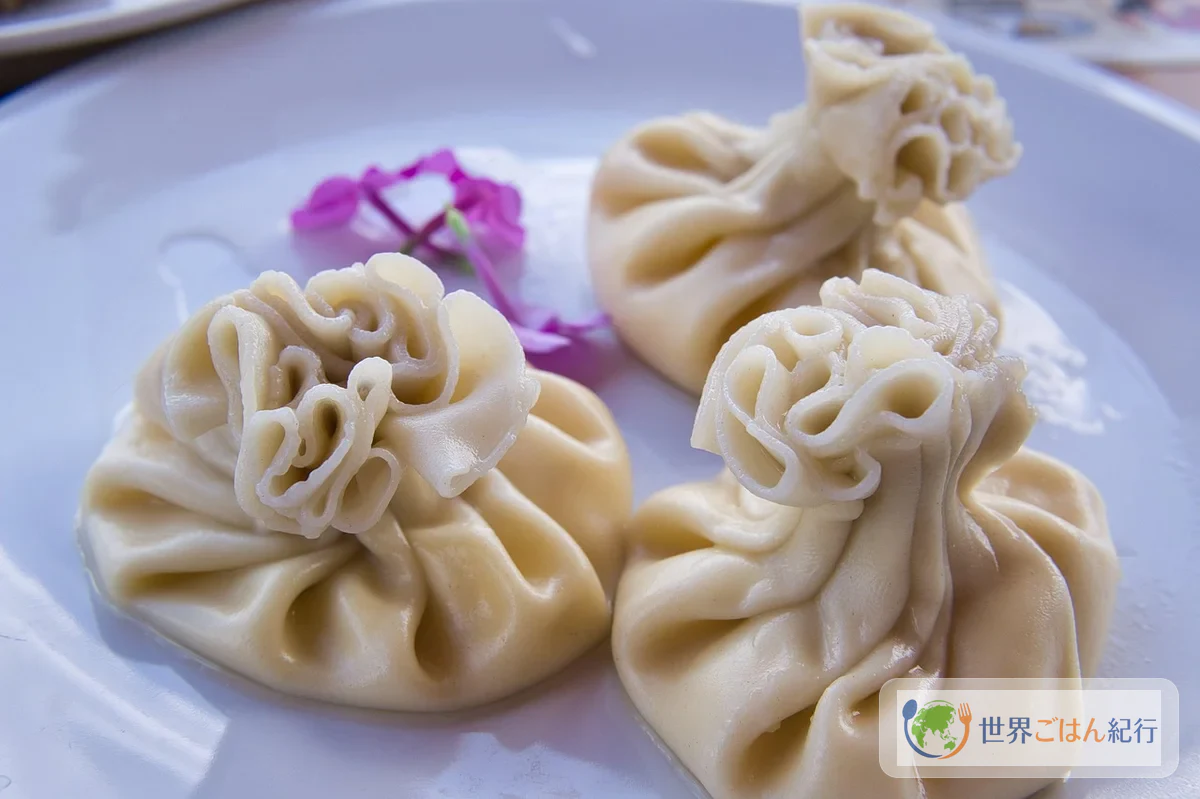
Aim for 12–18 pleats. It is hard at first, but after 3–4 dumplings you will get a feel for it. The key is to leave no air gap around the filling. Trapped air makes the dumpling burst when boiled, and the broth escapes. A finished khinkali has a rounded, plump base and a firmly tight knot on top.
Tip for pleatingIf you are right-handed, turn the khinkali with your left hand and pleat with the thumb and index finger of your right. Pleat clockwise in one direction at even intervals, about 0.25 inch (5 mm) wide. When you finish, twist off the extra dough at the top to seal.
5Boil
10–12 min
Bring a large pot of water to a boil and add 1 tbsp salt. Lower the khinkali into the water one at a time. If you add too many at once they stick together, so cook 6–8 at a time, depending on the pot.
Gently sweep the bottom of the pot with a wooden spoon so they do not stick. Once they float to the surface, the dough turns translucent, and the dumplings are round and taut with broth, they are ready 3–4 minutes later. Plan on 10–12 minutes in total.
What you must never doDo not poke the khinkali with chopsticks or a fork while they boil. If the dough is pierced, all the broth runs out and you lose the best part. Lift them out carefully with a ladle or slotted spoon.
6Serve and eat
3 min
Put the boiled khinkali on a plate while still steaming and sprinkle generously with black pepper. The ideal result has taut dough with no tears and no broth leaking onto the plate. Dropping 1 tsp butter on top is a classic finish.
There is a proper way to eat them. First, pinch the pleated top knot and lift the dumpling. Turn it over and take a small bite from the side of the dough. The hot broth flows out, so sip it. After the broth, eat your way through the rest. The knot at the top is not eaten, and it is left on the plate as a way of counting how many you ate.