Ingredients and steps on one page. Print it, or choose “Save as PDF” in the print dialog.
Sekai Gohan
Bokpe (Бөкпе): Kazakh Hulled Millet Simmered in Milk
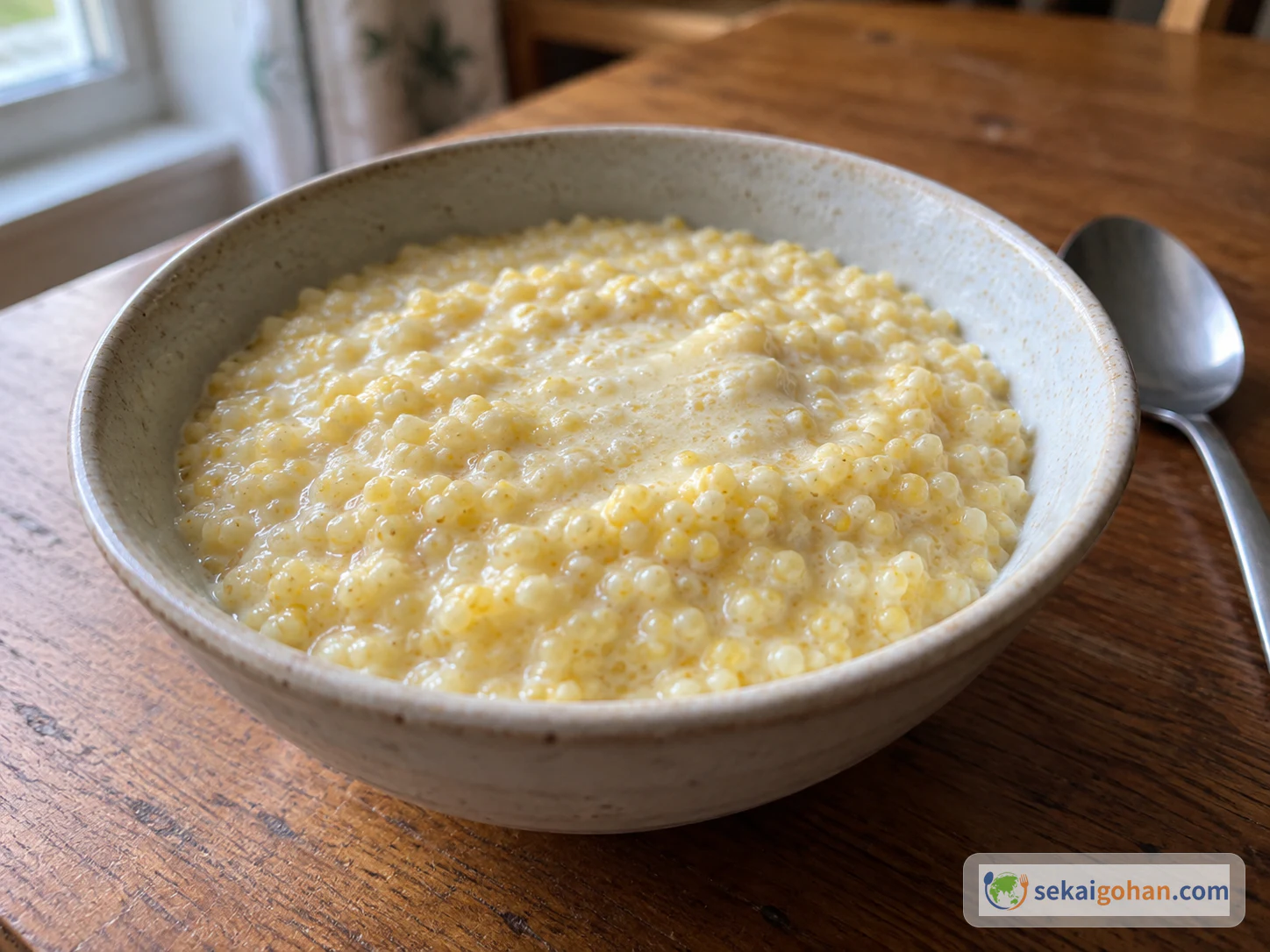
Ingredients
| Ingredient | Amount | Role |
|---|---|---|
| Hulled millet (ақталған тары) | 1 cup | The main grain and the texture of the dish. Use whole hulled grains, not millet flour, flakes or another grain |
| Whole milk, pasteurized | 1 L | The cooking liquid that the millet absorbs. Use pasteurized whole milk, not raw milk |
| Butter | 2 tbsp | Added once, as the milk reduces |
| Granulated sugar | A sprinkle | A light sweetness added with the butter. Start small and decide by tasting |
Steps
1Check the millet
Measure 1 cup of hulled millet. Look it over and remove anything that isn't grain. Make sure you have whole grains, not flour or flakes. If you choose to rinse the millet, drain it thoroughly so that no extra water goes into the pot.
2Combine the milk and millet
Pour 1 quart (1 L) of milk into the deep, heavy saucepan and add the millet. Set the pan over low heat and stir from the bottom as it warms, so the grains don't settle and stick. Leave plenty of room above the milk in case it rises.
3Simmer gently and keep scraping the bottom
Keep the heat low so that only small, quiet bubbles appear, mostly at the edge. Stir often, running the spoon along the bottom of the pan to prevent scorching. Continue until the milk begins to reduce. Watch the pot rather than the clock.
4When the milk reduces, add the butter and sugar
When there is visibly less free milk and the grains have started to swell, it is time for the butter and sugar. The mixture should still be loose and creamy, with no crust on the bottom.
Add the 2 tbsp of butter and a light sprinkle of sugar. Stir until the butter melts into the grains. This is the only time the butter goes in. Don't add more on top when serving.
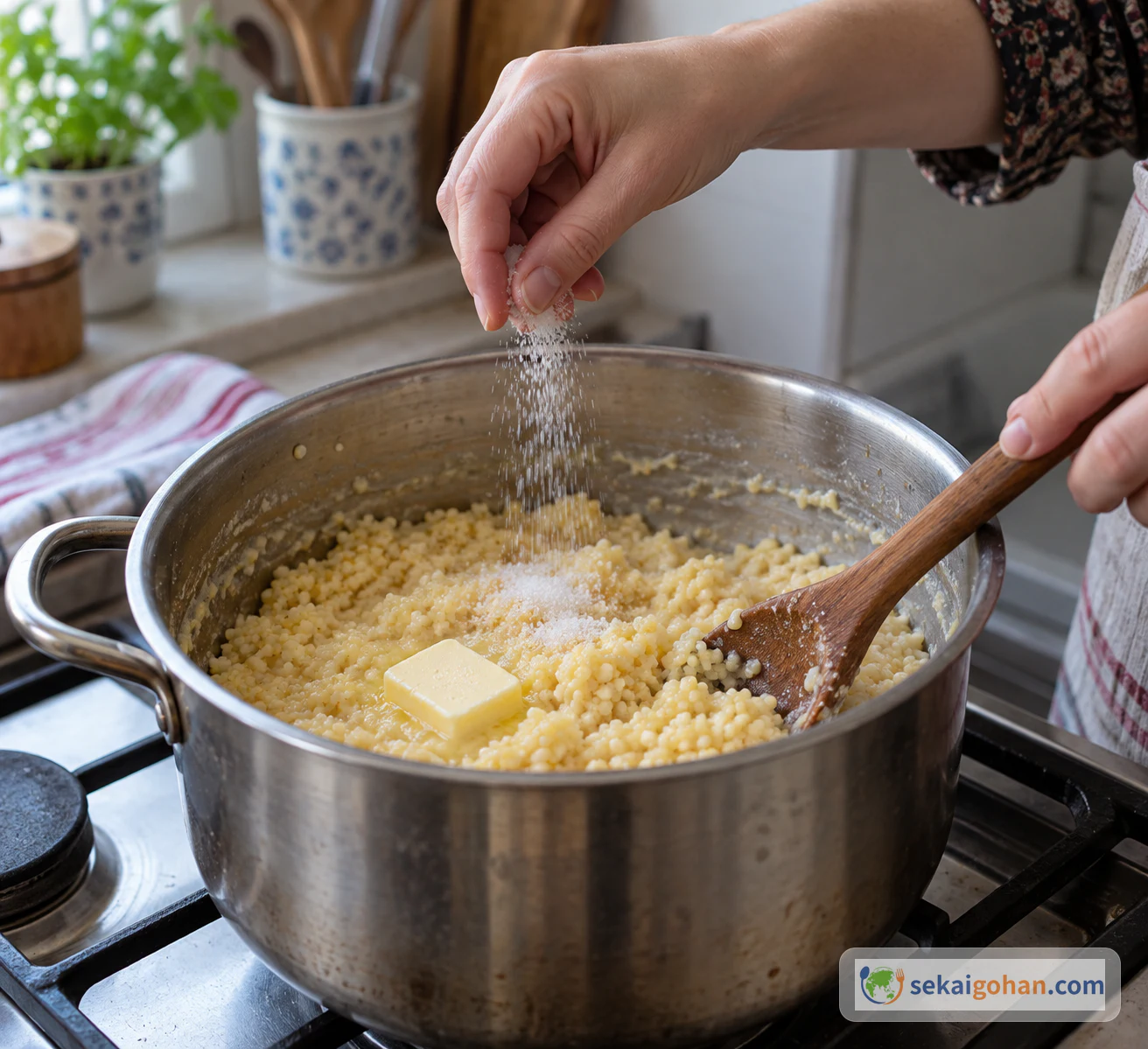
Add the butter once, sprinkle in a small amount of sugar, and fold both into the grains 5Cook until the grains are tender
Keep the heat low and continue to stir, still reaching the bottom of the pan. Taste a few grains. Stop when they are soft with no hard center, the milk has been absorbed, and the whole pot has settled into a soft, moist mass. The grains should still be visible as separate grains, not crushed into a paste or browned on the bottom.
6Rest briefly, then serve
For a gentle low-heat finish, turn the heat to its lowest setting or turn it off. Let the pot sit briefly so the surface settles; you can cover it. A thin, pale skin can form on the surface, and that is part of the finished dish. Don't judge doneness by the skin. Judge it by the softness of the grains.