Ingredients and steps on one page. Print it, or choose “Save as PDF” in the print dialog.
Sekai Gohan
How to Make Mămăligă: Moldova's Golden Cornmeal Porridge
Ingredients
Mămăligă itself
| Ingredient | Amount | Substitutes & notes |
|---|---|---|
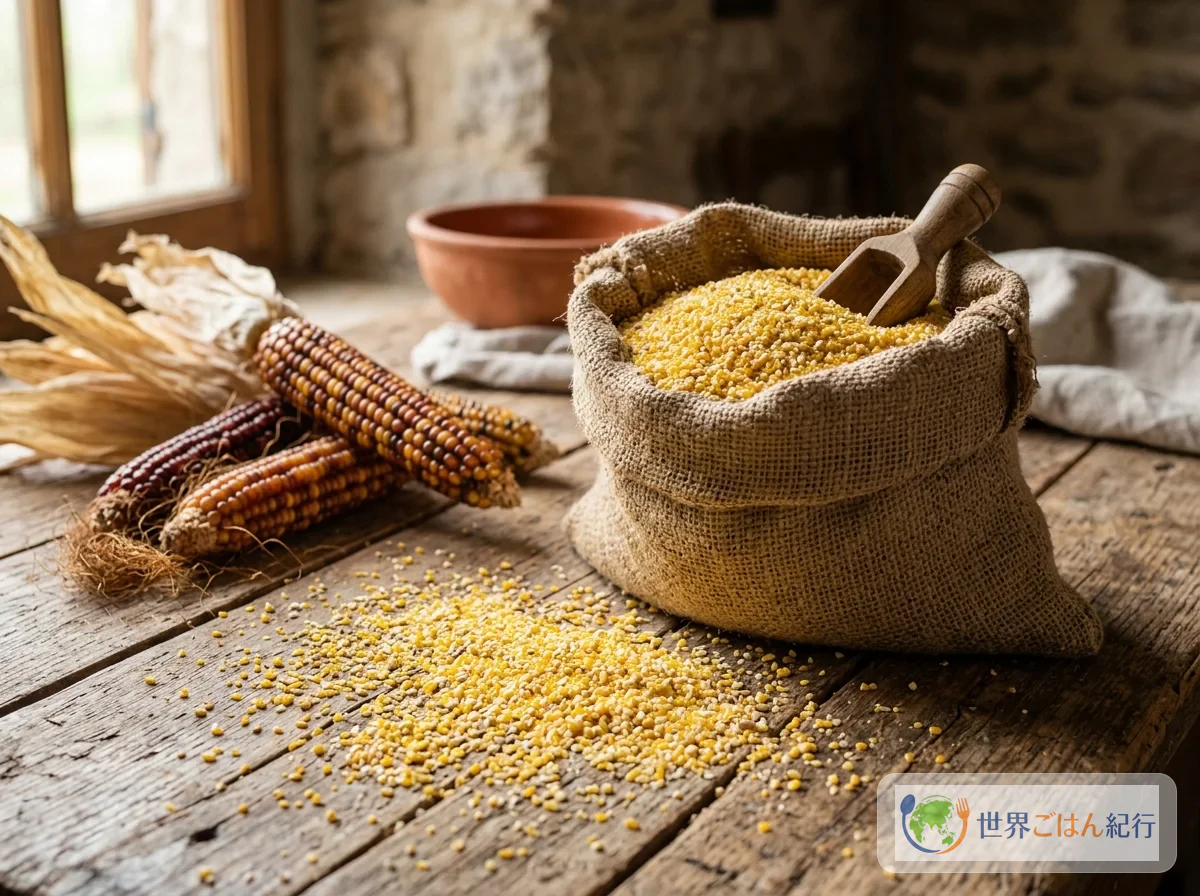
| Cornmeal (medium to coarse grind) | 10.5 oz (300 g) | Polenta meal also works. Do not use instant polenta; its texture is different |
| Water | 1 quart (1 L) | Soft water is best |
| Salt | 1 tsp | — |
| Butter | 1 oz (30 g) | For finishing. Noticeably improves the flavor |
Medium to coarse cornmeal is best for mămăligă. Look for it labeled "cornmeal" or "polenta meal." Instant polenta (precooked) is convenient but not suited to mămăligă, which is stirred for a long time to develop elasticity. "Corn grits" are too coarse, so soaking them in water for 30 minutes before use softens the grittiness.
The accompaniments contain common allergens. Dairy (cheese, sour cream, butter) is the basic accompaniment. For a dairy allergy, replace the butter with vegetable oil and leave out the cheese and sour cream. Mămăligă itself needs only cornmeal, water, and salt. Some tocană recipes use flour, which contains wheat.
Accompaniment (brânză and smântână)
| Ingredient | Amount | Substitutes & notes |
|---|---|---|
| Feta cheese | 5.5 oz (150 g) | Cottage cheese plus 1/4 tsp salt works as a substitute. Any regular grocery store carries it |
| Sour cream | 5.5 oz (150 g) | Heavy cream also works |
Accompaniment (tocană, pork stew)
| Ingredient | Amount | Substitutes & notes |
|---|---|---|
| Pork shoulder | 14 oz (400 g) | Chicken thighs also work |
| Onion | 2, finely chopped | — |
| Canned tomatoes | 1 can (14 oz / 400 g) | — |
| Garlic | 3 cloves | — |
| Paprika | 1 tbsp | The basic spice of Moldovan cooking |
| Bay leaves | 2 | — |
| Vegetable oil | 2 tbsp | — |
| Salt and pepper | Salt 1/2 tsp, black pepper 1/4 tsp | Taste at the end and add up to 1/4 tsp more salt |
| White wine | ½ cup (100 ml) | Optional. Cooking wine can substitute |
Steps
1Add the meal a little at a time
10 min
Put 1 quart (1 L) of water and 1 tsp salt in a heavy pot and bring it to a full boil over high heat. Wait until the surface moves in big rolls, drop to medium heat, and sprinkle in 10.5 oz (300 g) cornmeal a handful at a time.
Stir in big circles with a wooden spoon in your dominant hand, and let the meal fall like fine rain from the other. Add it all at once and white lumps remain in the middle, so take 3 to 5 minutes to add it all. At this point it is still a loose porridge, and you cannot see the bottom of the pot. That is normal.
2Stir over low heat until it gets heavy
20–25 min
Once all the meal is in, drop to low heat and move the wooden spoon as if scraping the bottom of the pot. If the heat is high, only the outside sets first and a bitter scorch forms on the bottom. Keep it at small bubbles breaking gently, and if it boils hard, take it off the heat once.
At 10 minutes it is porridge, at 15 minutes it begins to turn sticky, and past 20 minutes it is heavy enough to be lifted with the spoon. When the dough pulls away from the walls of the pot and moves as one mass, it is done. At the end add 1 oz (30 g) butter and mix it in quickly just before turning off the heat.
Rest for a minute when your arm tiresStirring for 20 minutes is hard work. If you tire, you can rest your hand for about a minute with the heat still low. But if you leave it for long, the bottom of the pot scorches, so keep the break short. When the bottom begins to feel heavy, moving the spoon in bigger strokes before lowering the heat helps it avoid sticking.
3Turn it out into a dome and let it settle
6 min
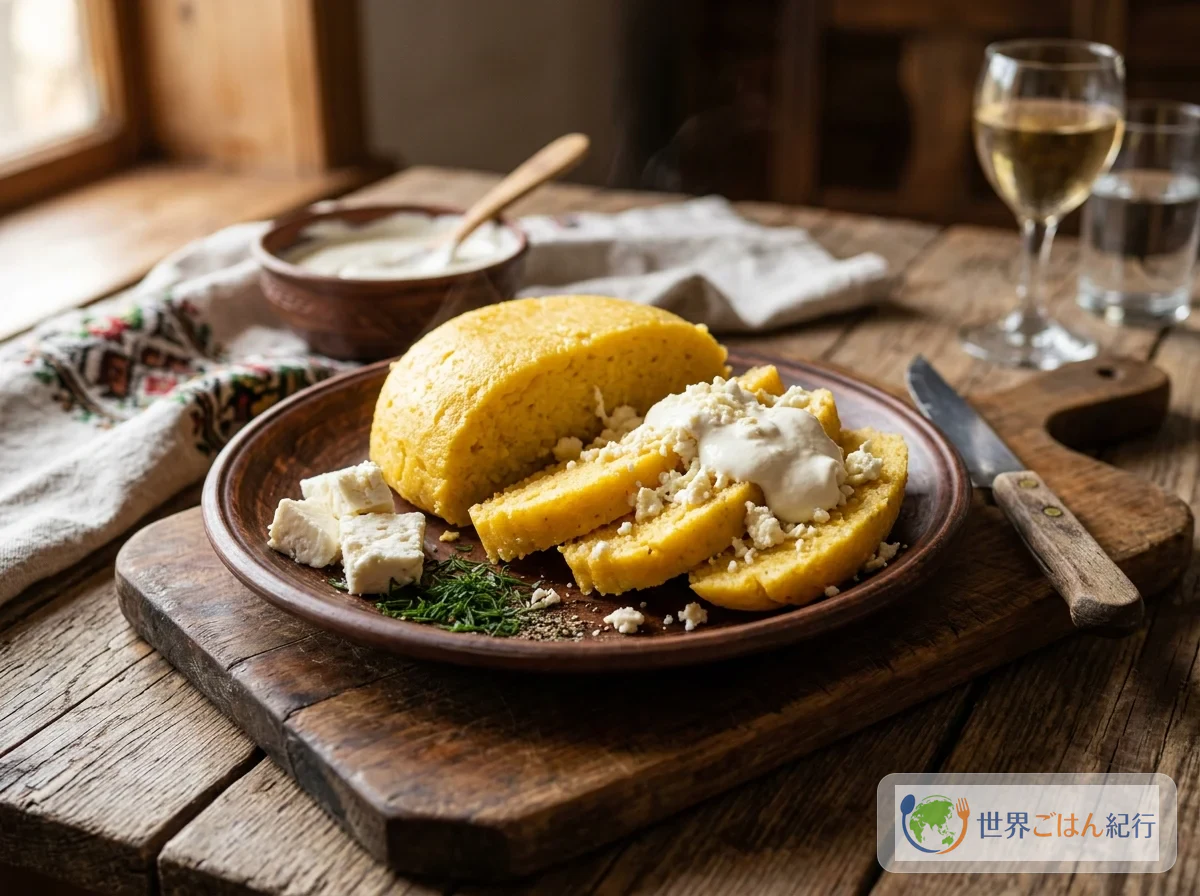
Lightly wet a cutting board with water and tip the finished mămăligă out of the pot upside down. Just before turning it out, the dough has a smooth surface, is thick enough to hold the marks of the wooden spoon, and has come together into one mass in the pot. If it makes a dome about 18 to 20 cm across (up to 8 inches) and 3 inches (8 cm) tall and the sides do not slump, the water content is right.
Do not cut it right away; leave it about 5 minutes. While hot the surface is soft and likely to collapse when the thread goes in, so waiting until the steam settles a little is the secret to dividing it cleanly.
4Cut with thread
3 min
In Moldova, mămăligă is cut with thread, not a knife. Pressing with a knife crushes the cut surface and makes it sticky, but pulling thread leaves the outline even in warm dough.
Slide cotton thread (kitchen twine) under the mămăligă, cross the thread over with both hands, and pull up to cut. For 4 people, serve 2 to 3 slices of 1 inch (3 cm) thickness each. If the thread sticks to the dough, wet it lightly with water.
If you do not have threadIf you have no twine, unflavored dental floss works. If you use a knife, wetting the blade first keeps it from sticking. A palette knife or butter knife is easier than a kitchen knife for pushing apart thin slices.